Questions on this page14
- Is Hakone worth it, or is it a tourist trap?
- How do I get to Hakone from Tokyo?
- Is the Hakone Freepass worth it?
- The Hakone loop, leg by leg
- Owakudani: eggs, gas and closures
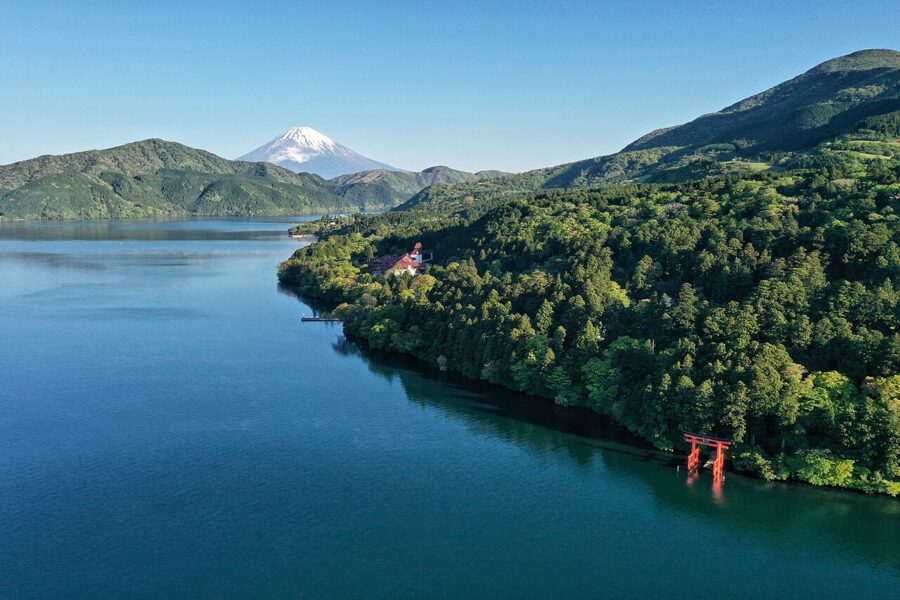
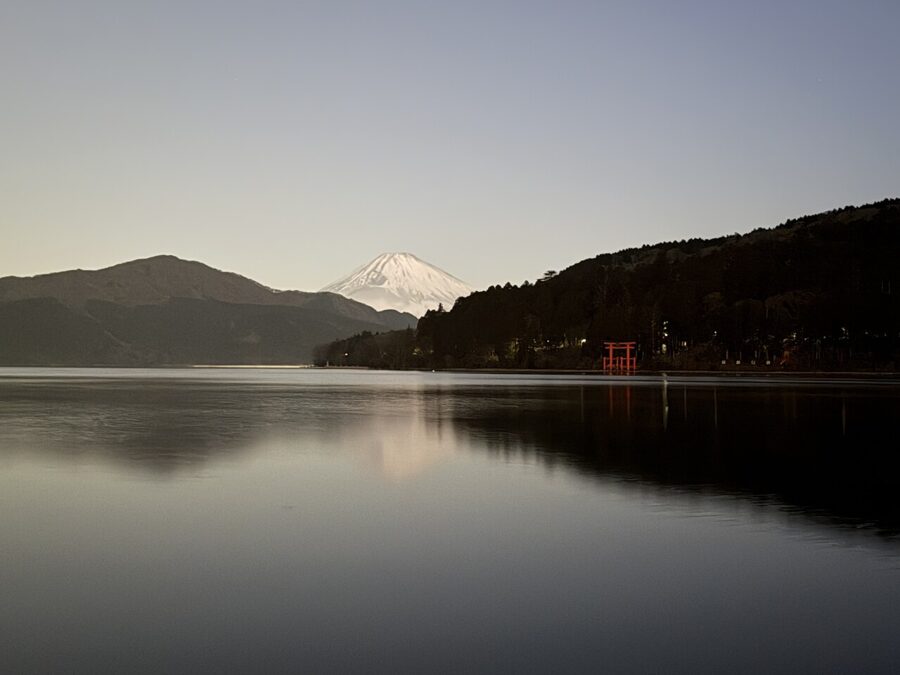
- Hakone Shrine and the torii in the lake
- Which museum should I choose?
- Onsen and ryokan: day baths, tattoos and private baths
- Can I send my luggage ahead?
- Can I see Mount Fuji from Hakone?
- One day or two?
The Romancecar pulls out of Shinjuku, and about 80 minutes later you step off at Hakone-Yumoto. From there one pass covers a mountain railway, a cable car, a ropeway over a steaming volcanic valley and a pirate ship on a crater lake, with a bus to bring you back. That circuit is what most people come for, and it is worth doing once.
Hakone is famous for hot springs, Fuji views across Lake Ashi and that loop. Below are the questions people ask most about it, answered with fares and rules as of November 2026.
Is Hakone worth it, or is it a tourist trap?
It is worth it, with a caveat: the famous loop is the most crowded part. On autumn and holiday weekends there are lines at the cable car, the ropeway and the boat pier, and the bus back down sits in the same traffic as everyone’s car.
The quieter Hakone is the one that made it famous before the pirate ships: hot springs that drew travelers on the old road between Edo and Kyoto, the checkpoint on that road, and a run of serious art museums in the forest. Do the loop early, then spend the rest of your time in a bath or a gallery.
How do I get to Hakone from Tokyo?
The Romancecar from Shinjuku if you have a Hakone Freepass, the Shinkansen from Tokyo Station if you have a JR Pass, and the highway bus if you want to start at the lake end. Adult one-way fares, as of November 2026:
| Route | Time | Fare | Arrives at |
|---|---|---|---|
| Odakyu Romancecar, Shinjuku | About 80 min | ¥2,470 (about US$16), fare plus limited express fee | Hakone-Yumoto |
| Odakyu ordinary trains, Shinjuku | About 2 hours, change at Odawara | ¥1,270 (about US$8) | Hakone-Yumoto |
| Kodama Shinkansen, Tokyo Station | About 35 min, then 15 min on the Tozan Line | ¥3,280 (about US$22) unreserved, plus ¥360 | Odawara |
| Odakyu Highway Bus, Busta Shinjuku | About 2 h 25 min | ¥2,560 (about US$17) | Togendai, Lake Ashi |
The Romancecar from Shinjuku
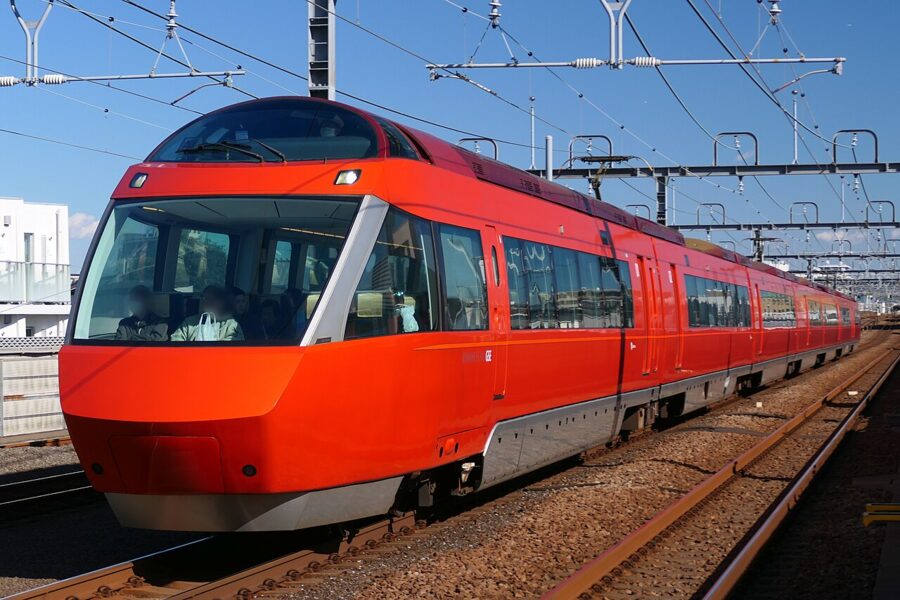
The Odakyu Romancecar runs from Shinjuku to Hakone-Yumoto in about 80 minutes, and every seat is reserved. You pay the ¥1,270 fare (or use the Freepass) plus a ¥1,200 (about US$8) limited express fee, ¥50 less if you buy the e-ticket online through Odakyu’s EMot site.
Tickets go on sale at 10:00 a.m. Japan time one month before departure. The March 2026 timetable has about 16 departures toward Hakone on weekdays and 24 on weekends, and weekend mornings sell out first. If it is full, an Odakyu rapid express to Odawara and the Tozan Line from there costs the same fare and takes about two hours.
The Shinkansen to Odawara
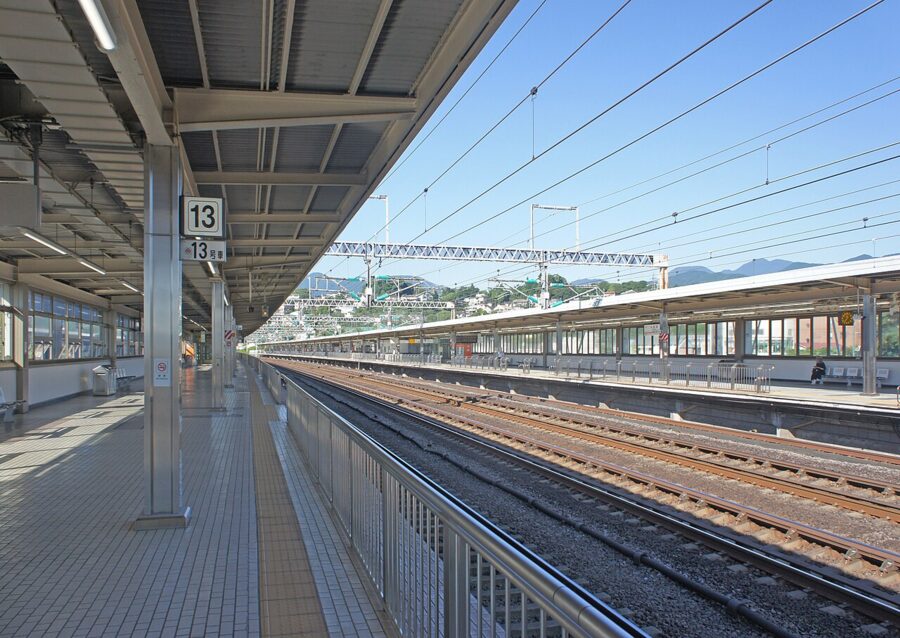
From Tokyo Station a Kodama reaches Odawara in about 35 minutes for ¥3,280 in an unreserved seat. From Odawara the Hakone Tozan Line runs to Hakone-Yumoto in about 15 minutes for ¥360 (about US$2). This is the route for JR Pass holders, since the pass covers the Kodama and the Hikari but nothing past Odawara; see getting around Japan for how the pass fits the rest of a trip.
The highway bus from Busta Shinjuku
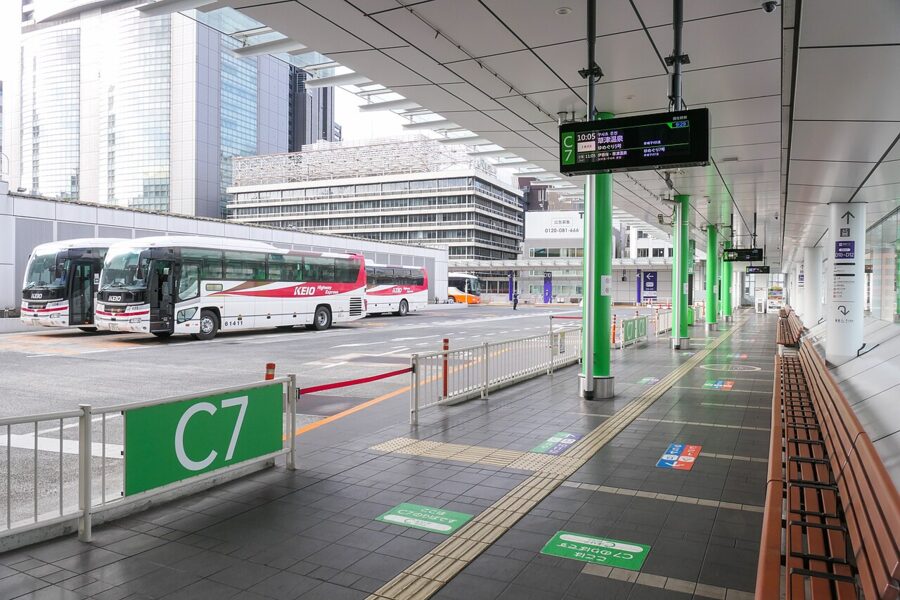
Odakyu Highway Bus runs from Busta Shinjuku, above Shinjuku’s south exit, to Sengoku, Togendai and the Lake Ashi hotels. It drops you at the lake end of the loop, which suits anyone doing the circuit in reverse. The catch is the Tomei Expressway: weekend traffic is routine, and renewal works there run until December 18, 2026.
Is the Hakone Freepass worth it?
Yes, if you do the loop. The Hakone Freepass from Shinjuku costs ¥7,100 (about US$47) for two days or ¥7,500 (about US$50) for three. The version from Odawara costs ¥6,000 (about US$40) or ¥6,400 (about US$43). Prices rose ¥1,000 on October 1, 2025, along with the ropeway and boat fares, so older guides are out of date.
The pass covers the Odakyu Line (one round trip, Shinjuku version only), the Hakone Tozan train, cable car, ropeway, sightseeing boats, Hakone Tozan buses, and Odakyu Highway Bus and Tokai Bus within the Hakone area. It also brings small discounts at around 70 museums, baths and restaurants. Here is one full loop from Shinjuku, paying each fare separately:
| Leg | Single fare |
|---|---|
| Shinjuku to Hakone-Yumoto (no Romancecar) | ¥1,270 |
| Hakone-Yumoto to Gora (Tozan train) | ¥460 (about US$3) |
| Gora to Sounzan (cable car) | ¥430 (about US$3) |
| Sounzan to Togendai (ropeway) | ¥2,000 (about US$13) |
| Togendai to Moto-Hakone (boat) | ¥1,700 (about US$11) |
| Moto-Hakone to Hakone-Yumoto (bus) | ¥1,210 (about US$8) |
| Hakone-Yumoto to Shinjuku | ¥1,270 |
| Total | ¥8,340 (about US$56) |
Against ¥7,100, one loop saves ¥1,240, and every extra bus ride widens the gap. From Odawara the same loop costs ¥6,520 against ¥6,000 for the pass: it still wins, just barely.
What does the Freepass not cover?
The Romancecar fee: ¥1,200 each way from Shinjuku, or ¥200 from Odawara if seats are left on the day. It does not cover the Izu-Hakone buses, which share some stops around Lake Ashi, or the Komagatake Ropeway at Hakone-en. The pass is sold as a paper ticket at Odakyu machines and service centers, or as a QR code on your phone through EMot.
The Hakone loop, leg by leg
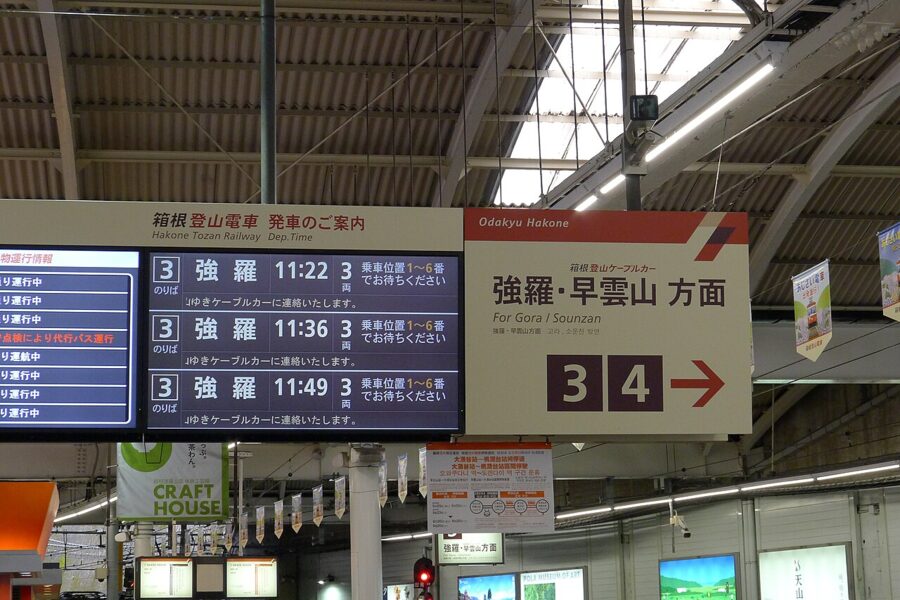
The classic order is counterclockwise: train to Gora, cable car to Sounzan, ropeway over Owakudani to Togendai, boat across Lake Ashi, bus back down. Allow five hours with stops, and start by 9:00 a.m. if you can.
Doing it in reverse, bus first, dodges the morning ropeway rush. Watch the clock, though: the ropeway runs 9:00 a.m. to 5:00 p.m. between February and November, and only until 4:15 p.m. in December and January.
Leg 1: Hakone Tozan train to Gora
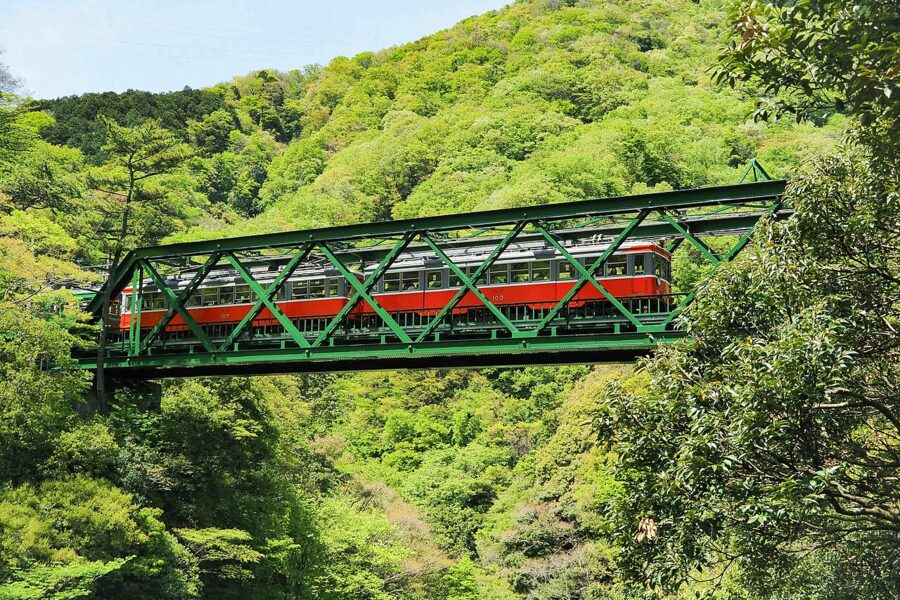
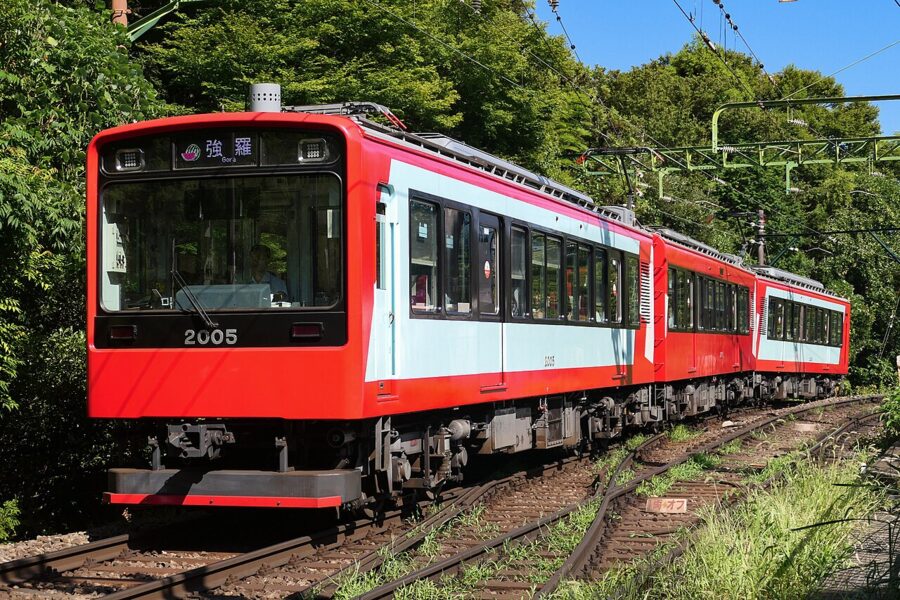
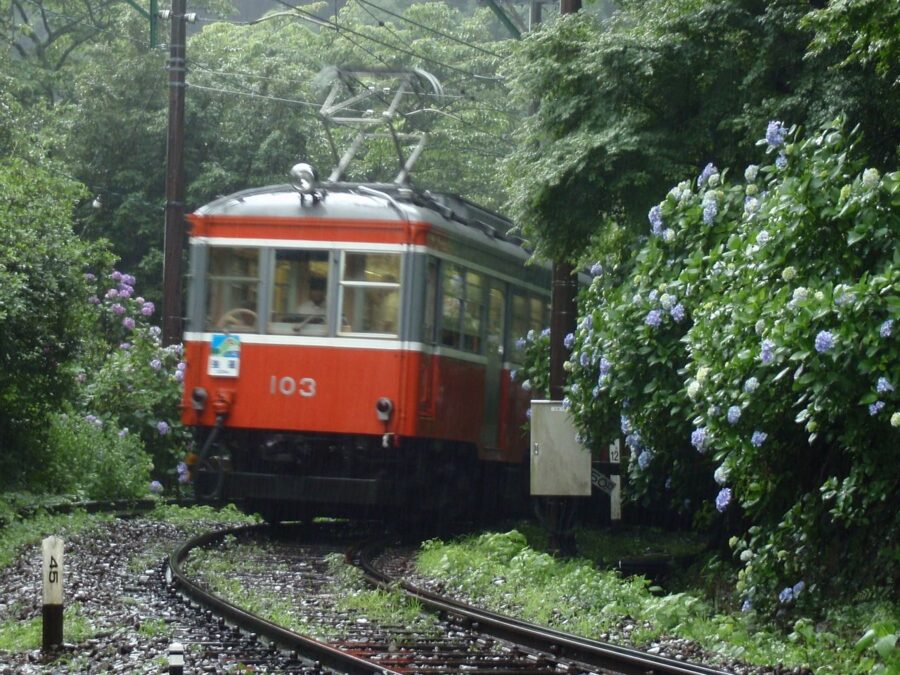
The Hakone Tozan Railway climbs 8.9 kilometers from Hakone-Yumoto to Gora in about 40 minutes. It opened in 1919 and runs on gradients of up to 80 per mille, the steepest on any adhesion railway in Japan. To gain height in the narrow valley the train reverses three times, at Deyama, Ohiradai and Kami-Ohiradai, and the driver and conductor swap ends each time.
Leg 2: cable car to Sounzan
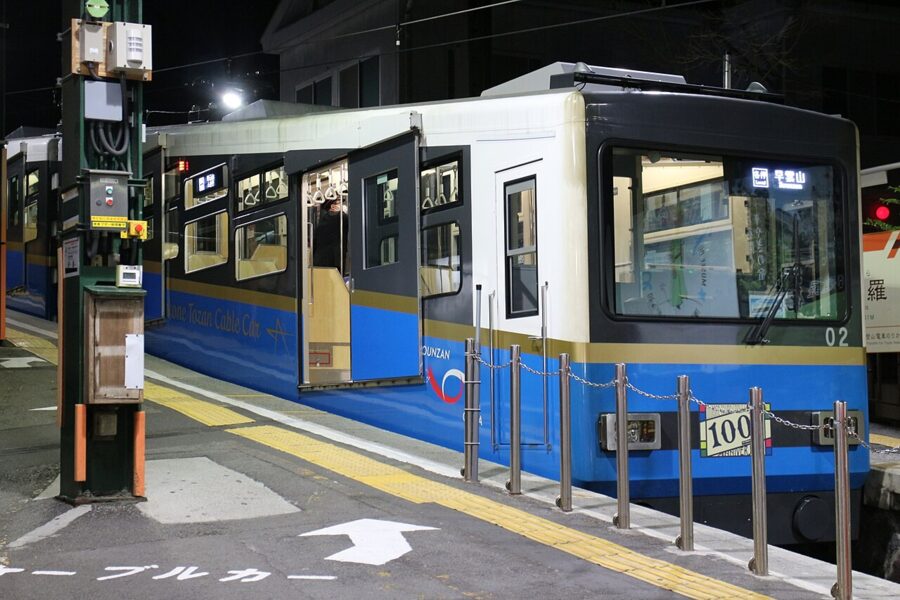
At Gora you cross the platform to the Hakone Tozan Cable Car, which climbs to Sounzan in about 10 minutes. On busy days this is the first queue; let a full car go rather than standing in the aisle.
Leg 3: Hakone Ropeway over Owakudani
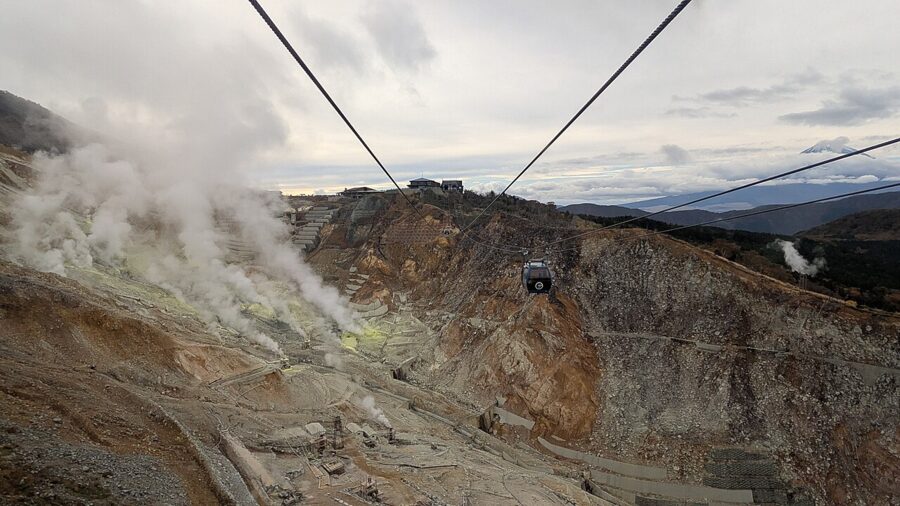
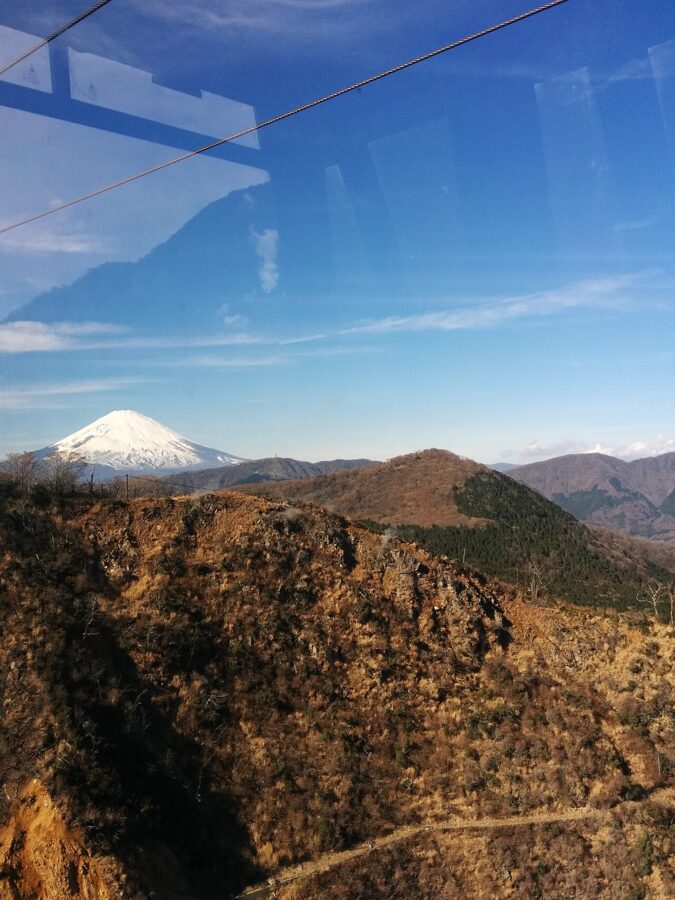
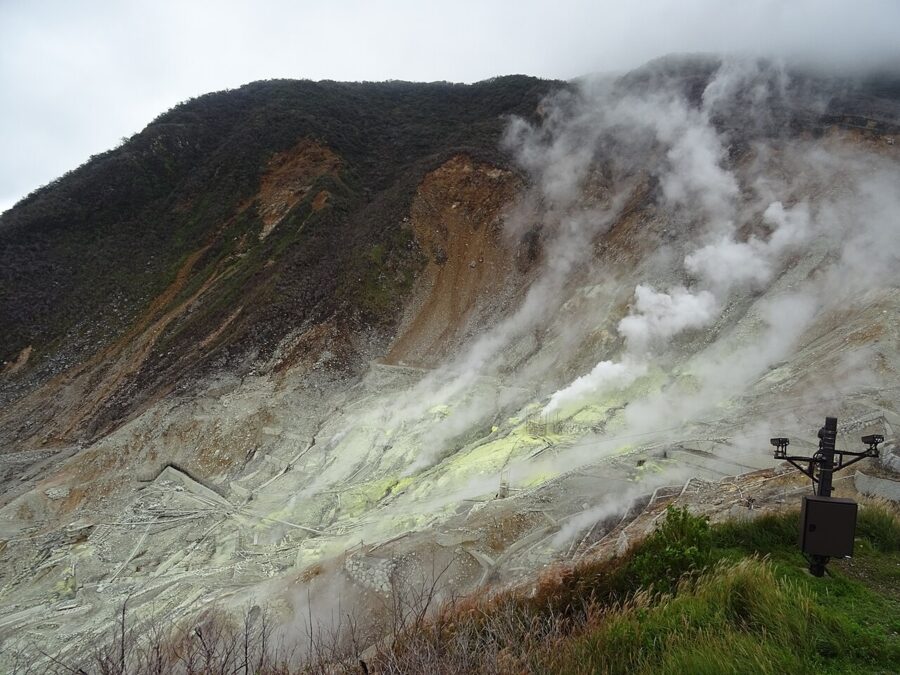
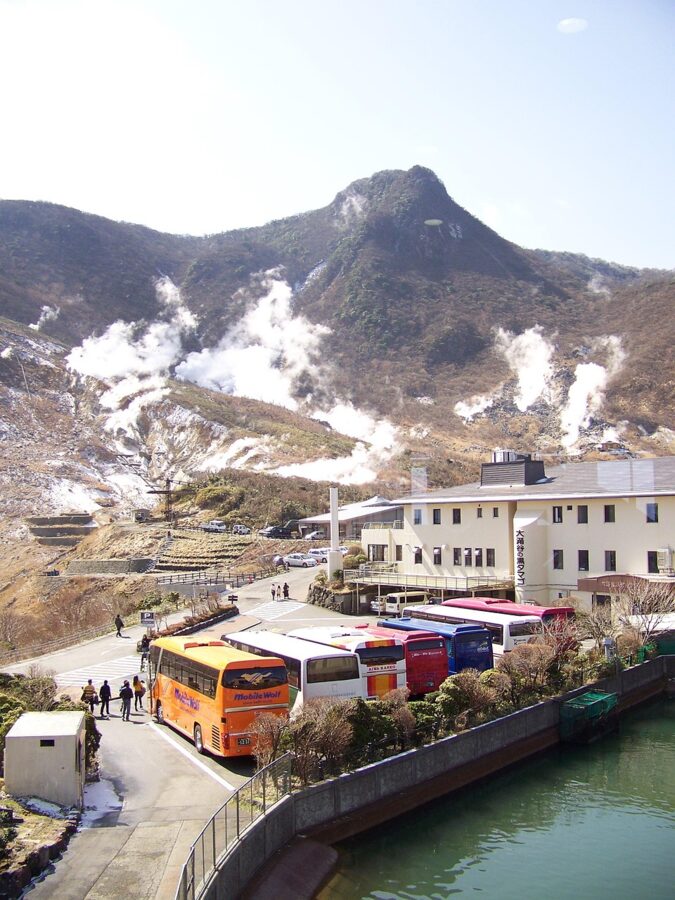
From Sounzan the Hakone Ropeway runs about four kilometers to Togendai, stopping at Owakudani and Ubako. Gondolas for 18 people leave roughly every minute. Between Sounzan and Owakudani you cross the valley about 130 meters above the vents, and toward Togendai you have Fuji and the lake ahead.
Two maintenance closures matter this winter. From December 7 to 24, 2026, buses replace the Owakudani to Sounzan section, and from January 12 to February 26, 2027, the Togendai to Owakudani section. The replacement bus notice says the Freepass is valid on them, but expect crowds.
Leg 4: the pirate ship across Lake Ashi
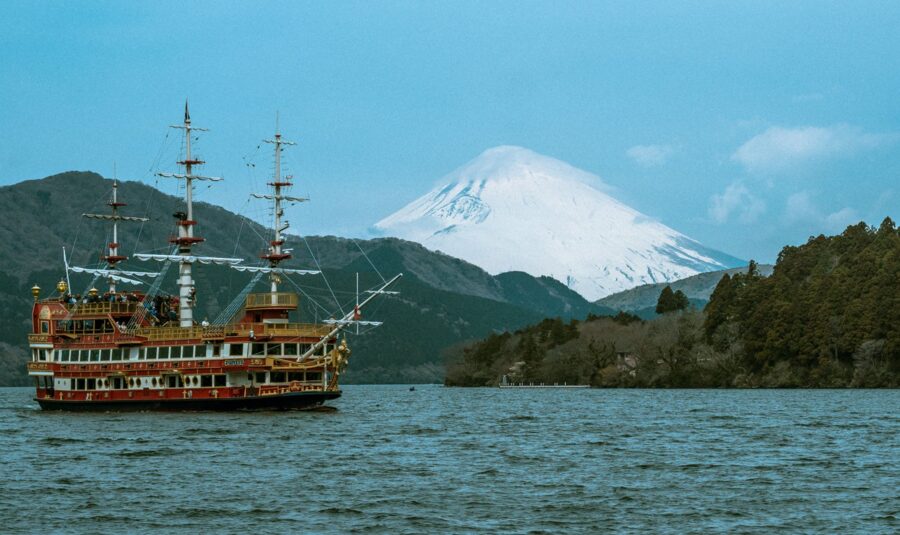
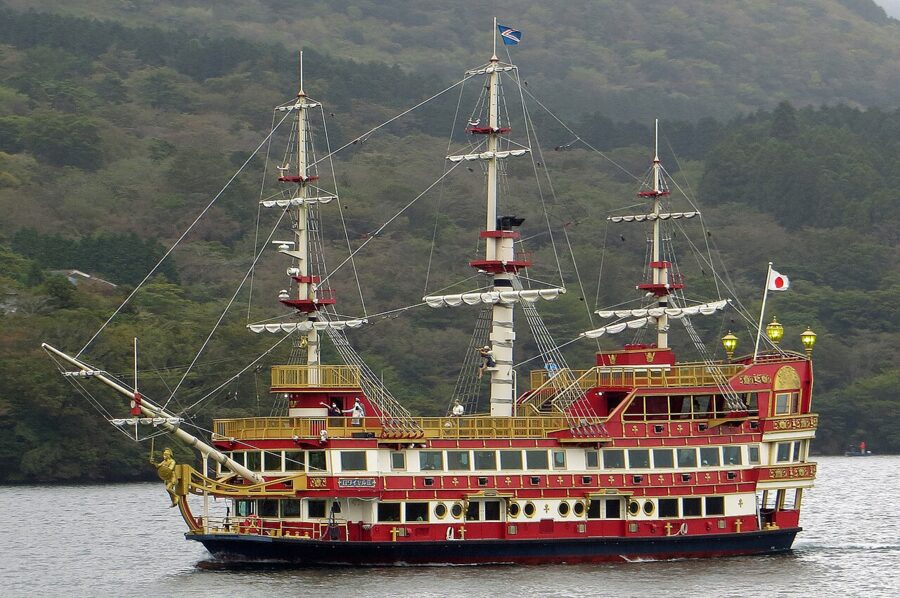
At Togendai the Hakone Sightseeing Cruise ships cross to Hakone-machi and Moto-Hakone in 25 to 40 minutes. First class adds ¥800 (about US$5), worth it only on a cold or wet day. In good weather the open decks are better.
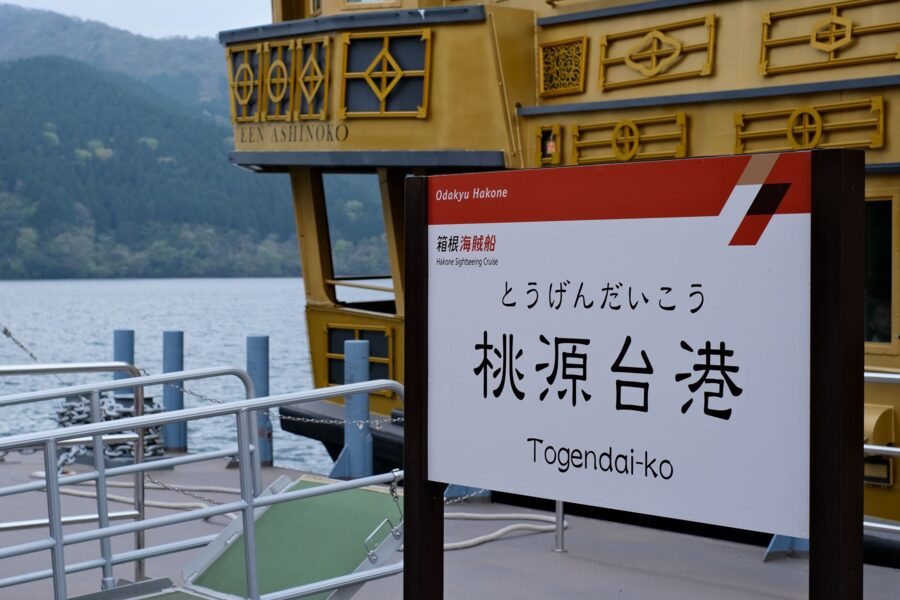
Leg 5: the bus back to Hakone-Yumoto
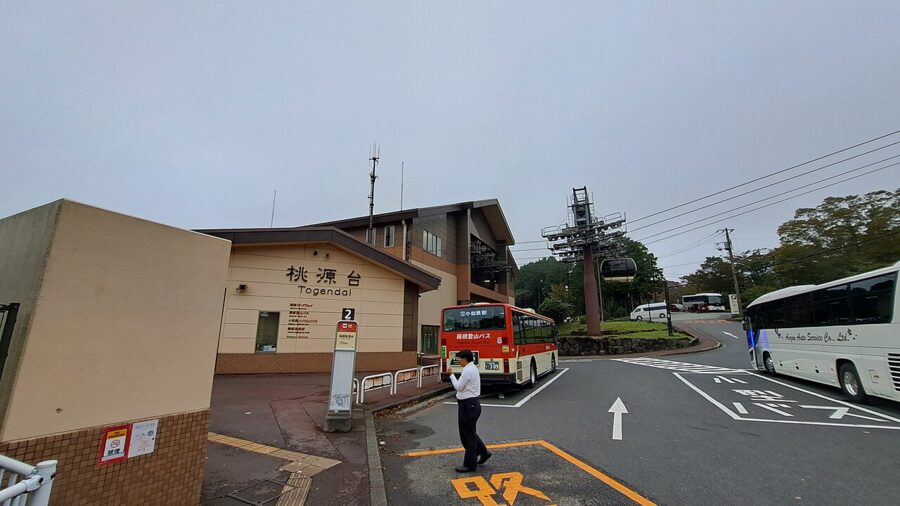
From Moto-Hakone, Hakone Tozan buses run down to Hakone-Yumoto Station; the shrine’s access page gives about an hour, and the fare rose with the October 2025 bus fare revision. On weekend afternoons this is where the day goes wrong. If the road is jammed, get off near Kowakudani Station and take the Tozan train down instead.
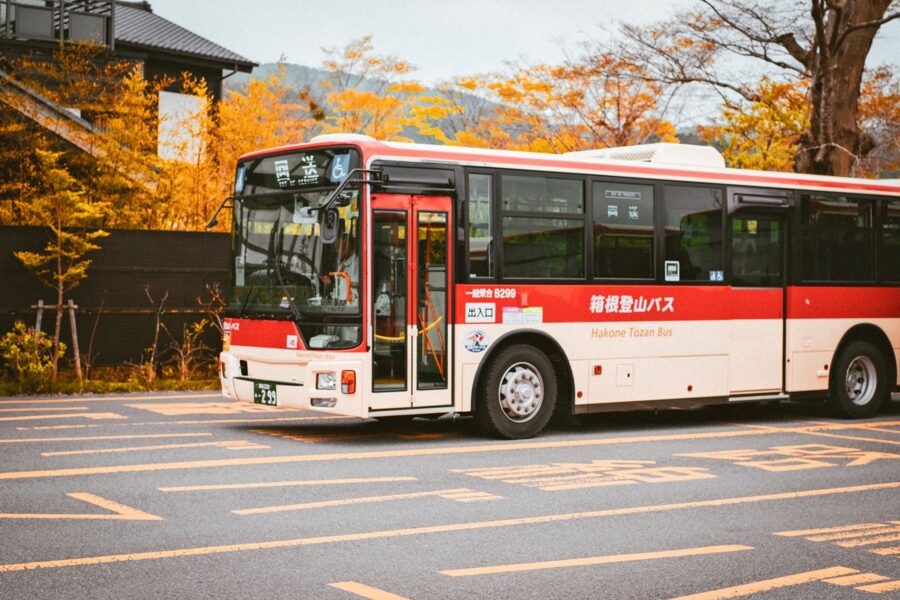
Owakudani: eggs, gas and closures
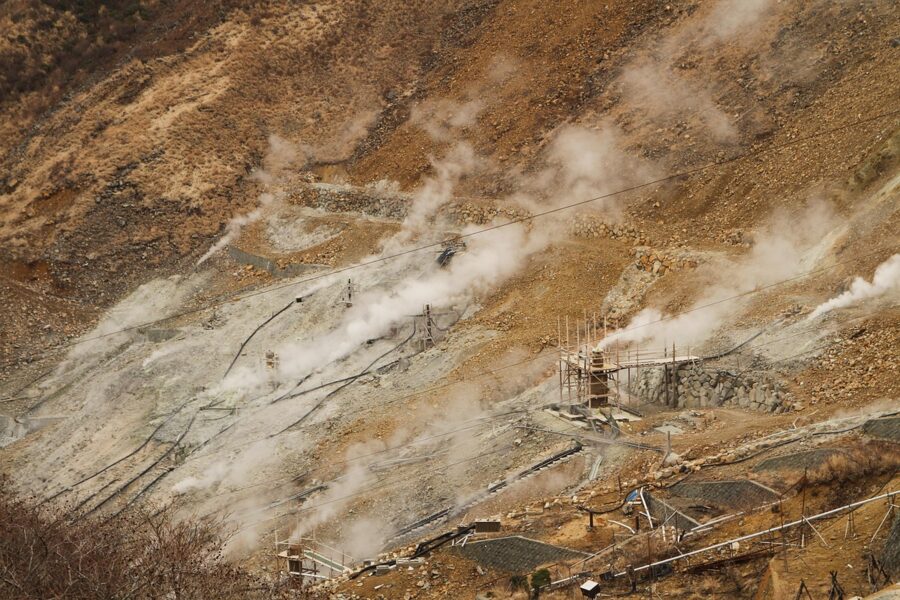
Owakudani is the valley the ropeway crosses, a bare slope of the Hakone volcano where steam still pours out of yellow ground. The ropeway station has the Earth Valley observation deck, opened in April 2025, and the OWAKUDANI KITCHEN restaurant, opened in July 2026. Thirty to 45 minutes here is about right.
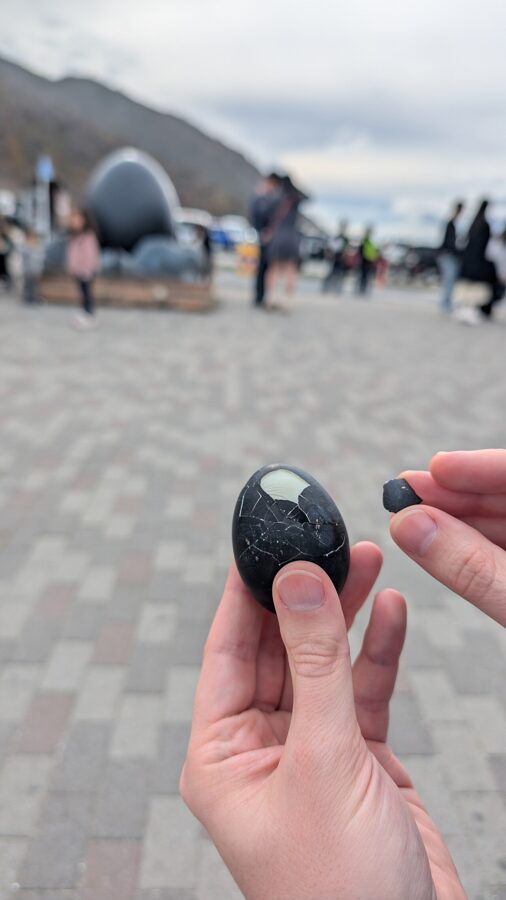
Do the black eggs really add seven years to your life?
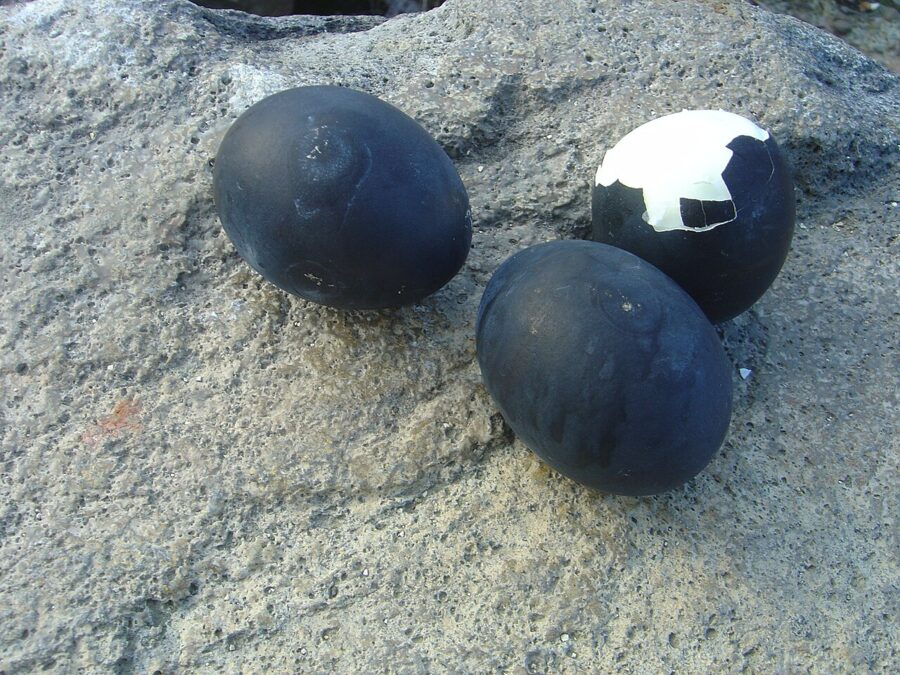
That is the tradition: each kuro-tamago (black egg) adds seven years. The eggs are boiled in the hot spring water, which turns the shells black; inside it is an ordinary hard-boiled egg. The Owakudani Kurotamago-kan sells them at four for ¥500 (about US$3) from 9:00 a.m. to about 4:40 p.m., and they can sell out.
Is Owakudani open right now?
Usually, yes. The Japan Meteorological Agency keeps Hakone volcano at eruption alert Level 1, and its October 2026 report calls it generally calm while warning that the steaming around Owakudani continues. When the level went up in the past, the ropeway and Owakudani closed for long stretches in 2015 and 2016 and again in 2019.
Gas closes it more often than the volcano does. The ropeway suspends service when its gas readings rise, whatever the alert level, and people with asthma or heart conditions are advised not to visit.
Can I walk down into the valley?
Only on a guided entry. The nature trail, about 700 meters to the edge of the vents, now opens as a led walk: four sessions a day of about 40 minutes, up to 30 people, with helmets. It costs ¥800 per person, cashless only, booked online in advance, and bad weather or gas cancels it.
Hakone Shrine and the torii in the lake
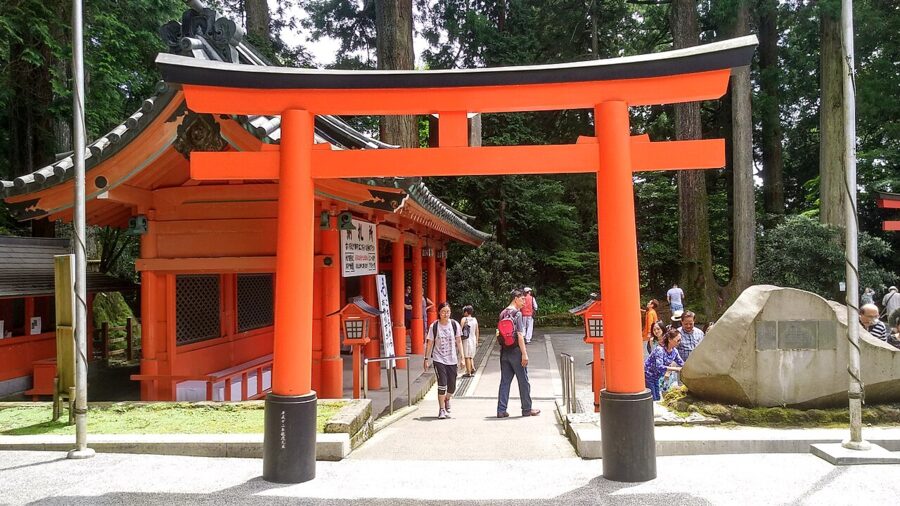
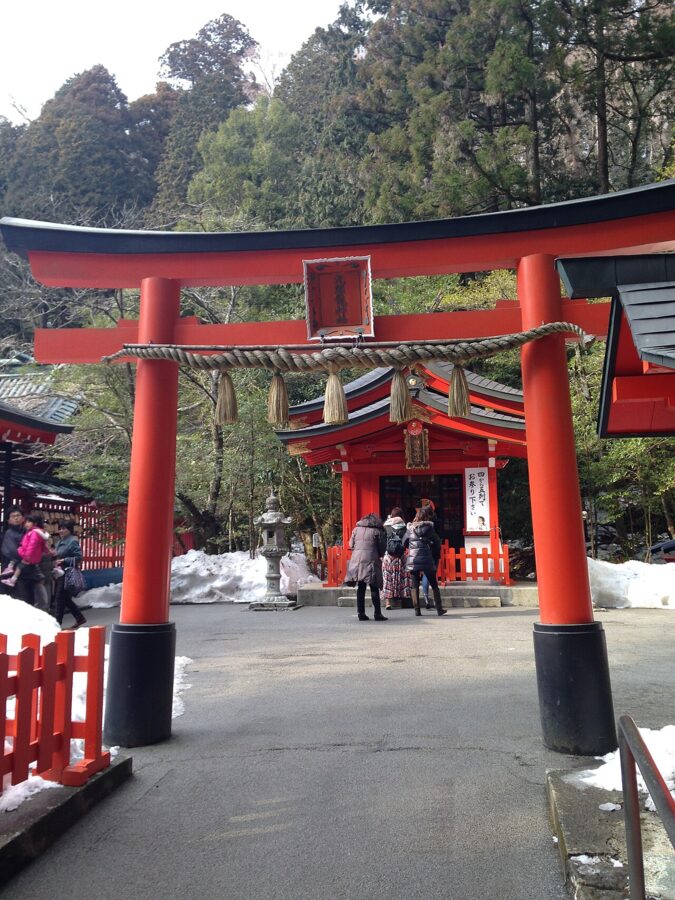
Hakone Shrine stands in the cedar forest on the west shore of Lake Ashi, about 10 minutes on foot from Moto-Hakone port, and entry is free. The main approach is about 90 stone steps; a side path has no steps, and wheelchair users can take the elevator from the treasure hall.
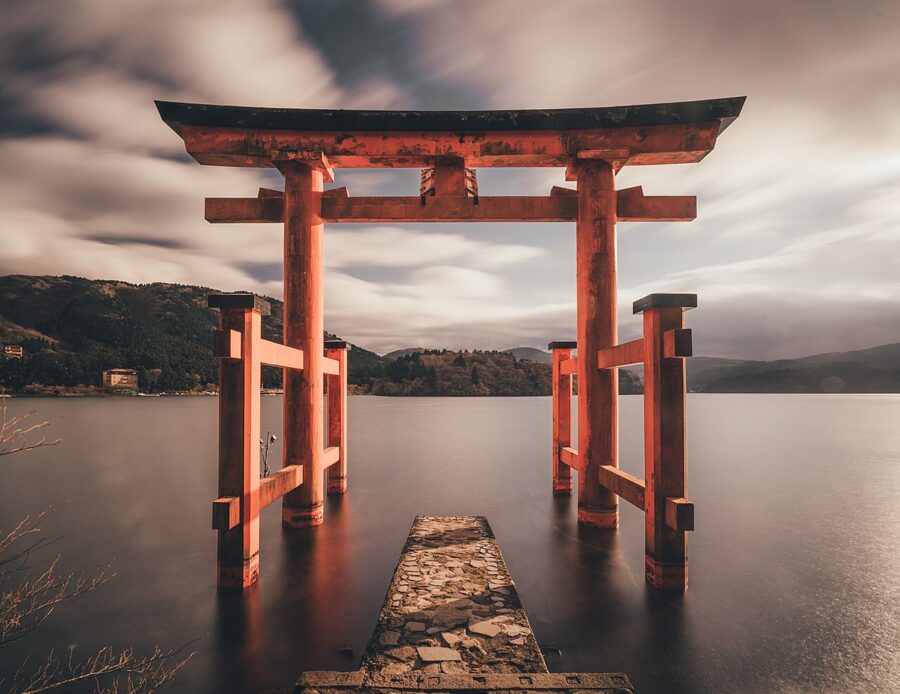
The photo everyone queues for is the Heiwa no Torii (Torii of Peace), standing in the shallows. On weekends the line to stand under it can be long. Go before 9:00 a.m. or late in the afternoon, or shoot it from the shore to one side, where it looks better with the lake around it anyway.
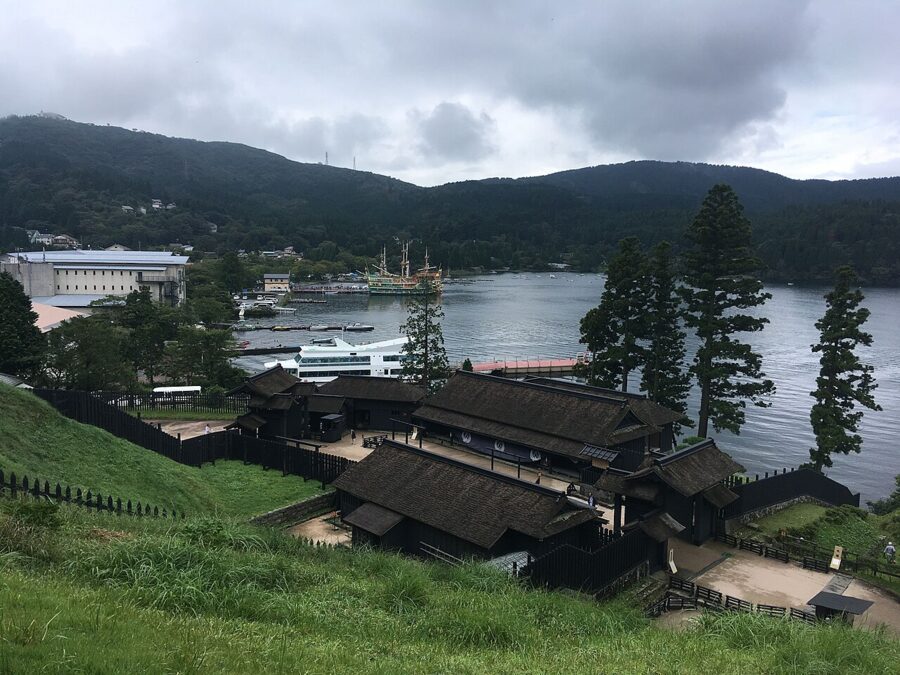
The amulet and goshuin (shrine stamp) office is open from 8:15 a.m. to 5:00 p.m., per the shrine’s site. Next to the main hall is the Kuzuryu Shrine, known for prayers for a good match. A lakeside walk of about half an hour leads south to the reconstructed Hakone Checkpoint, where the shogunate inspected travelers on the Tokaido.
Which museum should I choose?
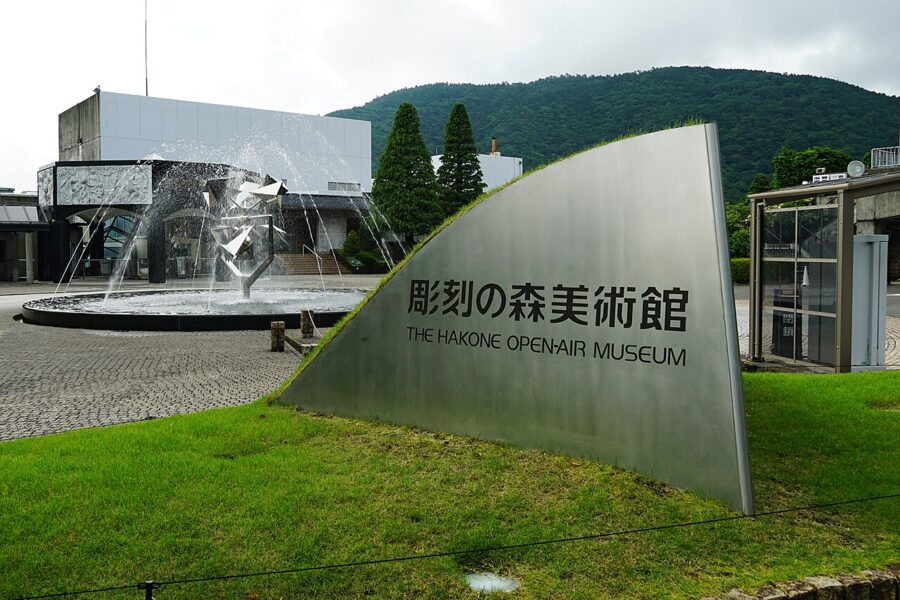
The Hakone Open-Air Museum, if you see only one. It is two minutes on foot from Chokoku-no-Mori Station, one stop before Gora. It opens 9:00 a.m. to 5:00 p.m. daily, last entry 4:30. Adult entry is ¥2,000 (about US$13) at the door or ¥1,800 online.
Sculptures stand on the lawns, the Picasso Pavilion holds a permanent collection, and there is a spring-water footbath. Allow two hours.
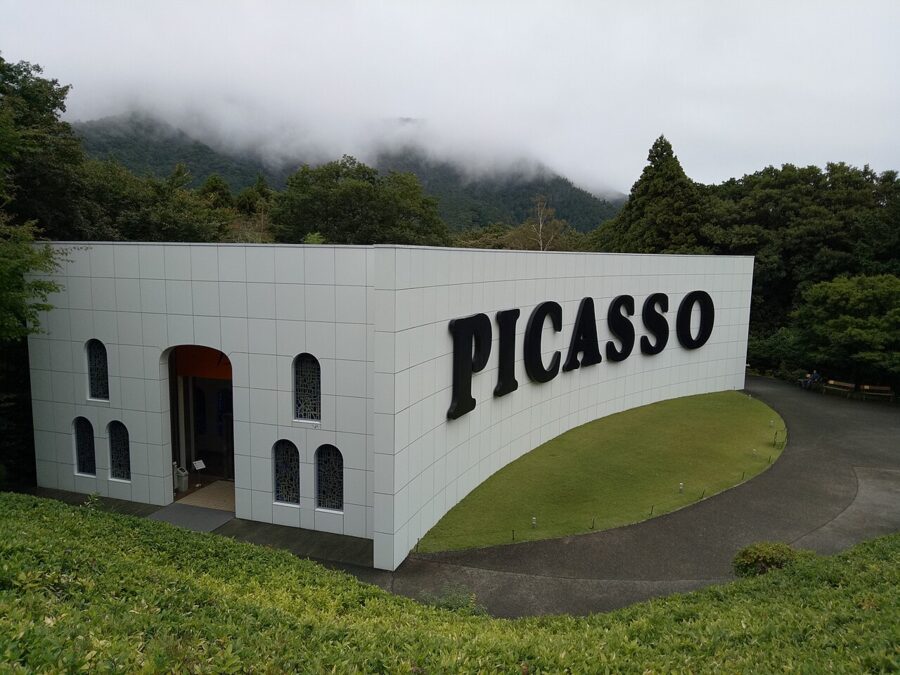
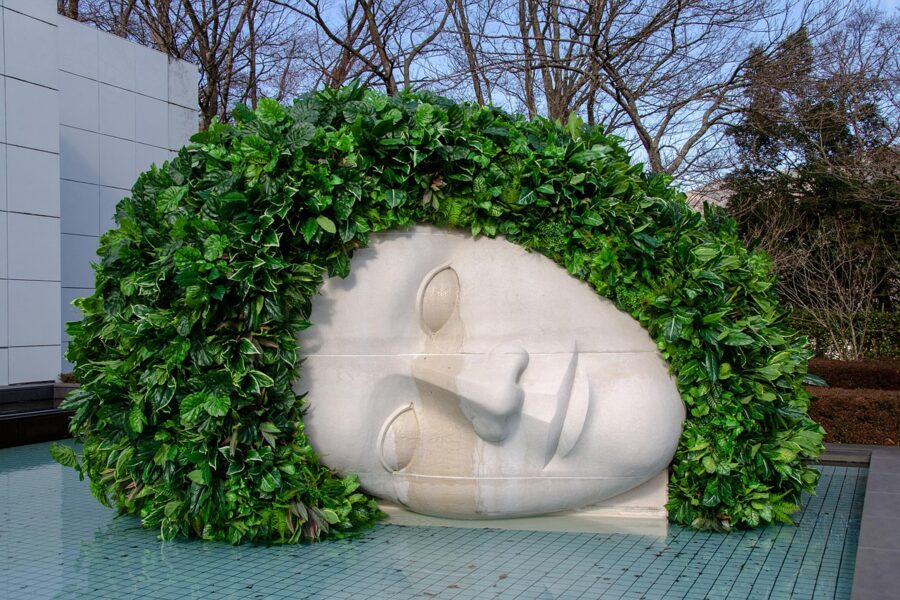
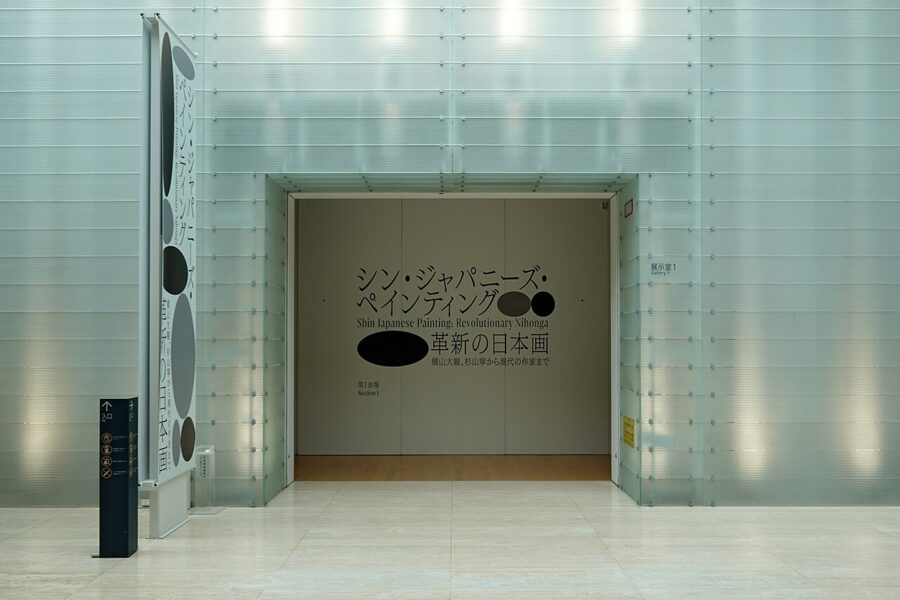
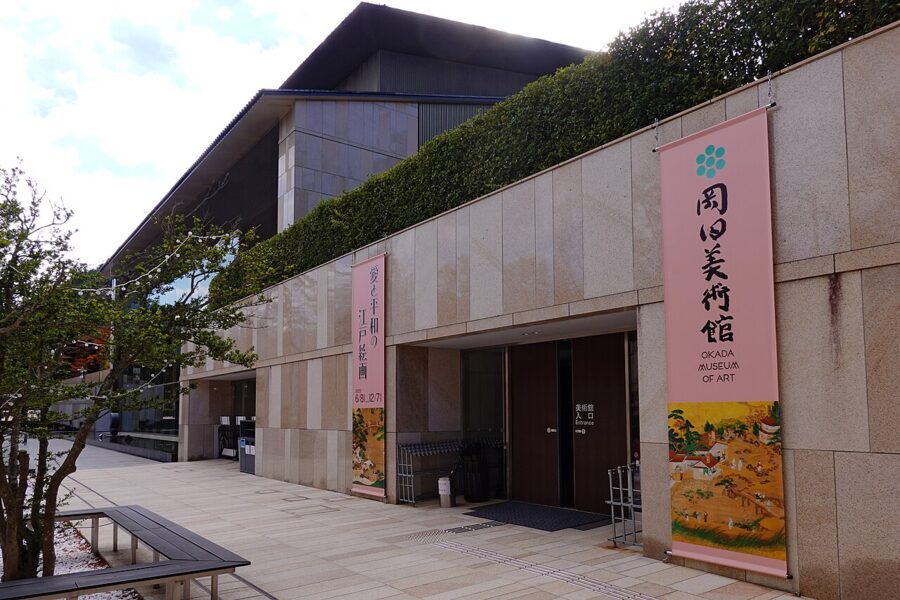
The Pola Museum of Art in Sengokuhara is the one for Impressionism; its exhibition marking 100 years since Monet’s death runs until April 7, 2027. The Okada Museum of Art in Kowakudani shows Japanese, Chinese and Korean art, opens 9:00 a.m. to 5:00 p.m., and has a footbath café out front. Both suit a slow second day.
Onsen and ryokan: day baths, tattoos and private baths
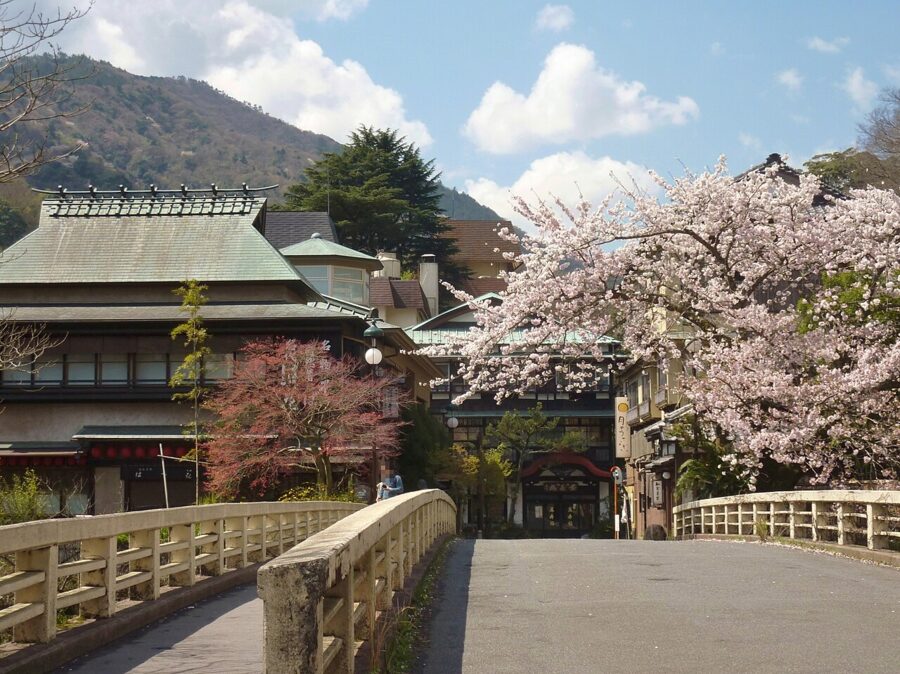
Hakone’s hot springs are scattered through villages from Yumoto at the bottom of the valley to Sengokuhara on the plateau. You do not need to stay overnight: a day bath, higaeri onsen, costs about the same as a museum ticket.
Where can I take a day bath?
Hakone Yuryo is the easy one, three minutes by free shuttle from Hakone-Yumoto Station. The baths cost ¥1,700 to ¥1,800 (about US$11 to US$12) on weekdays and ¥2,000 to ¥2,200 on weekends. It is open from 10:00 a.m. until 8:00 p.m. on weekdays, 9:00 p.m. on weekends, and closed December 1 to 3, 2026.
Tenzan Tohji-kyo, about 10 minutes by bus above Yumoto, is the one I would choose: outdoor baths among the trees and no entertainment. It is cash only, takes no reservations, turns away groups of more than six adults, and closes December 7 to 11, 2026.
Can I bathe in Hakone with tattoos?
Sometimes. Hakone Yuryo has lifted its tattoo restriction. Tenzan admits a tattooed bather who comes alone and covers up in the common areas, but not two or more together. Hakone Kowakien Yunessun refuses tattoos in principle, except under a rash guard in its swimsuit area, or in its Mori-no-Yu bath if two of its paid cover stickers hide them completely.
Private baths
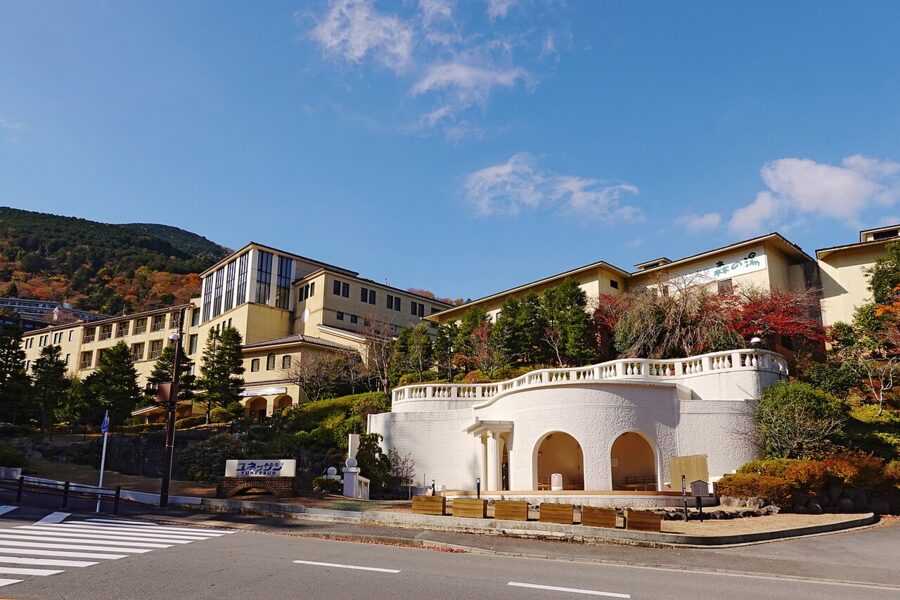
For anything larger than a stamp, book a kashikiri (private) bath. Hakone Yuryo has 19; two hours for up to two people starts at ¥10,400 (about US$69) on weekdays, bookable online from a month ahead. A ryokan room with its own open-air bath, kyakushitsu rotenburo, settles the question entirely.
Ryokan or hotel?
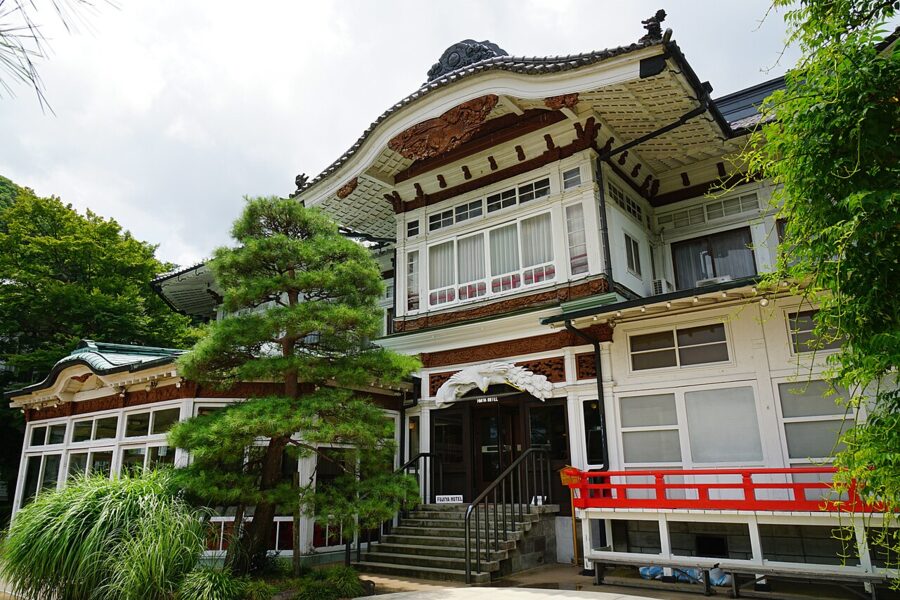
A ryokan, for one night. Dinner is a long set meal served in the early evening, so check in by mid-afternoon. Gora and Miyanoshita are the best bases for the loop, Yumoto for a late arrival, and the lake shore for Fuji at sunrise. For a Western hotel with history, the Fujiya Hotel in Miyanoshita opened on July 15, 1878, seven minutes on foot from Miyanoshita Station.
Can I send my luggage ahead?
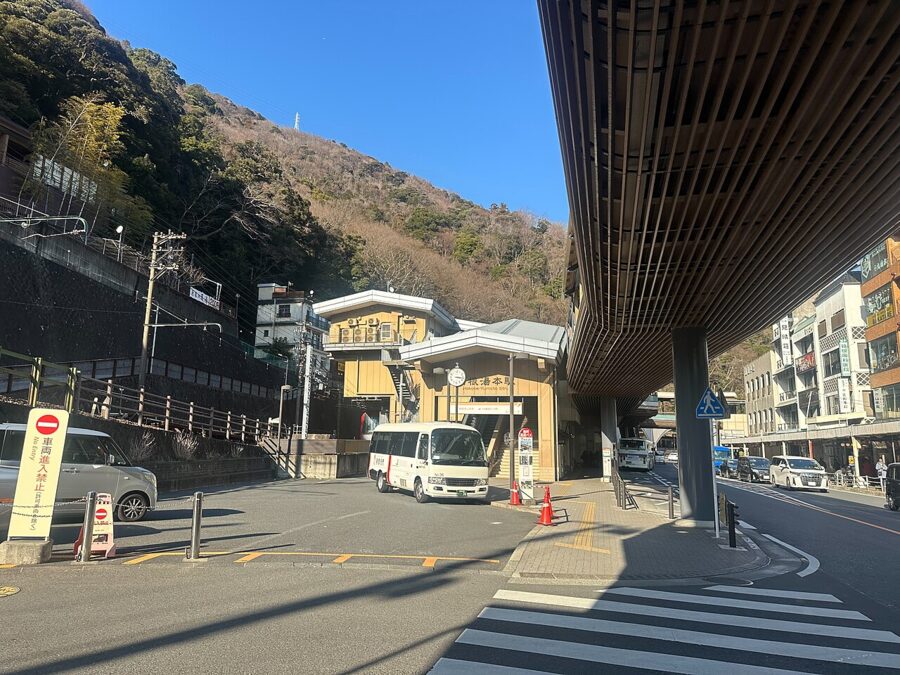
Yes, and you should, because the loop is no place for a suitcase. The Hakone baggage delivery service takes bags at a counter inside Hakone-Yumoto Station from 8:30 a.m. to 12:00 noon and delivers them to your hotel for pickup after 3:00 p.m. A regular bag costs ¥1,500 (about US$10) one way and a large one ¥2,500 (about US$17).
On the way back, leave your bags at the front desk by 10:00 a.m. and collect them at the station between 1:30 and 6:30 p.m. Only partner hotels are covered, so check the list first.
Can I see Mount Fuji from Hakone?
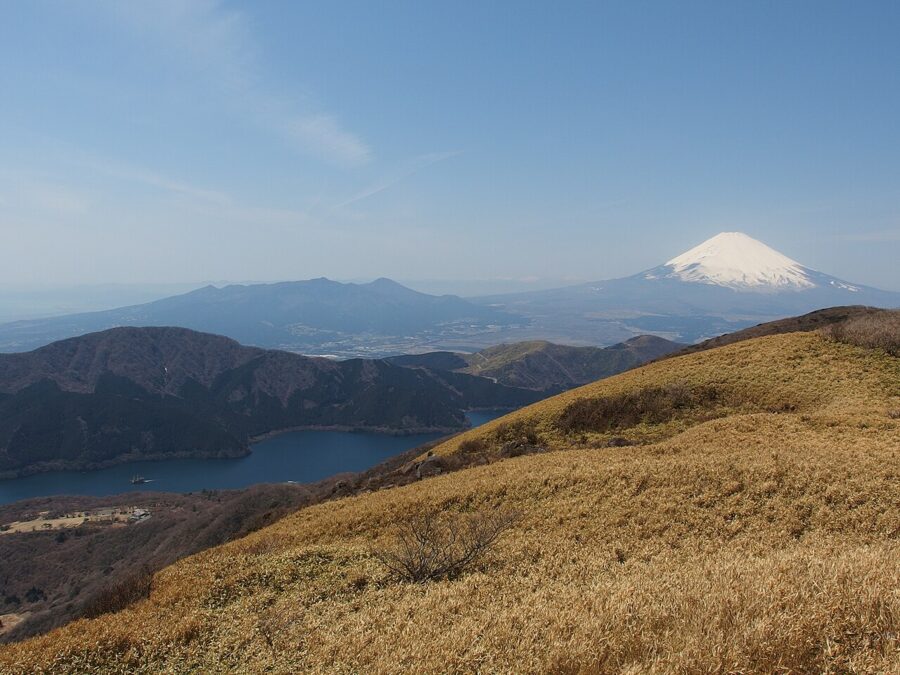
Yes, on clear days. Winter mornings are the best chance; in the humid summer months the mountain spends most days in haze and clouds over as the day warms up.
The best spots are the ropeway toward Togendai, the lake shore around Moto-Hakone, and the top of Mount Komagatake. The Komagatake Ropeway from Hakone-en runs every 20 minutes from 9:00 a.m., last car up at 4:30 p.m., for ¥2,200 (about US$15) return. Climbing it and the Five Lakes below it are a separate trip: Mount Fuji.
One day or two?
Two if you can. One day covers the loop and nothing else: leave Shinjuku by 8:00 a.m., and you will be back at Hakone-Yumoto around 4:00 or 5:00 p.m. with no time for a bath.
With two, do the loop on the first day and sleep in Gora or Miyanoshita. On the second, see the Open-Air Museum when it opens, take a day bath, and catch an afternoon Romancecar home. That second day of buses and trains is where the two-day Freepass pays for itself.
So: yes, do the loop, but do it early, and spend the time you save in a bath. Book your Romancecar seat the day sales open and send your bag from Hakone-Yumoto before noon. Everything else can wait until you are there.