Questions on this page16
- How do I get to Shirakawa-gō without a car?
- Can I drive to Shirakawa-gō, and where do I park?
- Why do the gasshō-zukuri houses look like that?
- Which houses can I go inside?
- Where is the viewpoint, and is the shuttle worth it?
- Can I stay overnight in a farmhouse?
- How does the winter light-up work?
- Is Gokayama a quieter alternative?
- What are the rules in a village where people still live?
The first bus from Takayama leaves at 7:20 and reaches Shirakawa-gō at 8:10, more than an hour before anything from Kanazawa or Nagoya gets in. Take it, and you walk into the village while the lanes are still mostly empty. The traffic jams on the approach road usually start around ten.
Shirakawa-gō has no train station, so everyone arrives by highway bus or by car, and both work better early. Here are the buses and how booking works from December 1, 2026, then parking, the houses you can enter, the viewpoint, farmhouse stays, the winter light-up and the quieter villages of Gokayama.
A few answers first. The national Japan Rail Pass does not cover any bus here. There is no entry fee; drivers pay for parking, bus passengers pay nothing. Sightseeing hours are 8:00 to 17:00, and after that the lanes belong to residents and overnight guests.
How do I get to Shirakawa-gō without a car?
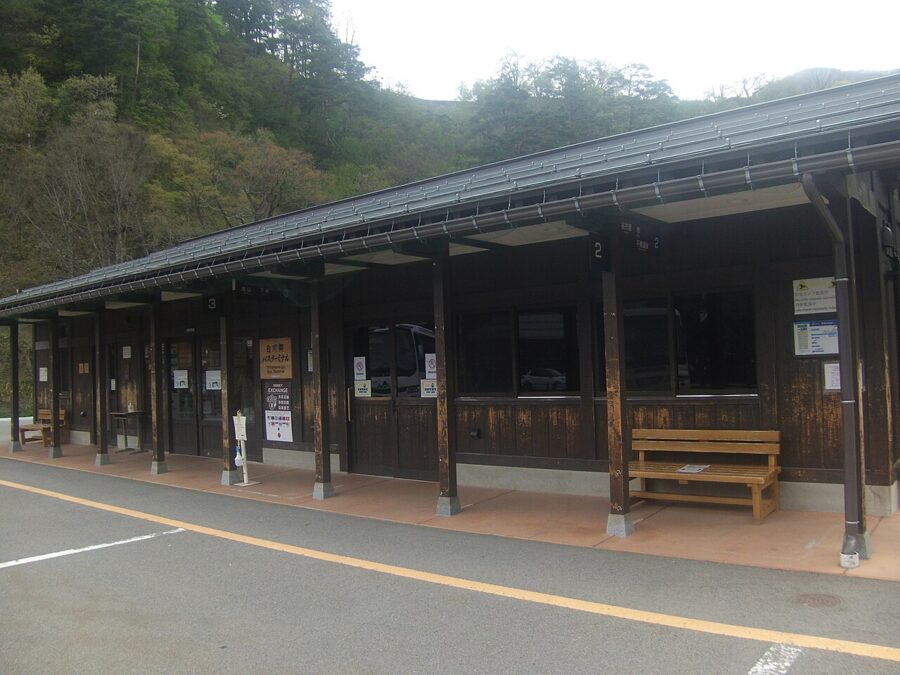
By highway bus, to the Shirakawa-go Bus Terminal at the edge of Ogimachi. Buses come from Takayama, Kanazawa, Toyama, Takaoka and Nagoya, and all of them stop at this terminal, a minute’s walk from the first thatched houses. It has a waiting room, toilets, a tourist desk and coin lockers.
Highway buses are the cheap way of getting around Japan, and here they are the only public transport. These fares apply from December 1, 2026.
| From | Time | One-way adult fare | Booking |
|---|---|---|---|
| Takayama Nohi Bus Center | About 50 minutes | ¥2,900 (about US$19) | Most runs reserved |
| Kanazawa Station West Exit | About 1 hour 15 minutes | ¥2,800 to ¥2,900 (about US$18 to US$19) | Reserved |
| Toyama Station | About 1 hour 20 minutes | ¥2,400 (about US$15) | Reserved |
| Takaoka and Shin-Takaoka | About 1 hour 40 minutes | ¥2,200 (about US$14) | Reserved highway bus, or the mostly unreserved World Heritage Bus |
| Nagoya, Meitetsu Bus Center | About 2 hours 40 minutes | ¥3,600 to ¥4,700 by date (about US$23 to US$30) | Reserved |
From Takayama
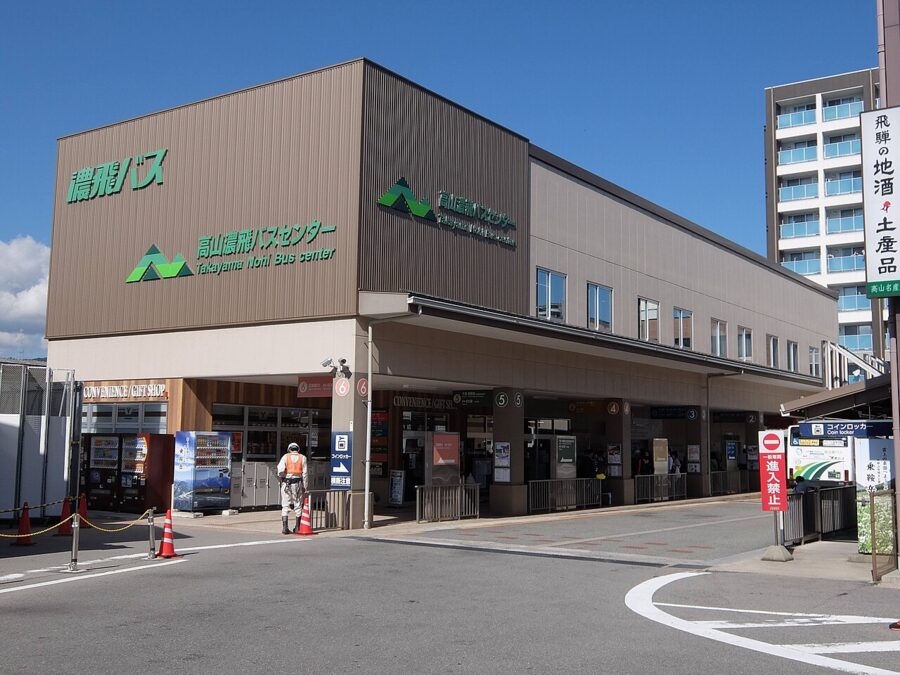
This is the easy one. Nohi Bus and its partners run about twenty buses a day from the Takayama Nohi Bus Center, beside JR Takayama Station, under the timetable that starts on December 1, 2026. The ride takes about 50 minutes and costs ¥2,900, up from ¥2,800. If you are staying in Takayama, this is the day trip I would do first.
Most departures are reserved-seat services; a handful are unreserved and fill first come, first served. Nohi’s Takayama to Shirakawa-go timetable marks which is which. The last buses back leave Shirakawa-gō at 17:25 (reserved) and 17:30 (unreserved), reaching Takayama at 18:15 and 18:35.
From Kanazawa
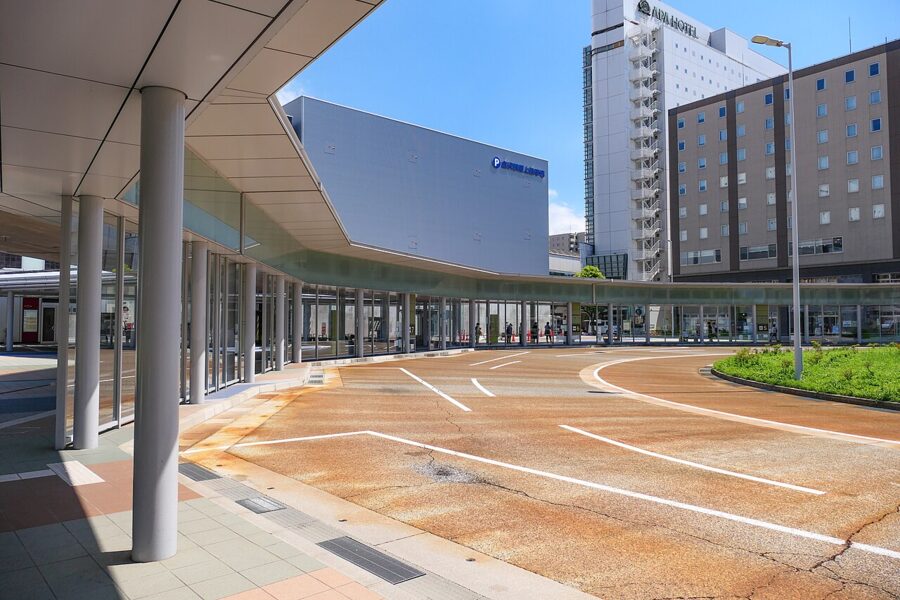
Hokuriku Railway (Hokutetsu) and Nohi Bus share the Kanazawa line, and every seat is reserved. Buses leave from stop 4 at the West Exit of Kanazawa Station, about ten a day under the December timetable. The first, at 8:00, is the Nagoya-bound bus, which reaches Shirakawa-gō at 9:15.
The fare is in transition. Hokutetsu’s Kanazawa line page still shows ¥2,800 (about US$18), while Nohi lists ¥2,900 from December 1, 2026; the booking page shows the fare for your date. The last bus back leaves at 17:55 and reaches Kanazawa at 19:10.
From Toyama, Takaoka and Nagoya
Toyama, on the Hokuriku Shinkansen from Tokyo, has three buses a day each way, leaving Toyama Station at 9:00, 10:10 and 12:00. From Takaoka and Shin-Takaoka, Kaetsuno Bus runs reserved highway buses and also the slower World Heritage Bus through Gokayama.
From Nagoya’s Meitetsu Bus Center, Gifu Bus, Meitetsu and Hokutetsu share the line. The 9:50 and 15:00 departures continue to Kanazawa, and Gifu Bus adds its own, with fares that follow a calendar from ¥3,600 to ¥4,700.
Do I need to book the bus?
Yes, for nearly every run. On weekends and in the autumn color season I would book as soon as your date is fixed. Kanazawa line tickets go on sale one month before the day of travel, Nohi and its partners sell through Japan Bus Online, and an unpaid reservation cancels itself when the payment deadline passes.
On unreserved buses, Nohi adds extra coaches when it is busy and may give you a fold-down seat; if those fill, you wait for the next one. Nohi sells tickets until 15 minutes before departure, but a reserved ticket does not hold your seat if you are not at the stop when the bus leaves.
Is the bus covered by the JR Pass?
No. These are private bus companies, and the nationwide Japan Rail Pass does not cover them. The Takayama-Hokuriku Area Tourist Pass does: ¥19,800 (about US$130) for five consecutive days of JR trains in the region plus the Takayama to Shirakawa-gō to Kanazawa or Toyama buses and the World Heritage Bus.
The catch is that pass holders cannot book reserved buses online, because the website takes immediate payment. You reserve by phone through the Nohi Bus reservation center, then show the pass at the counter before boarding.
Can I drive to Shirakawa-gō, and where do I park?
You can drive here, but not into the village. Cars go to the village-run Seseragi Park car park across the Shō River, and you walk over the 107-meter Deai suspension bridge into Ogimachi. For navigation, the village suggests the Gassho-zukuri Minkaen museum next door as the destination.
Parking is ¥2,000 (about US$13) per car since October 2025, per the tourist association’s access page, and about 30 percent goes to preserving the houses. The car park holds about 200 cars and opens 8:00 to 17:00, last entry 16:30. There is no overnight parking, no sleeping in vans and no towing trailers.
How bad is the traffic?
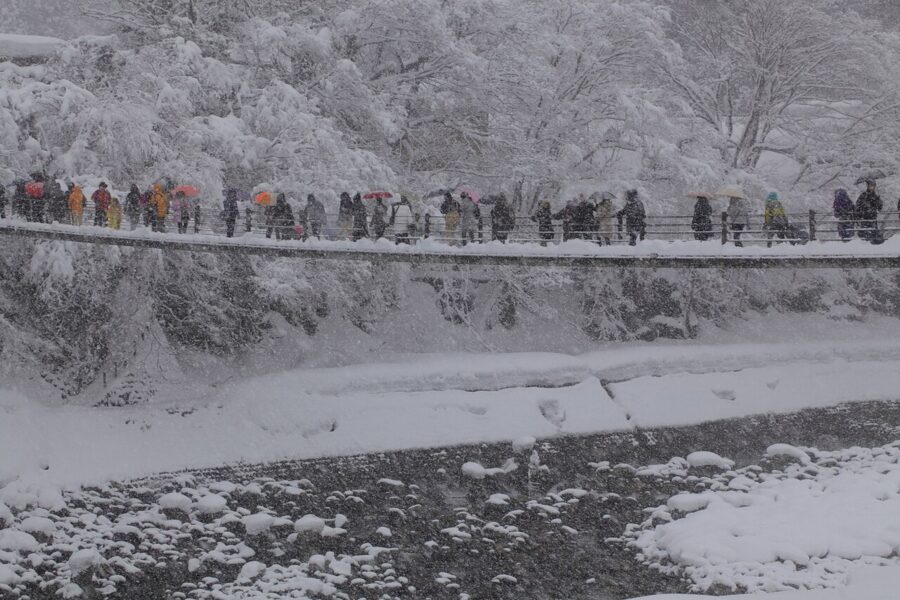
Bad on the wrong day. At Golden Week, the mid-August Obon holiday, the New Year and the autumn colors from late October to early November, the queue for the car park can last over two hours. The village’s SHIRAKAWA-Going site has a three-month congestion forecast and live road cameras. I would park in the 8 o’clock hour and leave after lunch.
Driving in winter
Between early December and late March, come only on studless winter tires, ideally in a four-wheel-drive car; ask for both when you rent. The Hakusan Shirakawa-go White Road from Ishikawa closed on November 11, 2026 until about early June 2027, so in winter you arrive by the Tokai-Hokuriku Expressway or Route 156.
Why do the gasshō-zukuri houses look like that?
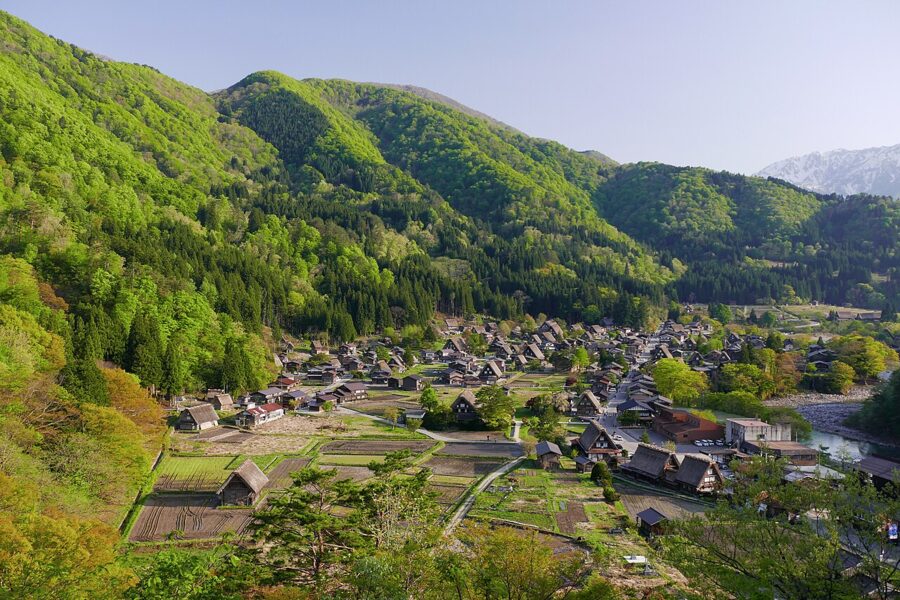
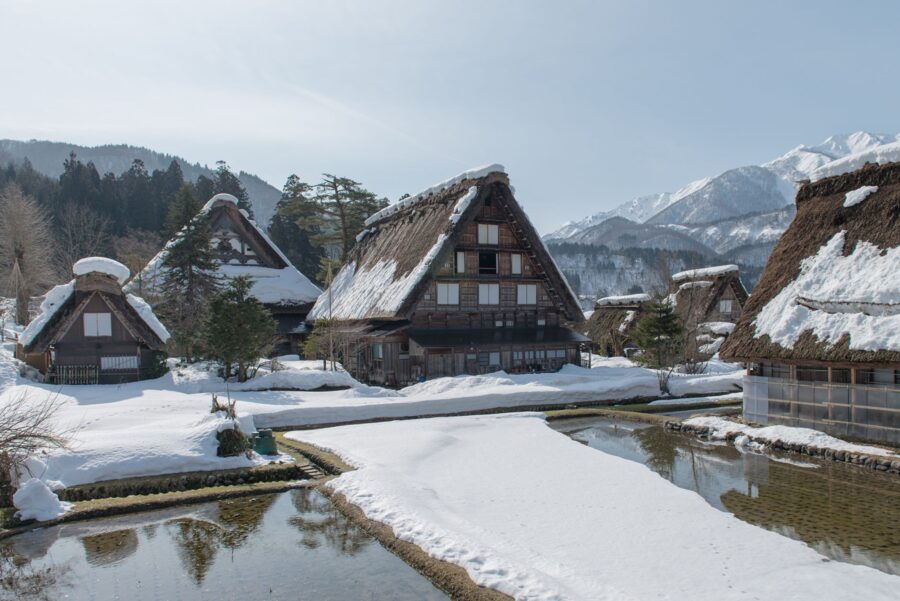
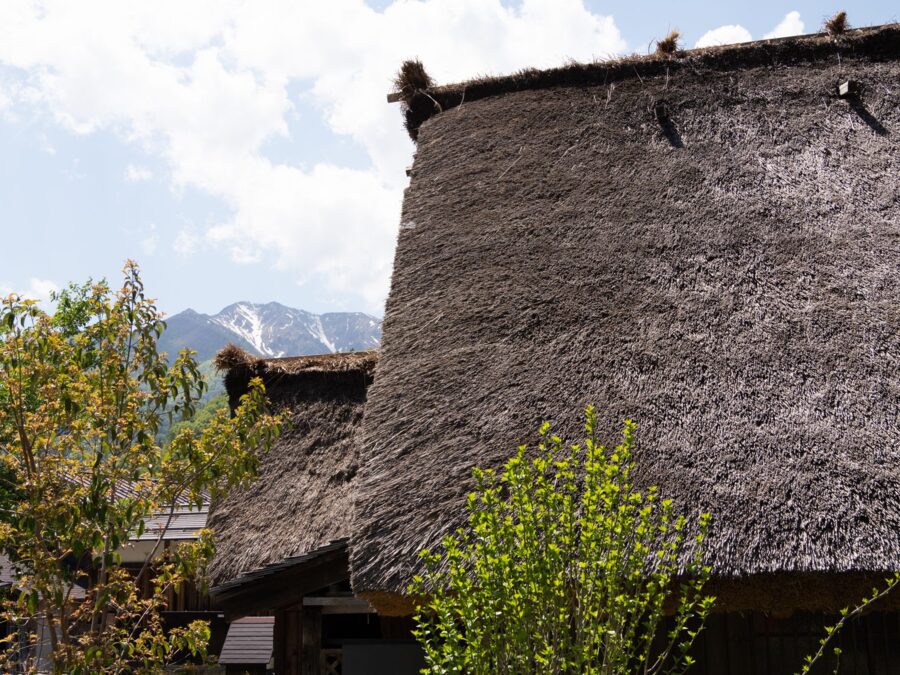
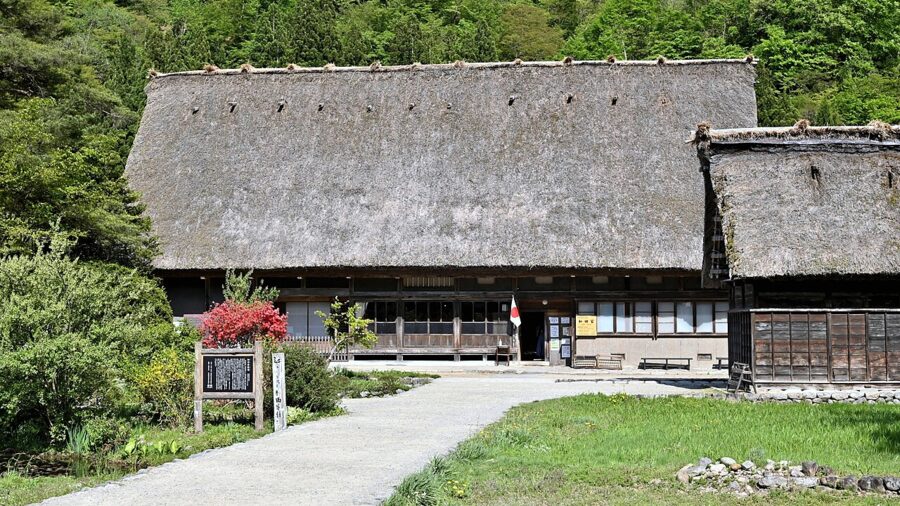
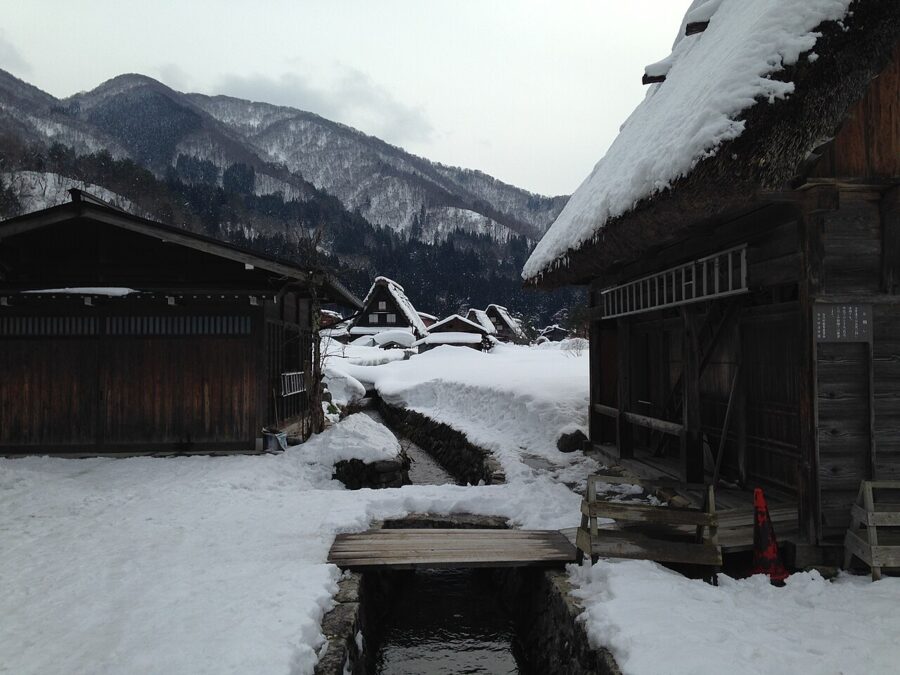
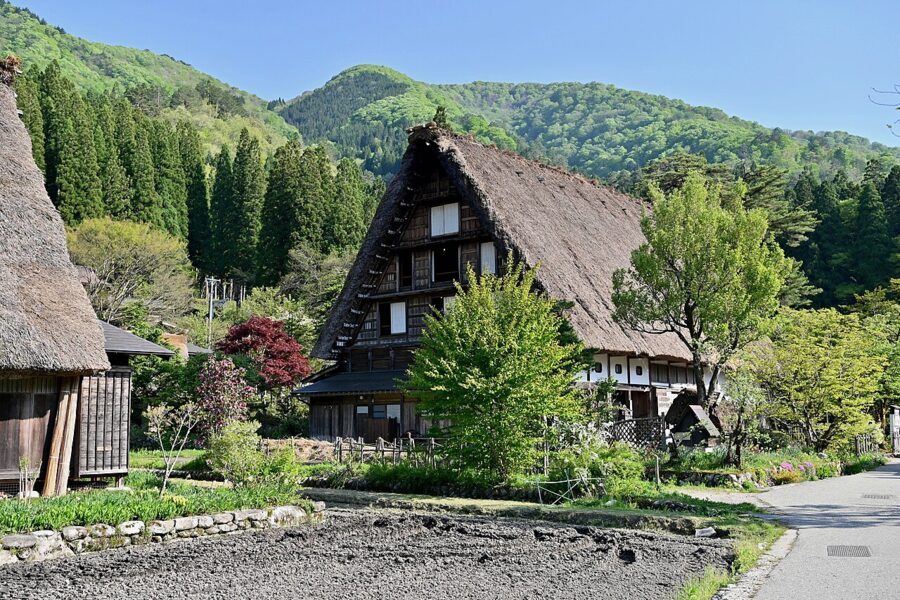
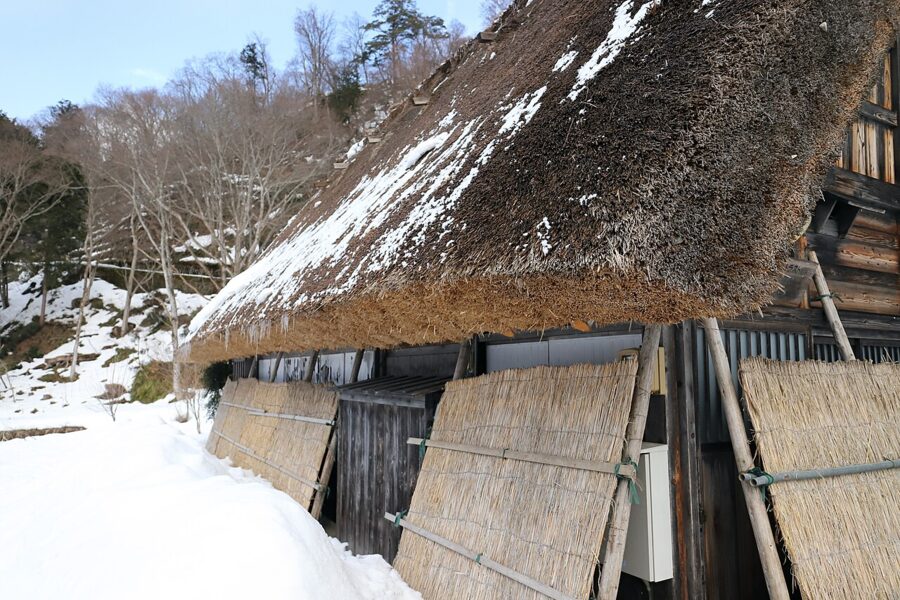
Because of the snow and the silkworms. Gasshō-zukuri means “built like hands joined in prayer,” which describes the thatched roof, pitched at about 45 to 60 degrees so the snow slides off. UNESCO’s World Heritage listing gives the other reason: these villages lived on mulberry and silkworms, and silkworms need a lot of indoor space.
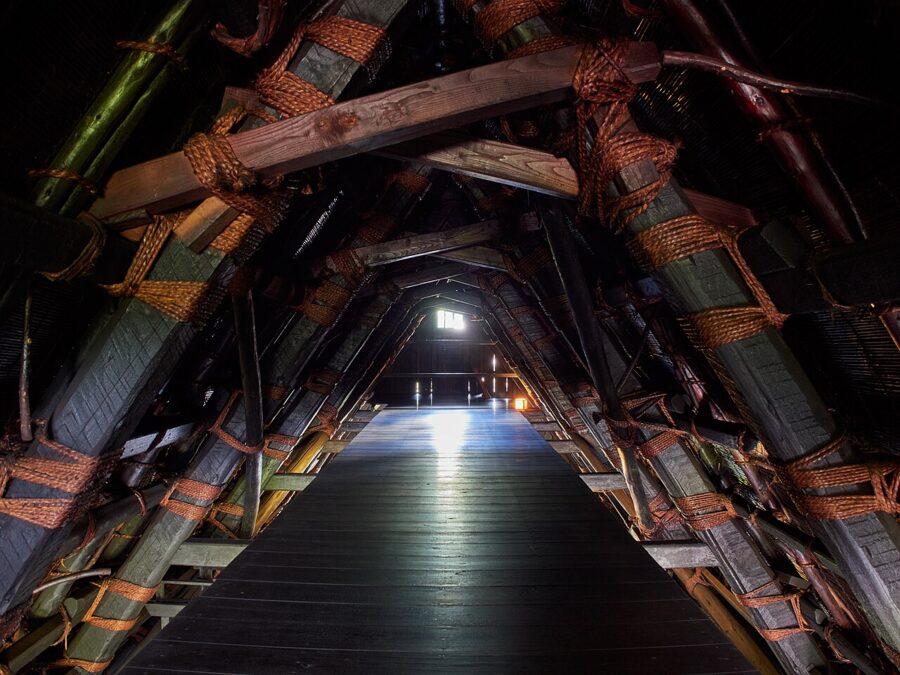
That space is the roof, floored in levels laid on cross-beams where the silkworm trays sat. The other cash product was enshō, saltpeter for gunpowder, made under the floor of the house.
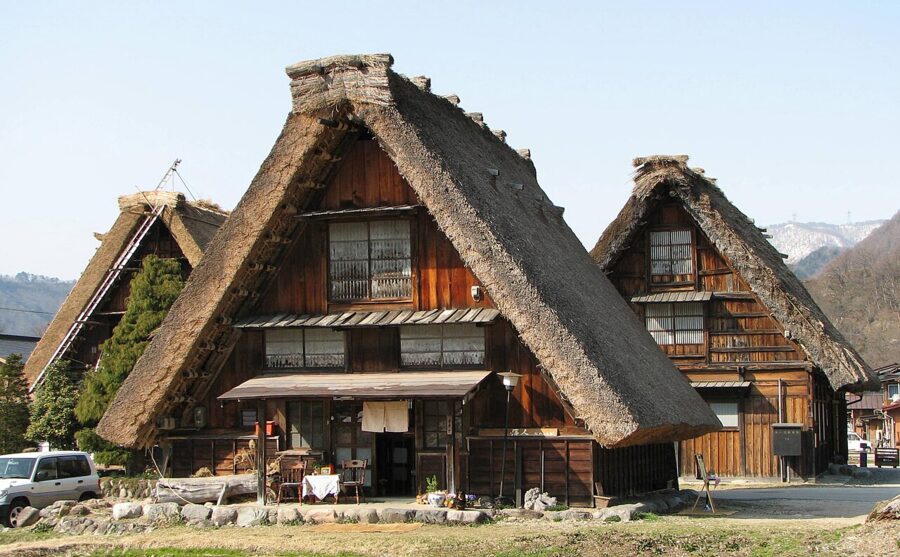
Two kinds of labor built each house. Paid carpenters raised the posts and beams; the villagers raised the roof frame and thatch themselves, unpaid, under the mutual-help system called yui, recorded for reroofing as early as 1792.
The joints are clever. The rafter feet are whittled to a point, the koma-jiri, and simply sit in hollows in the beam below, so the roof acts almost like a pin and does not bend the house. The World Heritage Center’s page on the structure also points out the curved chōna-bari beams, cut from trees bent at the root by snow.
Ogimachi’s preservation district has 59 gasshō houses, 60 counting Myōzen-ji temple’s living quarters, and 128 households as of 2023. Every ridge runs north to south, so from the viewpoint all the gables face the same way. In 1971, as thatched houses kept disappearing, residents agreed three rules that still hold: do not sell, do not rent, do not tear down.
Which houses can I go inside?
Four in Ogimachi, plus the open-air museum. Prices and hours are from the tourist association’s listings.
| House | Adult | Hours | Closed |
|---|---|---|---|
| Wada House | ¥400 (about US$3) | 9:00 to 17:00 | Irregular |
| Kanda House | ¥400 | 10:00 to 16:00 | Wednesdays (open if a holiday) |
| Nagase House | ¥400 | 9:00 to 16:00 for now | Irregular |
| Myōzen-ji Museum | ¥400 | 8:30 to 17:00 April to November; 9:00 to 16:00 December to March | Irregular |
| Gassho-zukuri Minkaen | ¥800 (about US$5) | 8:40 to 17:00 March to November; 9:00 to 16:00 December to February | Thursdays, December to March |
Wada House
If you have time for one, make it Wada House, among the largest houses in the district and the only national Important Cultural Property. The Wadas were village headmen and checkpoint officials in the Edo period, grew rich on saltpeter, and still live here; the first and second floors are open.
Audio commentary plays in Japanese downstairs and in English upstairs, silkworms are planned for July and August, and entry is cash only. It is four minutes’ walk from the bus terminal, at the foot of the path to the viewpoint.
Kanda, Nagase and Myōzen-ji
Kanda House took about ten years to build in the late Edo period, and it shows where saltpeter was made under the floor. Nagase House rises five stories, keeps a Buddhist altar said to be 500 years old, and screens a video of its 2001 reroofing by about 500 volunteers.
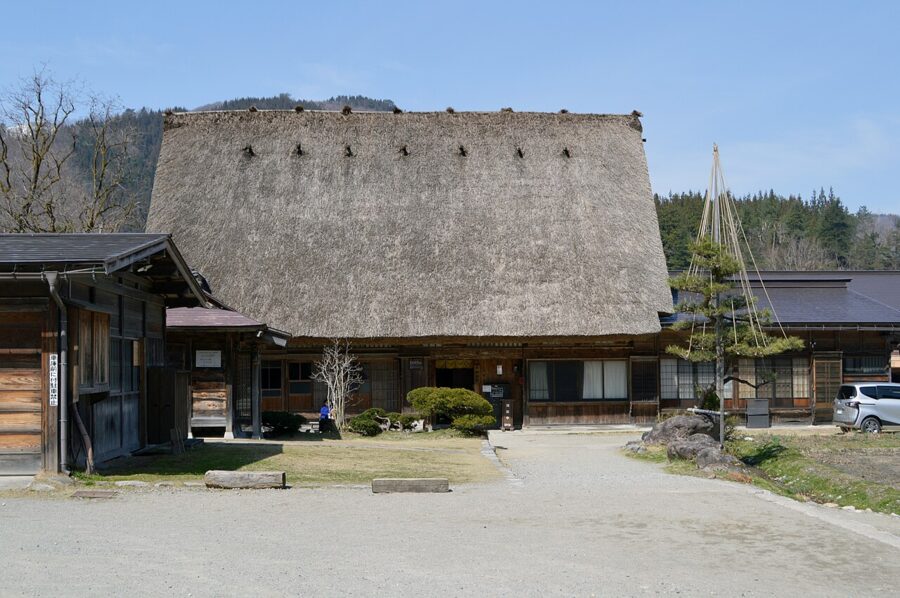
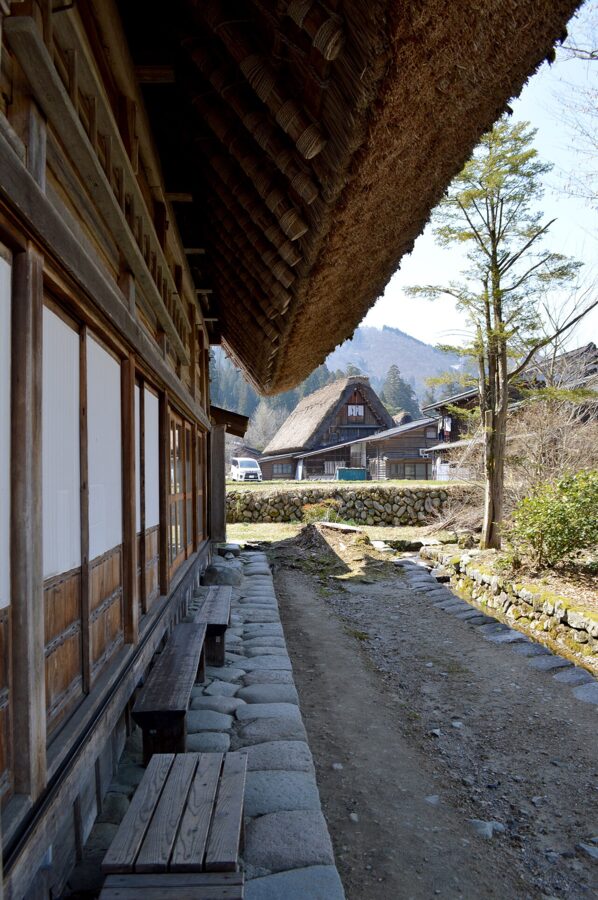
Myōzen-ji, a Shin Buddhist temple, has its main hall, living quarters and bell tower all in gasshō style, a combination found nowhere else. Its hearth is lit every day, and the main hall has screen paintings by Hamada Taisuke, whose work is also at Tō-ji and Daigo-ji in Kyoto.
The open-air museum
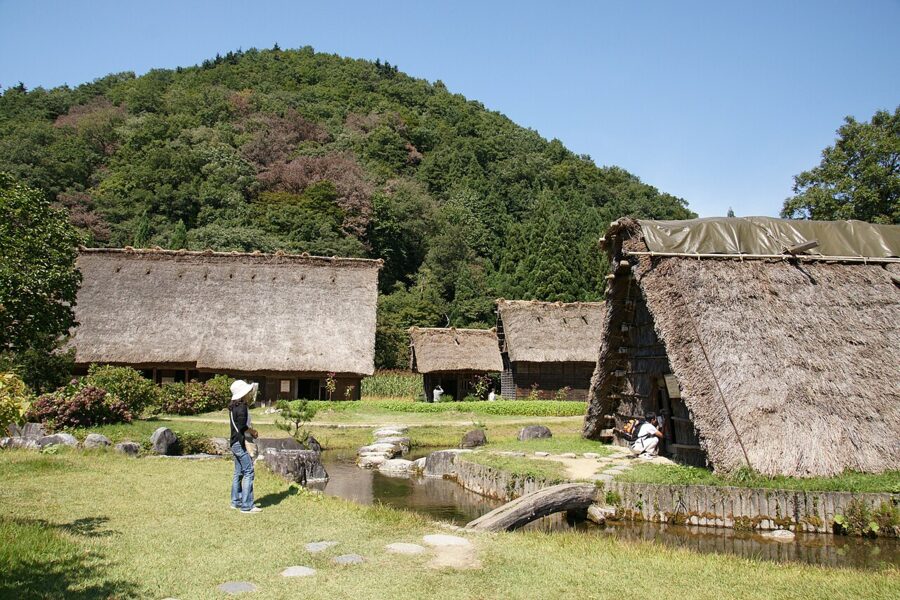
The Gassho-zukuri Minkaen, beside the car park, keeps 25 buildings moved from around the village, nine of them prefectural Important Cultural Properties. Some can be climbed to the third attic floor, and the Yamashita house is one of the few 18th-century gasshō houses left.
Where is the viewpoint, and is the shuttle worth it?
On the hill at the north end of the village, and the shuttle saves a 15- to 20-minute climb. Two viewpoints sit side by side: the public Ogimachi Castle Ruins Observatory, on the old castle site, and the private Shiroyama Tenshukaku observatory, with a café, open 9:30 to 15:30.
Private cars cannot go up. You walk about 600 meters uphill on a path that starts behind Wada House, or take the shuttle, ¥300 (about US$2) one way in cash, from a stop about 200 meters from the bus terminal.
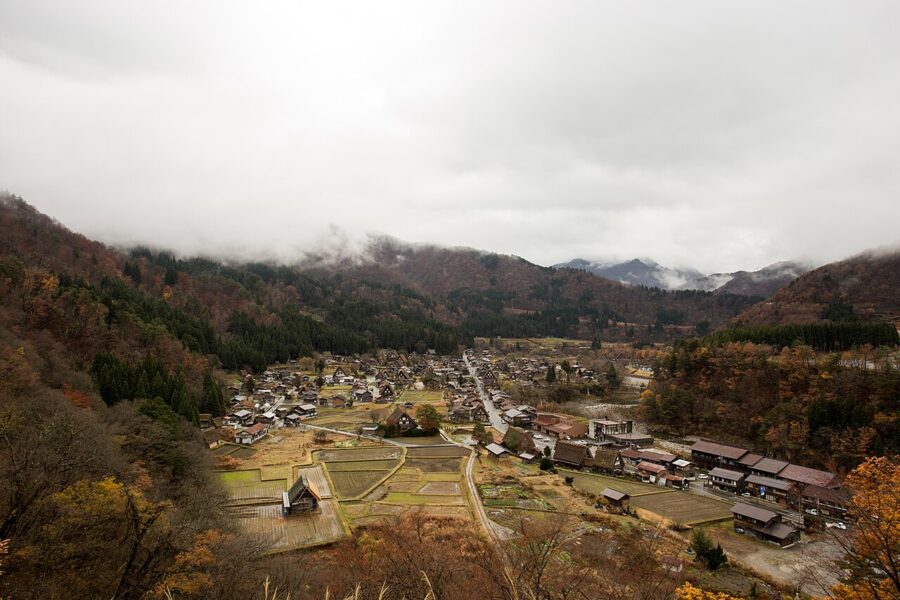
As of the 2026 to 2027 winter notices, the shuttle runs uphill 9:00 to 15:40 and downhill 9:10 to 16:10, with a gap in the noon hour, and stops in bad weather. My choice: ride up, walk down. The path brings you out behind Wada House, which is where you want to be next.
Can I stay overnight in a farmhouse?
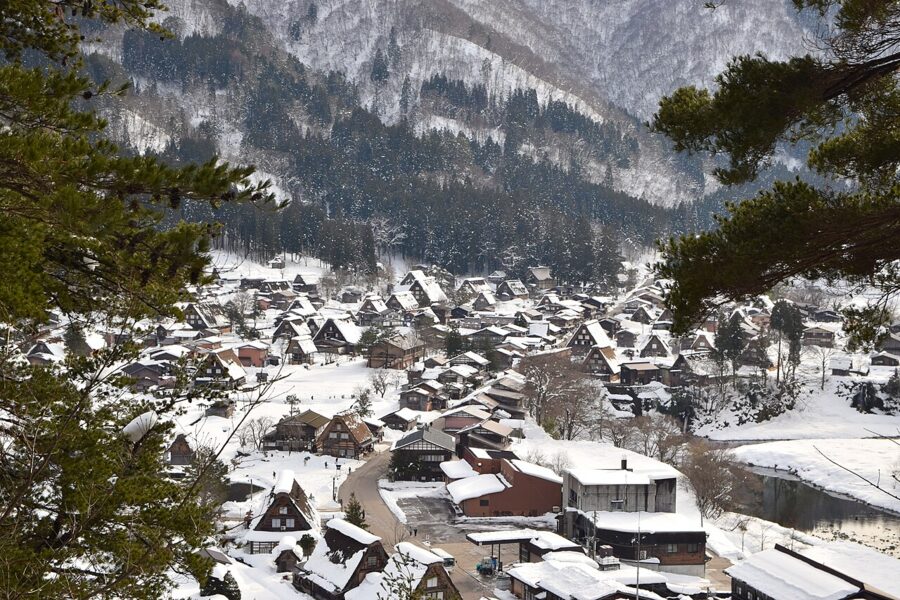
Yes, and if you can, I would. About 20 gasshō minshuku, family-run guesthouses in thatched houses, stand inside the village, and staying is the only way to see Ogimachi after 17:00, when the day visitors have gone and the lanes go quiet.
Most are booked through the tourist association’s lodging search, which shows every inn at once. Expect three to five rooms, check-in from 14:00 or 15:00 and check-out by 9:00 or 10:00. With so few rooms, book early for weekends and autumn.
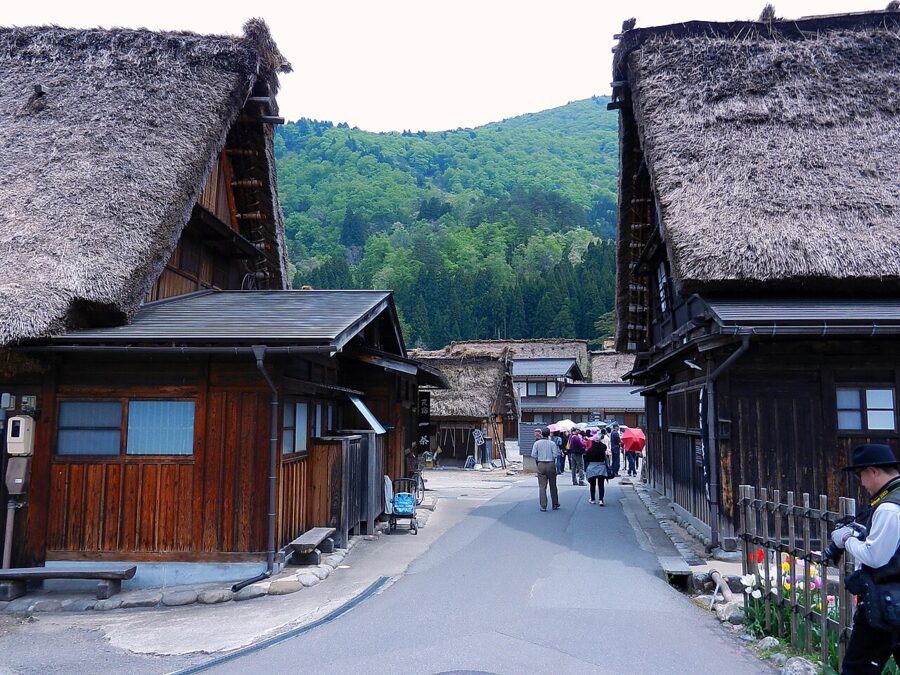
What is included, and what is it like?
The usual plan is a Japanese-style room with dinner and breakfast, often served around the irori, the sunken hearth: mountain vegetables, river fish and, at some inns, the family’s own rice. A few are now room-only: Nodaniya and Furusato serve no meals, and Nodaniya takes one group a night.
Shimizu, a 200-year-old gasshō house, lists its dinner-and-breakfast plan from ¥19,800, tax included, as of 2026. Expect an old house rather than a hotel: baths often go by time slot, and some inns have a shower only.
Your neighbors are families who farm in the morning and send children to school, so keep voices down outdoors at night, and do not wander into fields with a flashlight to photograph the stars.
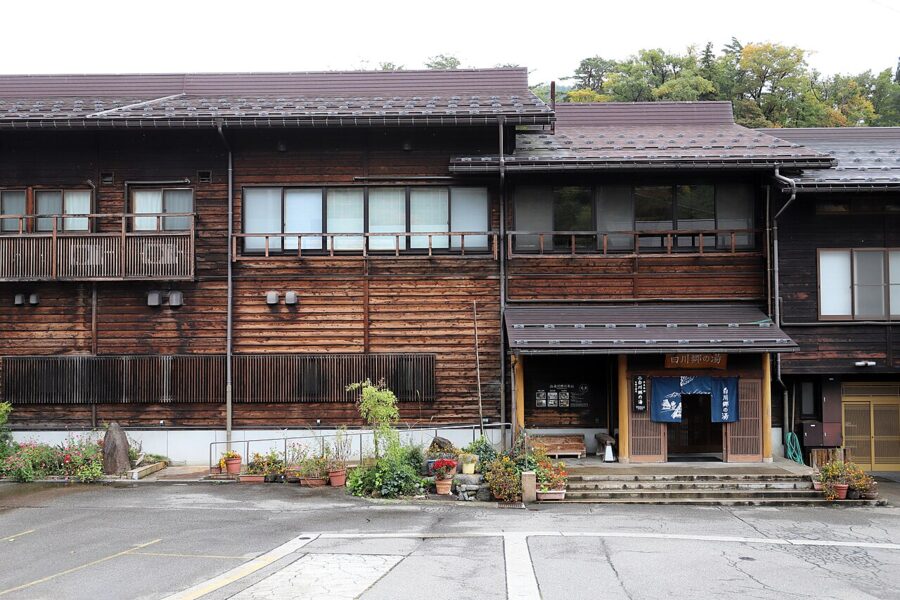
Before you search: Magoemon no longer takes guests and now runs as a restaurant, and Yamamotoya takes overnight guests only from December to March. If the village is full, the hot spring inns of Hirase Onsen, about 15 minutes south by car, are a good second choice.
How does the winter light-up work?
On four evenings only, by advance reservation only, with an admission ticket worn around your neck. For the 41st light-up the dates are January 11 (a Monday holiday), 17, 24 and 31, 2027, from 17:30 to 19:30. No tickets are sold on the day, and anyone without one is turned away at a gate set up at 15:30.
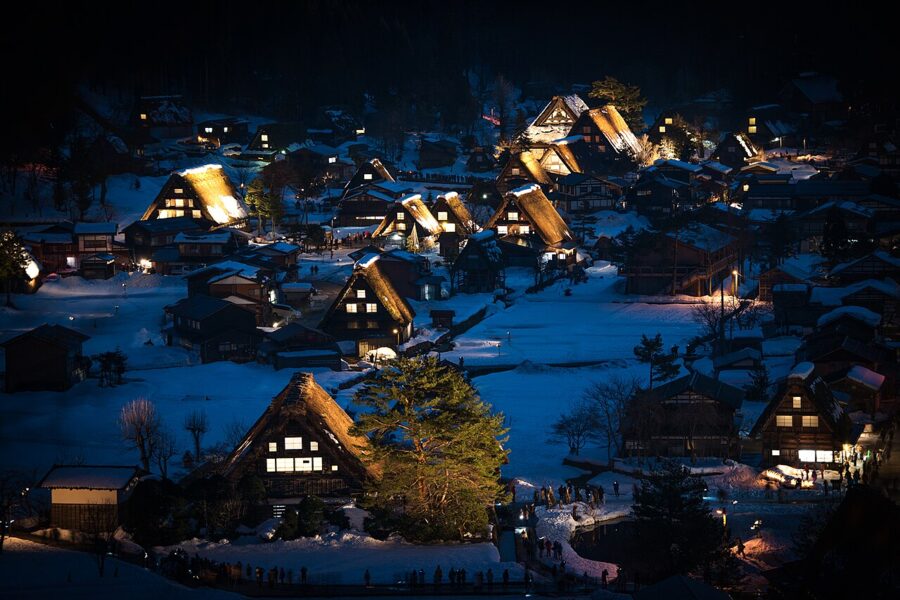
The official overview of the 2027 light-up lists five ways in: an overnight stay in Shirakawa village, a reserved parking space, a parking space plus a taxi, a bus tour by one of the highway bus companies, or a travel agency tour.
Is it too late to get in for 2027?
Not necessarily. The accommodation lottery has closed, but rooms that winners turned down go on sale first come, first served at 13:00 on November 26, 2026, through a notice on the tourist association’s home page. Later cancellations may be offered again without warning, and there is no waiting list.
The second round of light-up parking opens at 13:00 on December 1, 2026: ¥7,000 (about US$45) per car for one to five people, ¥10,000 (about US$65) for six to ten, by card, with no refunds. Cars park at the Midashima lot from 15:00 and must be out by 20:00.
Bus tours by Nohi, Kaetsuno, Toyama Chitetsu, Hokutetsu and Iruka Kotsu went on sale in October and early November; check each operator for what is left. Travel agency tours are listed from 13:00 on December 2, 2026.
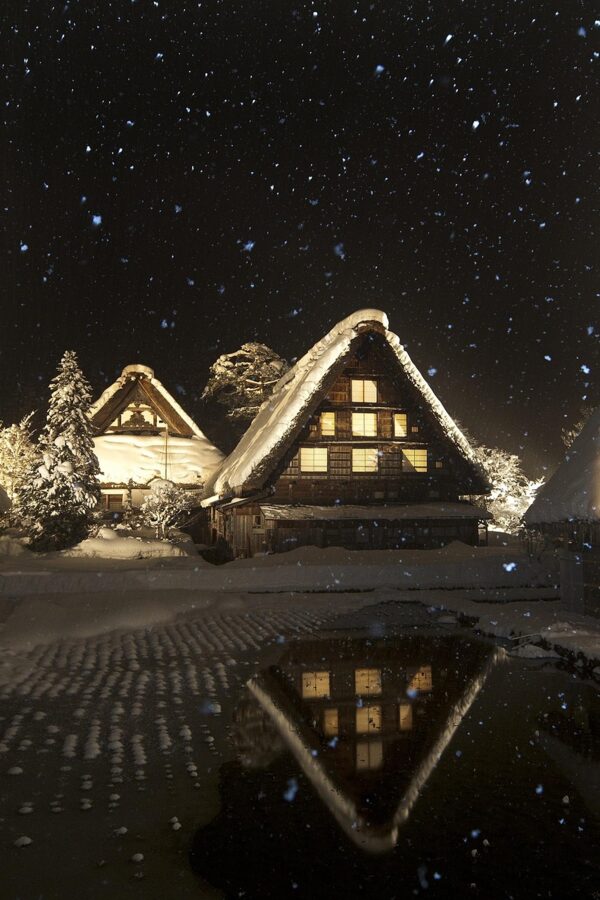
Can I just come for the day on a light-up date?
Yes, with limits. Daytime parking needs no reservation, but cars must enter by 15:00 and leave by 17:00, and the viewpoint path closes at 16:10. By bus, you must arrive by 15:20, and the regular buses out all leave between about 16:00 and 17:00; none run after the light-up.
Drones are banned in the village at all times, not only on light-up nights. The local Hakusan Taxi does not run on event days, and the event can be cancelled if a severe cold wave threatens transport.
Is Gokayama a quieter alternative?
Yes. Ainokura and Suganuma, the other two villages in the World Heritage listing, lie north in Gokayama, in Toyama Prefecture’s Nanto City. They are much smaller and on most days far emptier. I would choose Ainokura over a second afternoon in Ogimachi.
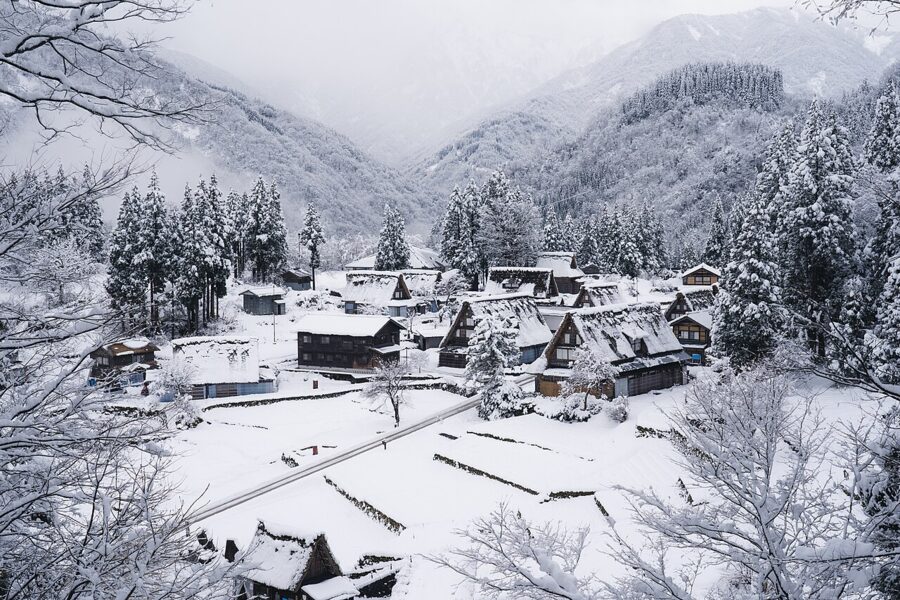
Ainokura’s houses sit among small walled rice fields on a terrace about 400 meters up, and several are guesthouses. Suganuma, about 25 minutes from Shirakawa-gō by bus, has nine gasshō houses and five households in a bend of the Shō River.
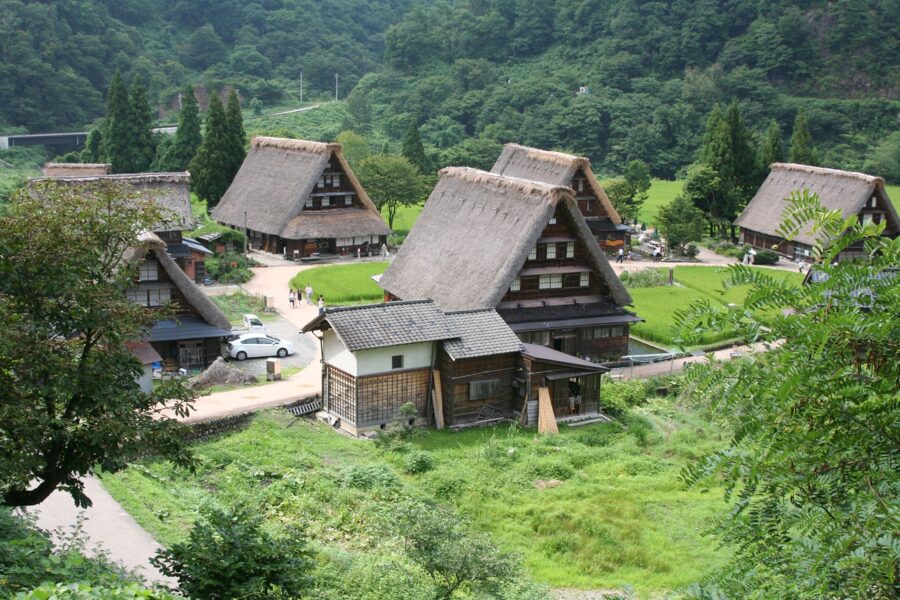
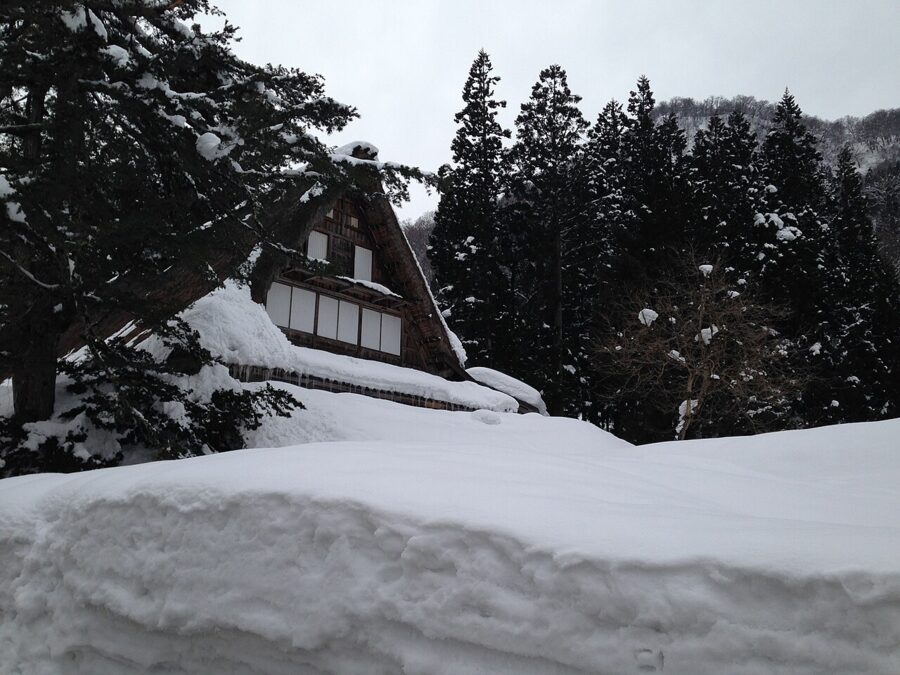
One difference you can spot: in Gokayama the door is usually in the triangular gable end, while in Shirakawa-gō it is usually on the long side.
How do I get to Ainokura and Suganuma?
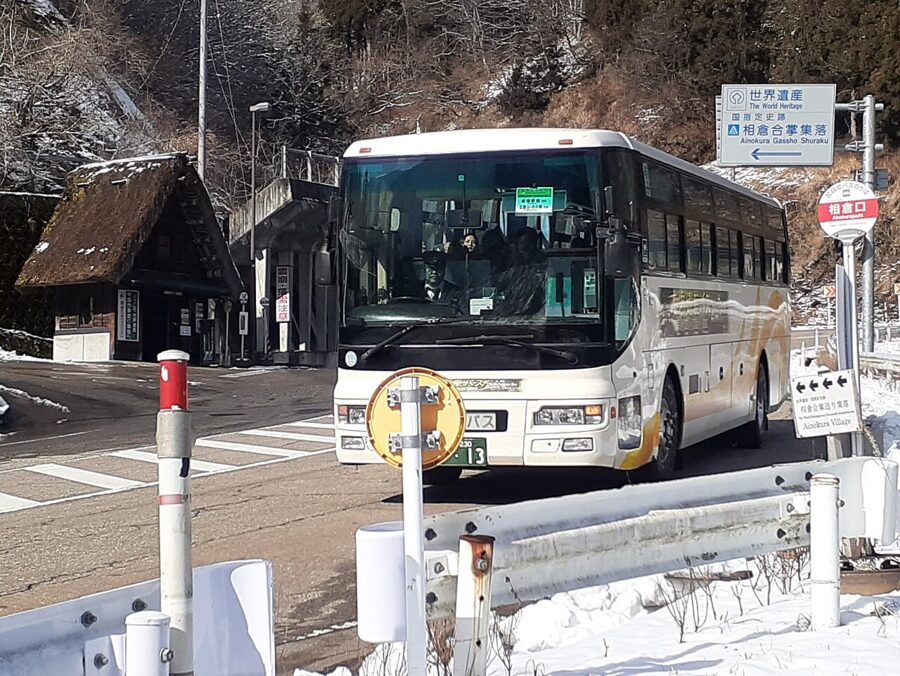
By the World Heritage Bus, which Kaetsuno Bus runs between Takaoka, Shin-Takaoka, Gokayama and Shirakawa-gō. It is mostly unreserved, but 16 seats per bus can be booked from a month ahead to the day before, and it takes contactless cards. A few runs are suspended for now, including the 16:00 from Takaoka.
Some of the Kanazawa buses stop at Suganuma too, but only from April to November, and only to set down passengers coming from Kanazawa or pick up those heading there. In winter you need the World Heritage Bus or a car, and Gokayama has a single taxi company with three cars.
Gokayama in winter
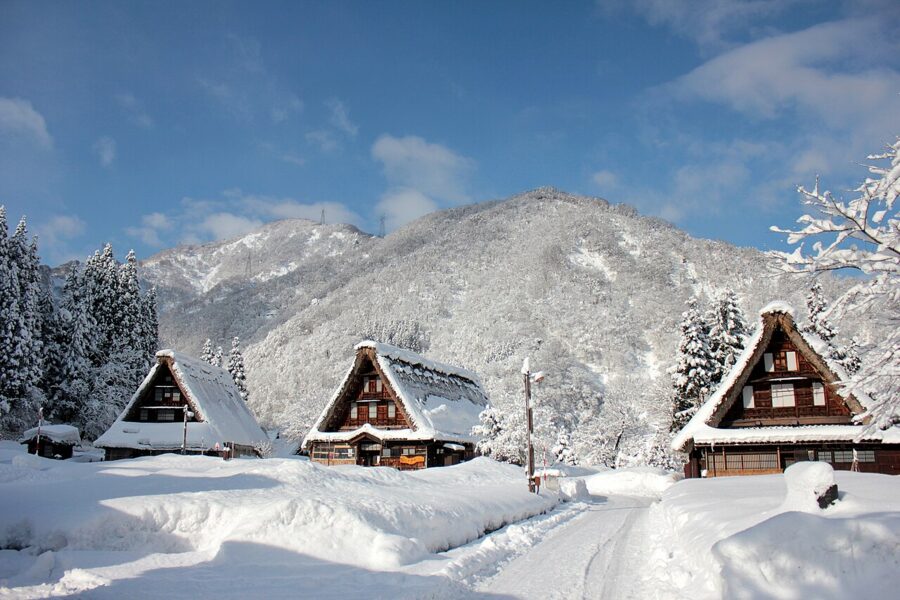
Gokayama has its own light-ups, and cars need no reservation. According to the Gokayama winter light-up page, Suganuma is lit on January 26 and February 6 and 7, 2027, and Ainokura on February 20 and 21, 2027, from dusk to 20:00. Parking is ¥1,000 (about US$6). In practice you need a car or a tour.
What are the rules in a village where people still live?
About 500 people live in Ogimachi, in a village of around 1,500 that receives about 2.15 million visitors a year. Shirakawa village’s responsible tourism page sets five rules.
- Use the designated car park. There is no driving into the village.
- No fire. One spark in a thatched roof can spread through the village. Smoke only at the smoking area by Seseragi Park or the three designated spots inside; residents patrol for fire daily and keep about 60 water cannons ready.
- Take your trash with you. There are no bins, by design; village shops will take rubbish from things bought there.
- No night sightseeing. After 17:00 the village is for residents and guests.
- No drones. Use the viewpoint instead.
The rest is privacy. These are homes, so do not open doors or step into rice fields and gardens for a photograph. Gokayama asks the same, and asks you to stay out from under the eaves and give way to residents’ cars.
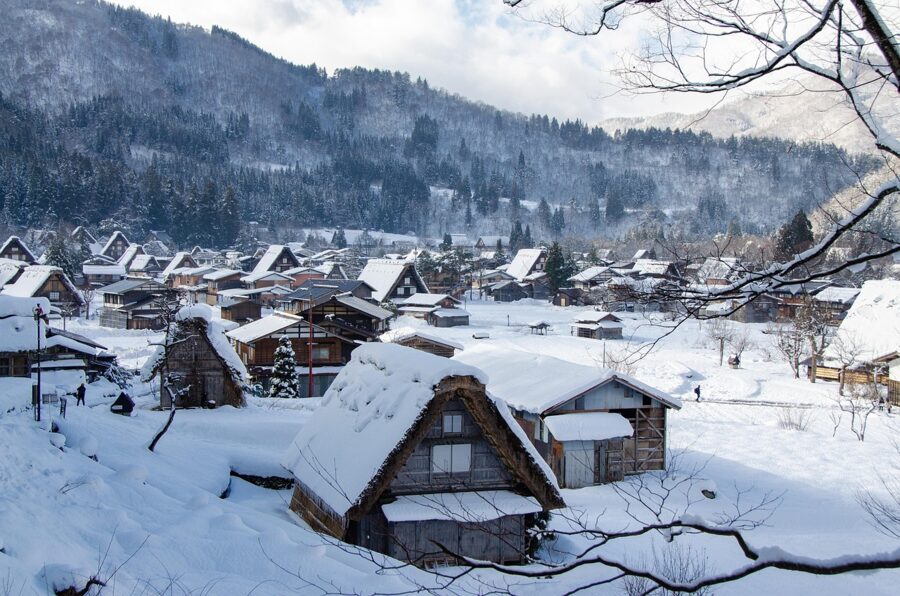
Is it worth going, with the rules and crowds? Yes, if you time it. The cherry blossoms come in mid-April to early May and the autumn colors peak from late October to mid-November, and any season works if you arrive before ten or stay the night.
So: no train, one bridge, and a car park with a two-hour queue on the worst days. Book the 7:20 from Takayama as soon as your date is fixed, and you will have Ogimachi nearly to yourself for an hour.