Questions on this page14
- How do I get to Takayama?
- How many nights do you need in Takayama?
- What is Sanmachi Suji?
- When are the morning markets, and which one is better?
- Is Takayama Jinya worth it?
- Hida Folk Village or Shirakawa-gō?
- When is the Takayama Festival?
- Where can I try Hida beef?
- Where should I stay: near the station, in the old town, or in a ryokan?
- What are the best day trips from Takayama?
The first Hida limited express from Nagoya reaches Takayama at 10:16. By then the riverside morning market has under two hours left, the lanes of the old town are filling with tour groups, and the brewers have long since hung out their cedar balls. That timing decides most Takayama trips: the town is at its best early and late, so the people who enjoy it are the ones who sleep there.
So the short answer to the question people ask most is two nights, with a third if you want Shirakawa-gō or the mountains too. Fares, hours and rules below are as of late 2026, and several of them changed this year.
How do I get to Takayama?
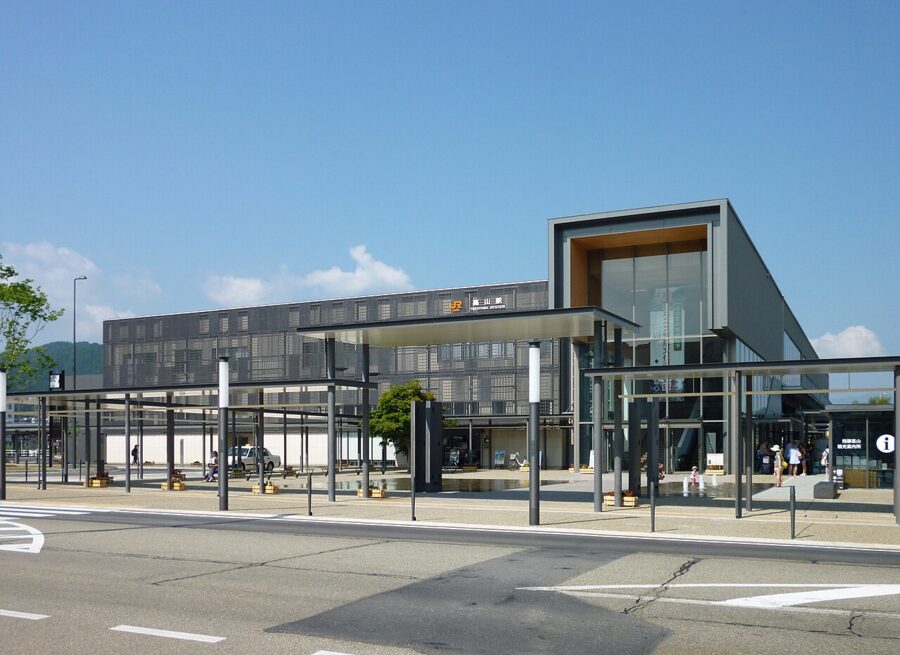
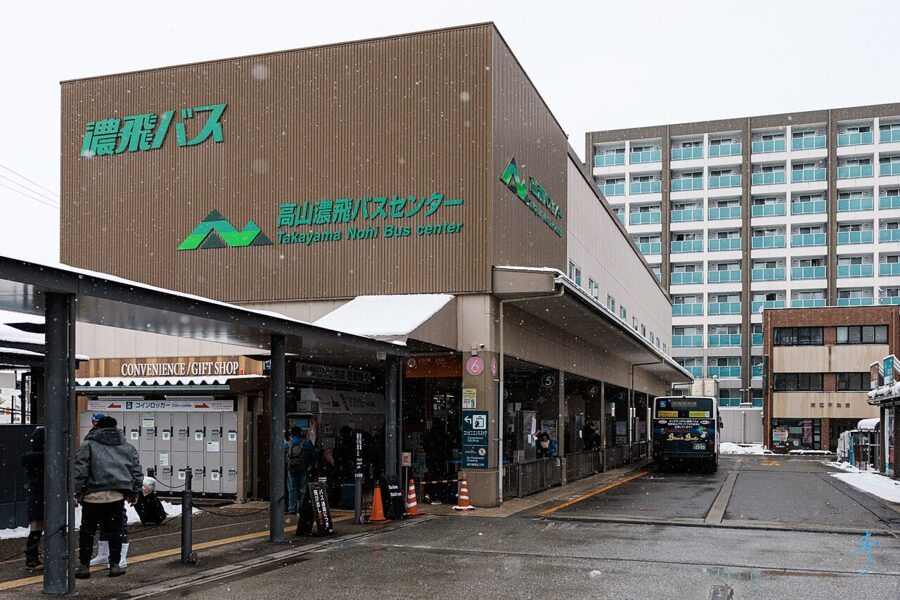
Takayama sits in the Hida mountains of northern Gifu Prefecture. Come by train from Nagoya, or by bus from Tokyo, Kanazawa or Shirakawa-gō; every route ends at Takayama Station or the Nohi Bus Center beside it.
From Nagoya, Osaka or Kyoto: the Hida
The Hida limited express runs about ten times a day between Nagoya and Takayama, and the ride takes roughly two and a half hours. A reserved seat costs ¥6,140 (about US$39) in the regular season, a ¥3,410 (about US$22) fare plus a ¥2,730 (about US$17) limited express charge, and an unreserved one ¥5,610 (about US$36). Reserved seats cost ¥200 (about US$1) less in the quiet season and up to ¥400 (about US$3) more at peak times, and during JR Central’s busiest periods every seat is reserved.
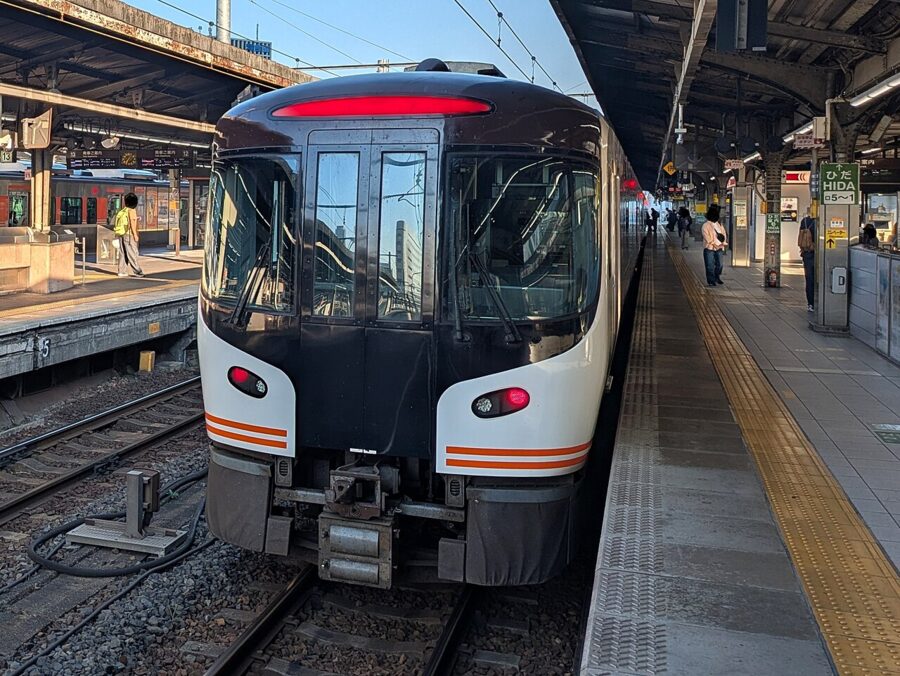
Some Hida trains start at Osaka and run via Kyoto, but they split or join other cars at Gifu, so check your car number before you board. The full Japan Rail Pass covers the Hida, and so do several regional passes; whether one pays for itself is a question for getting around Japan.
Is there a bullet train from Tokyo to Takayama?
No. The usual rail route from Tokyo is the Tokaido Shinkansen to Nagoya and the Hida from there, about four to four and a half hours with the change. The other is the Hokuriku Shinkansen to Toyama, then one of the few Hida trains south, about an hour and a half on that last leg. Without a rail pass, the bus is the cheaper way in.
The Nohi bus from Shinjuku
The Takayama to Shinjuku highway bus, run jointly by Nohi Bus and Keio, leaves Busta Shinjuku five times a day and takes about 5 hours 45 minutes. As of 2026 the daytime fare is ¥8,000 (about US$51), ¥500 (about US$3) less if you pay online through the Highway Bus booking site, and seats open a month ahead. Every seat is reserved, and in peak months a night bus runs from Tokyo Yaesu for ¥1,000 (about US$6) more.
Most of these buses stop at Hirayu Onsen on the way, which makes the bus the easy choice if you plan a night in the Okuhida hot springs. I would take the 8:15 or 9:15 from Shinjuku and be checking in by mid-afternoon.
From Kanazawa and Shirakawa-gō
Nohi Bus and Hokutetsu run well over a dozen buses a day between Takayama and Shirakawa-gō, and some continue to Kanazawa or Toyama. From December 1, 2026, the fare to Shirakawa-gō rises to ¥2,900 (about US$18) and the fare to Kanazawa to ¥4,400 (about US$28). Most departures are reservation only, and the operator warns of delays of two hours or more when the Shirakawa-gō car parks back up or the snow is heavy. Kanazawa deserves two nights of its own at the other end.
| From | How | Time | One-way fare (as of 2026) |
|---|---|---|---|
| Nagoya | Hida limited express, reserved seat | about 2 h 30 min | ¥6,140 |
| Nagoya | Hida limited express, unreserved | about 2 h 30 min | ¥5,610 |
| Shinjuku (Busta Shinjuku) | Nohi/Keio highway bus | about 5 h 45 min | ¥8,000 by day |
| Kanazawa Station | Nohi/Hokutetsu bus | about 2 h 15 min to 3 h | ¥4,400 from December 1, 2026 |
| Shirakawa-gō | Nohi bus | about 50 min | ¥2,900 from December 1, 2026 |
How many nights do you need in Takayama?
Two, as above. A day trip from Nagoya or Kanazawa is possible, and plenty of people do it, but you arrive after the best of the morning and leave before the lanes empty again around five. The sights close early too: most shut between 4 and 5 p.m., and many old-town shops close with them.
Here is how I would spend them. Arrive in the afternoon, walk the old town once the coaches leave, and eat Hida beef that evening. Next morning, Miyagawa Market at seven or eight, the Jinya at opening, then the breweries and a merchant house; after lunch, the Folk Village by bus. A third night buys a full day in Shirakawa-gō, Okuhida or Hida-Furukawa.
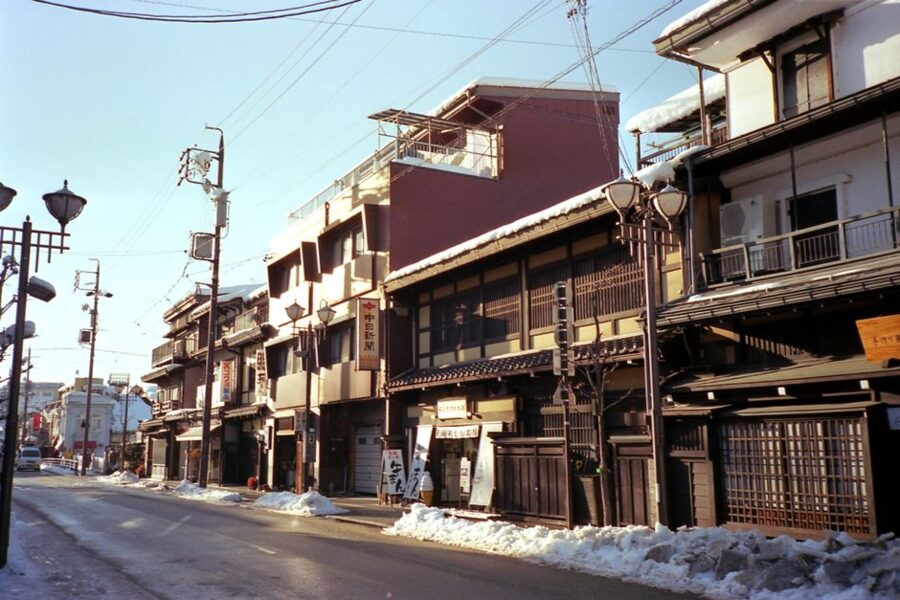
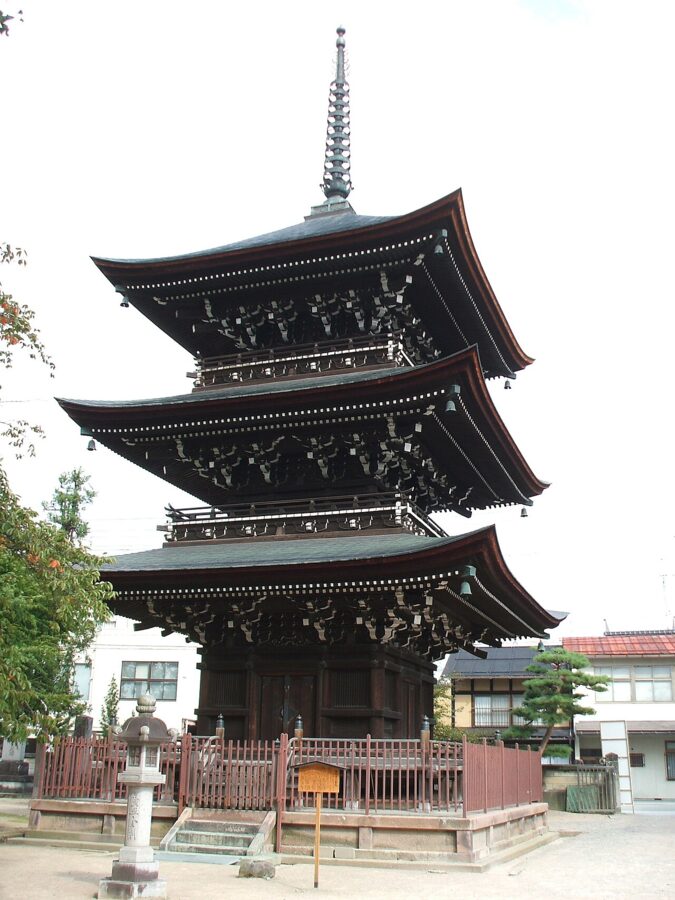
Between the station and the old town, it is a fifteen-minute walk east, past Hida Kokubunji temple and its three-storied pagoda. The Machinami loop bus covers the center for ¥100 (about US$1) a ride, and the city’s transport page lists a ¥500 one-day pass that also covers the Sarubobo bus to the Folk Village.
What is Sanmachi Suji?
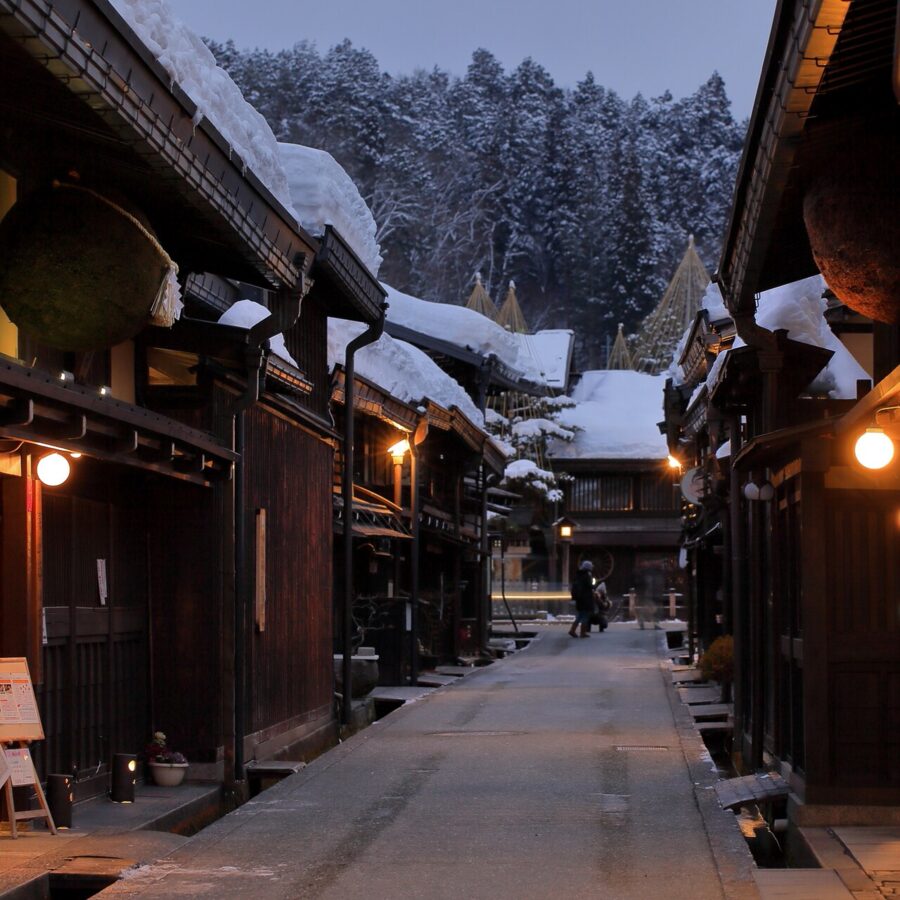
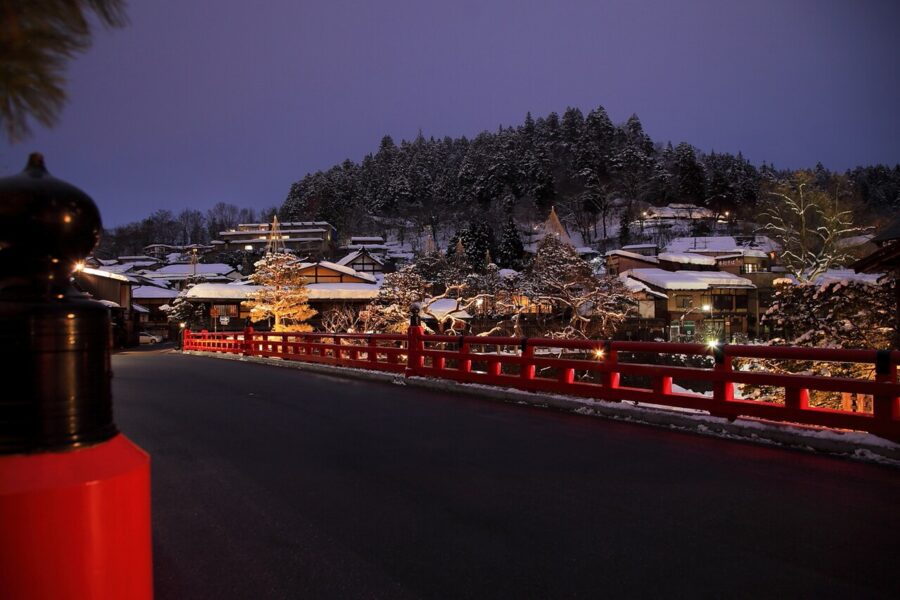
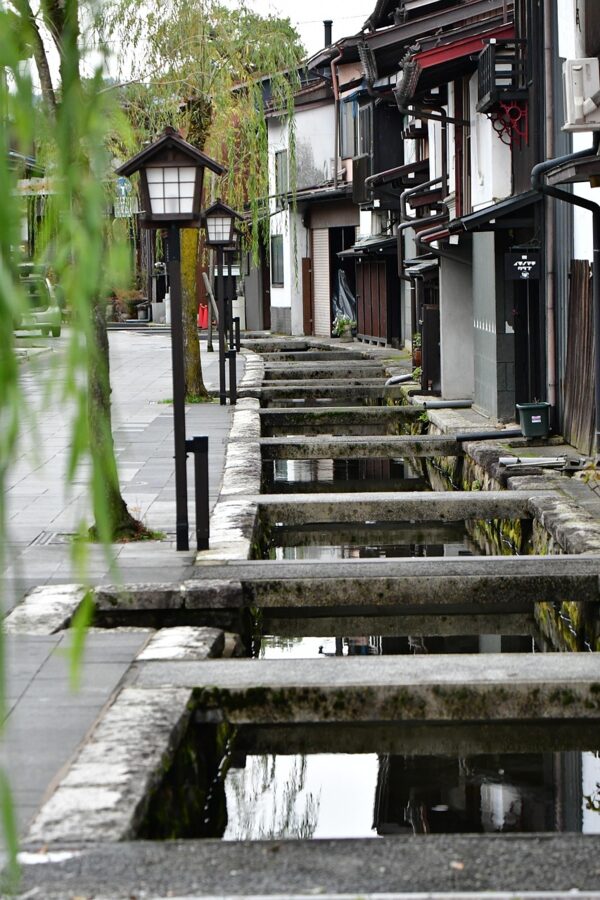
It is the old merchant quarter: three parallel lanes, Ichi-no-machi, Ni-no-machi and San-no-machi, lined with dark timber houses on the east bank of the Miyagawa. In the Edo period Hida was ruled directly by the shogunate rather than a local lord, so the town was built by merchants, not samurai. The lanes are a national preservation district, and the streets themselves are free and always open.
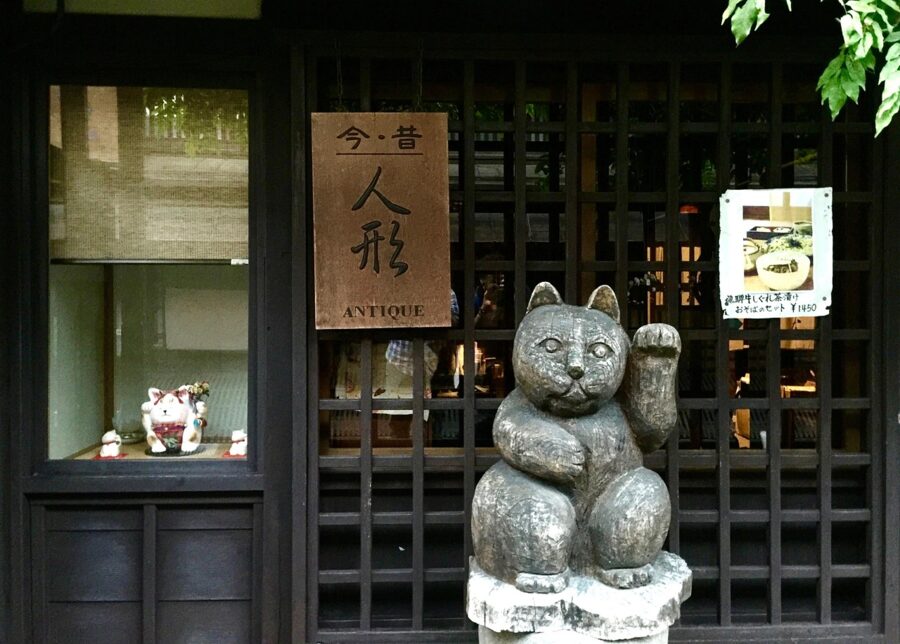
Kami-sannomachi, the southern block of San-no-machi, is the one in every photograph and the one to avoid at midday. Walk it before ten or after four, and spend the middle of the day in the quieter blocks north of Yasugawa-dōri, around the Kusakabe and Yoshijima houses. Smoking is banned in the old town except in marked areas, a rule the city enforces because the whole district is built of wood.
Which sake breweries can you visit, and how does tasting work?
Look for the sugidama, a ball of cedar sprigs hung over a brewery door. It goes up green when the new season’s sake is pressed and browns over the following months as the sake matures, so the color tells you roughly where the brewer is in the year. Six old-town brewers, Hirase, Niki, Hirata, Harada, Funasaka and Oita, take part in the town’s shared tasting events.
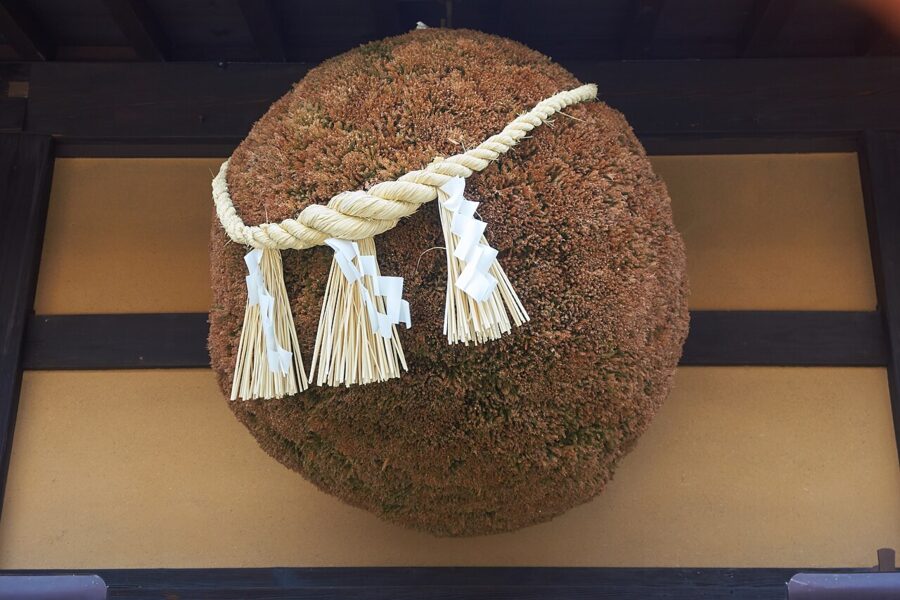
There are no town-wide tasting rules. Each brewery sets its own terms, and some tastings are paid, so ask before you pour. The legal drinking age in Japan is 20, and anyone driving should not drink at all.
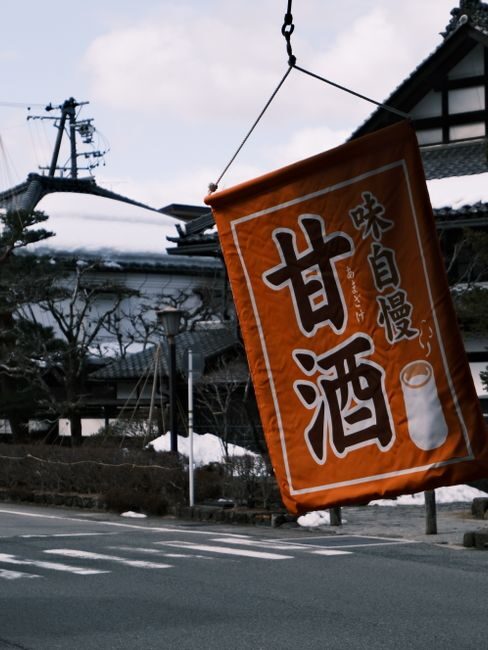
If you are here in late spring, the Nonbei Matsuri is the easy way in. A ¥3,000 (about US$19) booklet buys two tastes at each of the six breweries, with a stamp at each. The 2026 run ended in June; the next is listed for May 28 to June 20, 2027, from 10:00 to 16:00.
Which merchant house should I go inside?
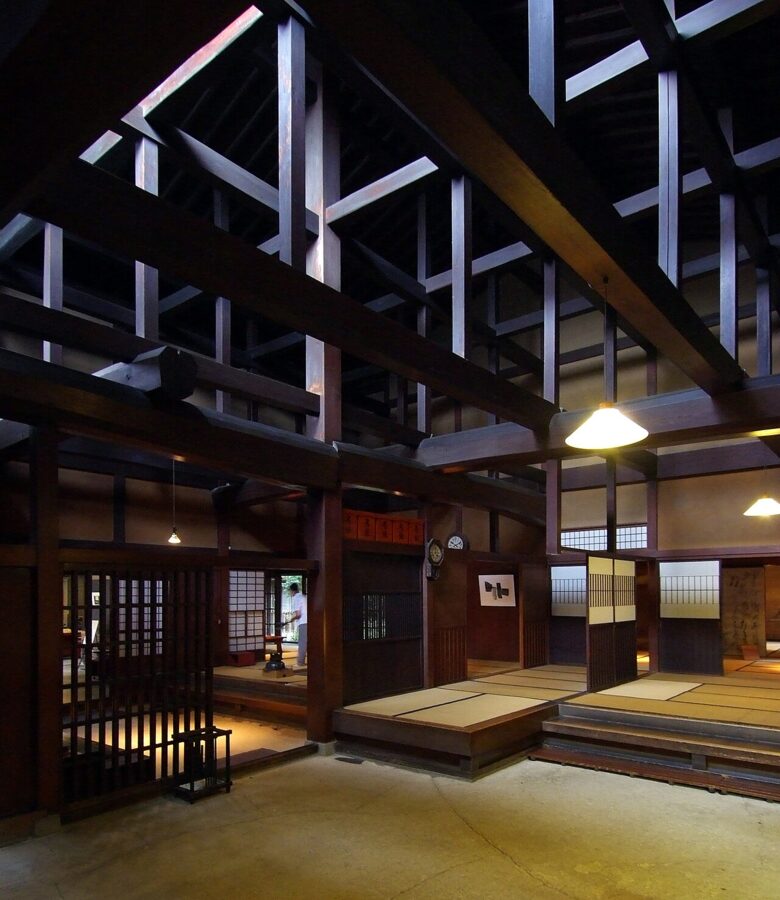
Kusakabe Mingeikan, if you only see one. The family were merchants to the shogunate’s office, and after a fire in 1875 the master carpenter Kawashiri Jisuke rebuilt the house in 1879 in the old style, with a hall that rises the full height of the roof. It has been an Important Cultural Property since 1966.
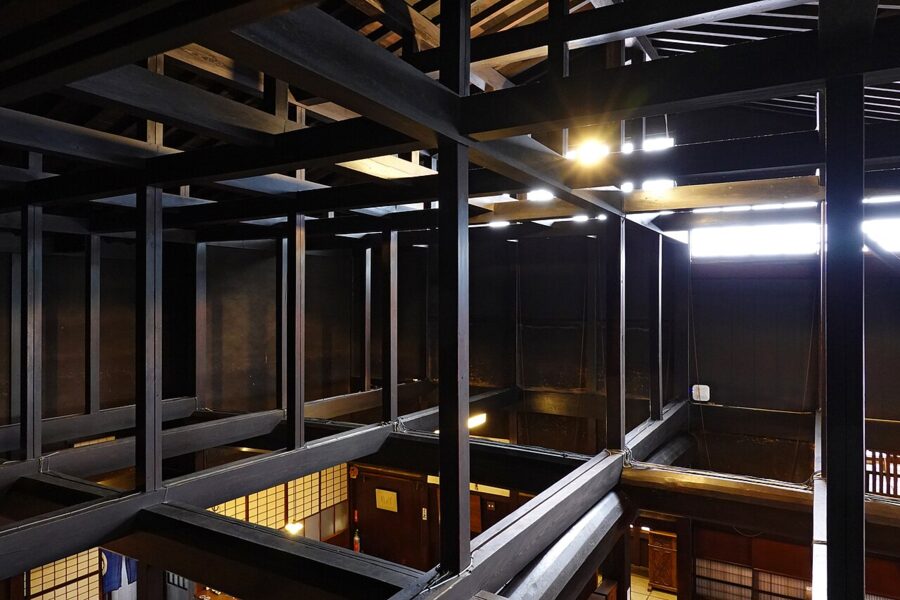
Entry is ¥1,000, the hours are 10:00 to 16:00, and it closes on Tuesdays, or on Wednesday when Tuesday is a holiday. Yoshijima House, a former brewer’s home next door, makes a good comparison.
When are the morning markets, and which one is better?
Both run every day of the year and both finish around noon. The Miyagawa Morning Market opens at 7:00 from April to November and at 8:00 from December to March, along the east bank of the river between Kajibashi and Yayoibashi bridges. The Jinya-mae market fills the square in front of the Jinya’s gate and is much smaller.
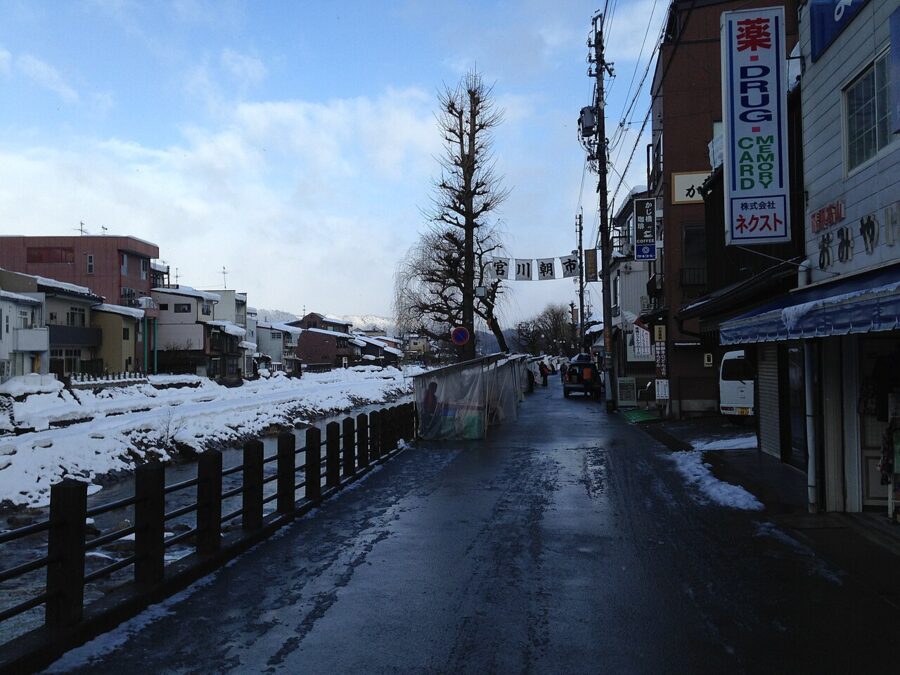
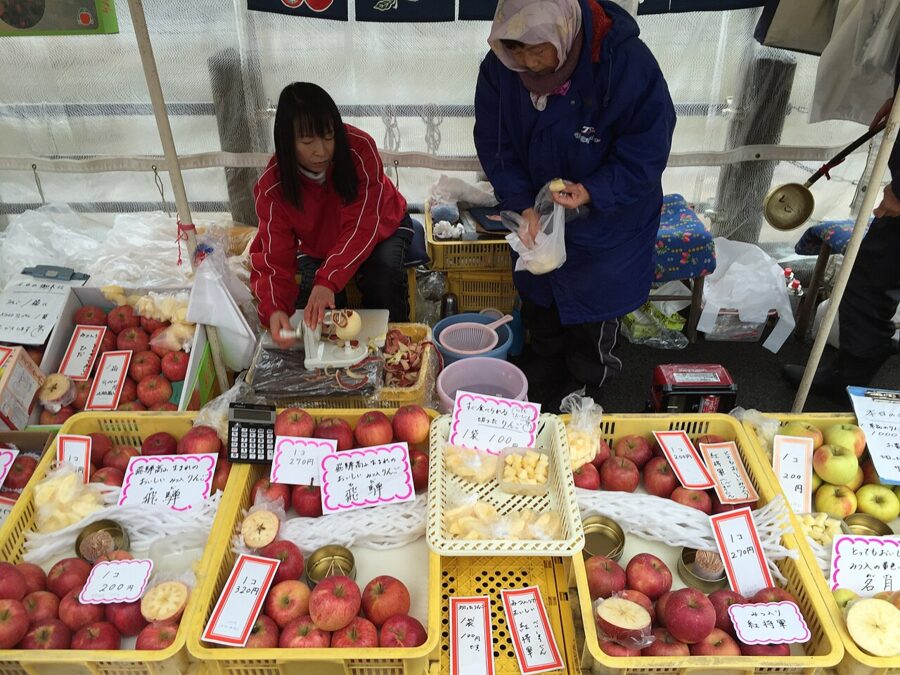
If you have time for one, go to Miyagawa. Its sellers run the market themselves through a cooperative, which has held this stretch of riverbank since May 1960 after years of being moved on from the streets nearby. Go at seven or eight, when local people are still shopping and the stallholders have time to tell you how to cook the mountain vegetables.
What to buy: red turnip pickles, miso, rice cakes made that morning, apples in autumn, and small carved or sewn souvenirs. The faceless red doll you will see everywhere is a sarubobo, a charm for safe childbirth and family luck. The Jinya-mae market is worth a look on your way to the Jinya, and it needs ten minutes, not an hour.
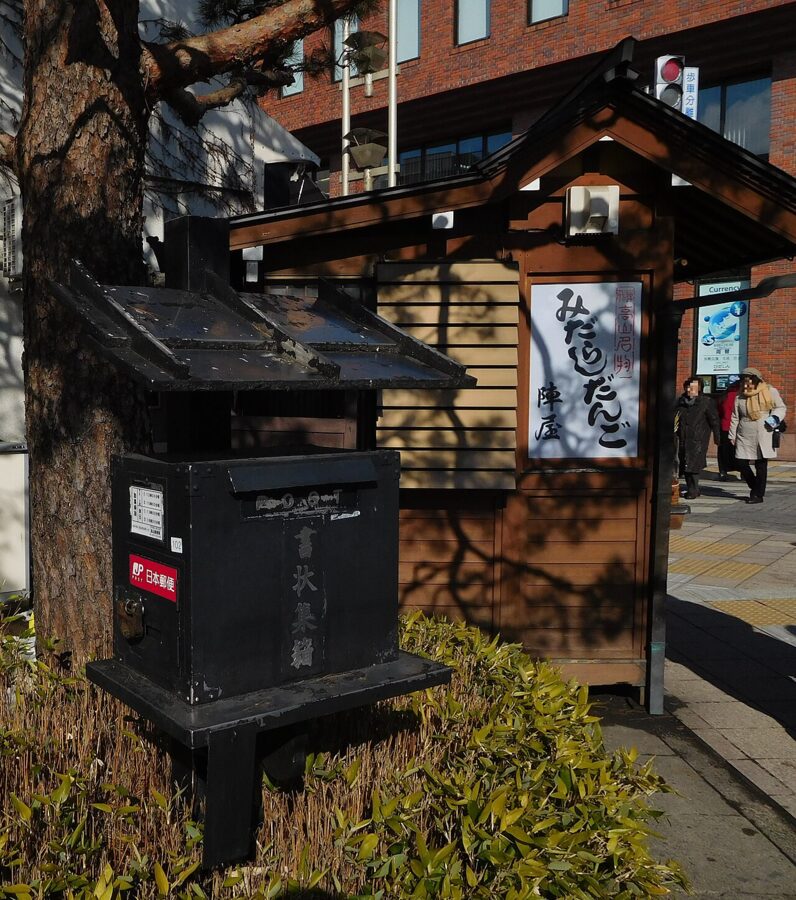
Is Takayama Jinya worth it?
Yes, and it takes about half an hour. The shogunate ran Hida from this office from 1692 until 1868, and it stayed in use as a government office until 1969. Of the sixty-odd magistrate’s offices that existed across Japan at the end of the Edo period, this is the only one whose main buildings survive.
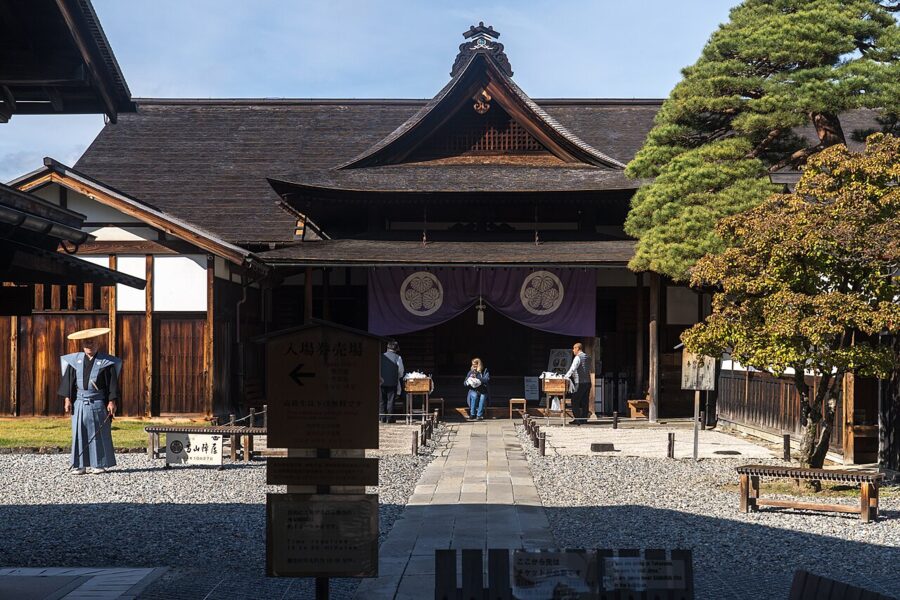
Inside are tatami offices and audience rooms, a courtroom with the instruments of interrogation still laid out, and a rice storehouse moved here from the grounds of Takayama Castle in 1695. That storehouse, built around 1600, is counted among the oldest surviving Edo-period rice stores in Japan. Free guides are available.
Admission rose on April 1, 2026, to ¥500 for adults, and it is free for high school students and younger. The Jinya opens at 8:45 and closes at 17:00 from April to October and at 16:30 from November to March, with last entry thirty minutes before. It closes over the New Year holidays.
Hida Folk Village or Shirakawa-gō?
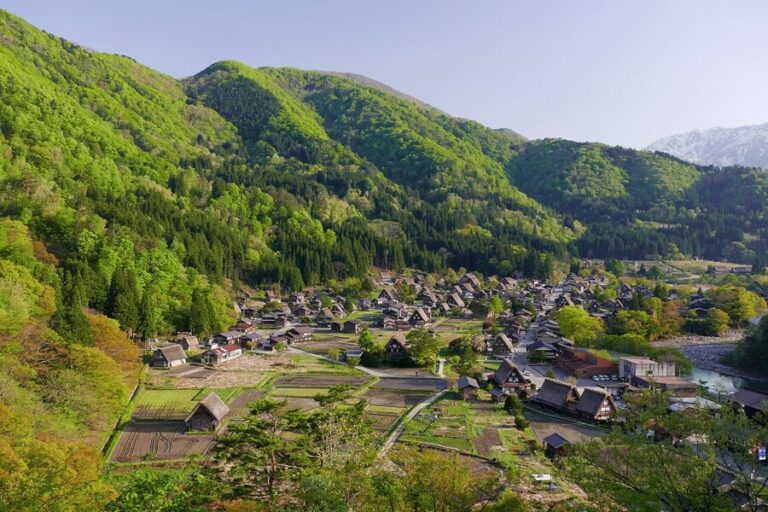
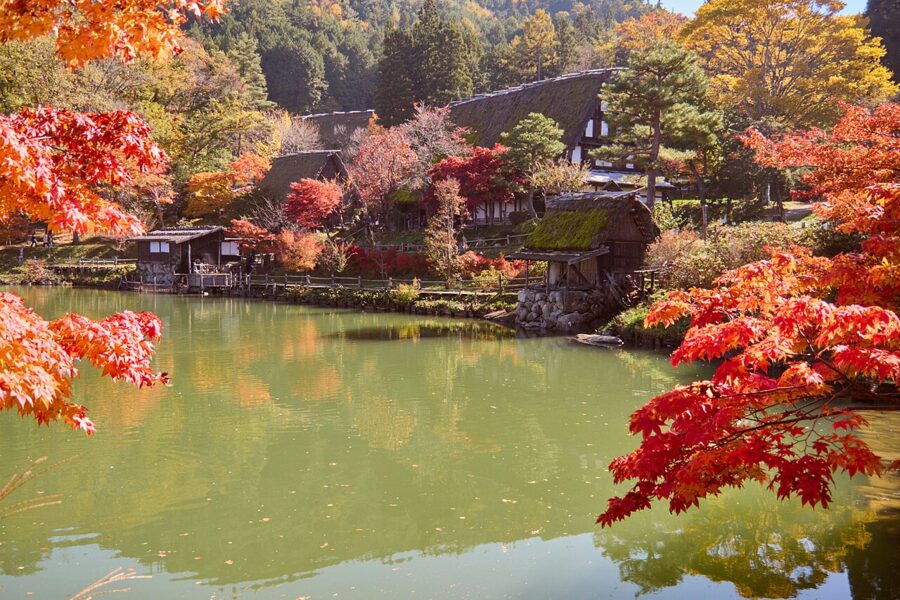
It depends on what you want. The Hida Folk Village (Hida no Sato) is an open-air museum of about thirty farmhouses and storehouses moved here from around the region, furnished and open inside. Shirakawa-gō is a living village of thatched houses in its own valley, with a World Heritage listing and the crowds that come with it.
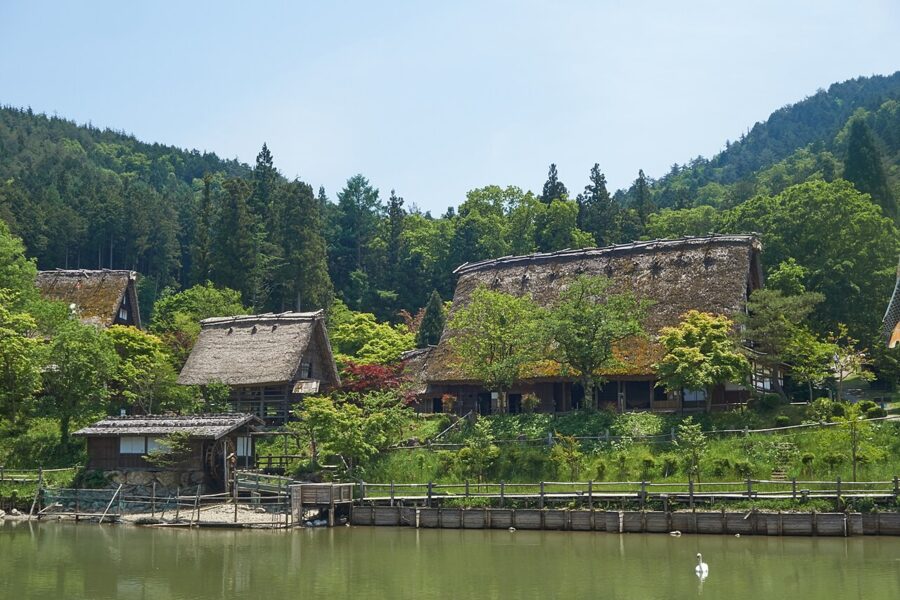
The Folk Village is the easier half day: a ten-minute ride on the Sarubobo bus from the station, ¥700 (about US$4) for adults and ¥200 for school-age children (as of 2026), and open daily from 8:30 to 17:00. Paths are unpaved with steps between houses. The houses are furnished: spindles, silkworm trays and cooking gear sit where they were used.
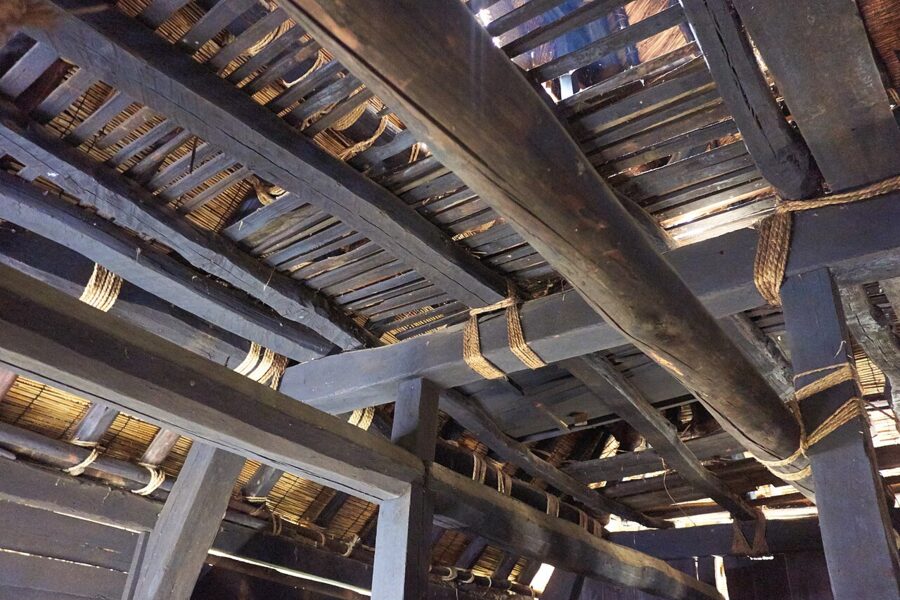
My advice: if Shirakawa-gō is already on your route between Kanazawa and Takayama, skip the Folk Village. If it is not, the Folk Village gives you most of the architecture without a three-hour round trip, and it is quiet on weekday mornings.
When is the Takayama Festival?
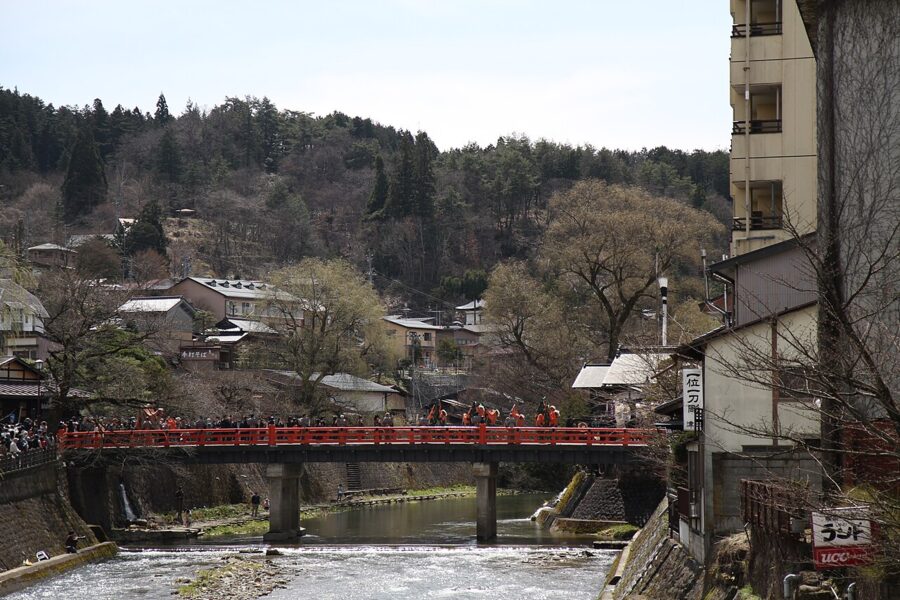
Twice a year, on fixed dates: April 14 and 15 for the spring festival, and October 9 and 10 for the autumn festival. They are two different shrine festivals with one name. In spring it belongs to Hie Shrine, south of Yasugawa-dōri, with twelve floats; in autumn to Sakurayama Hachimangu, north of it, with eleven.
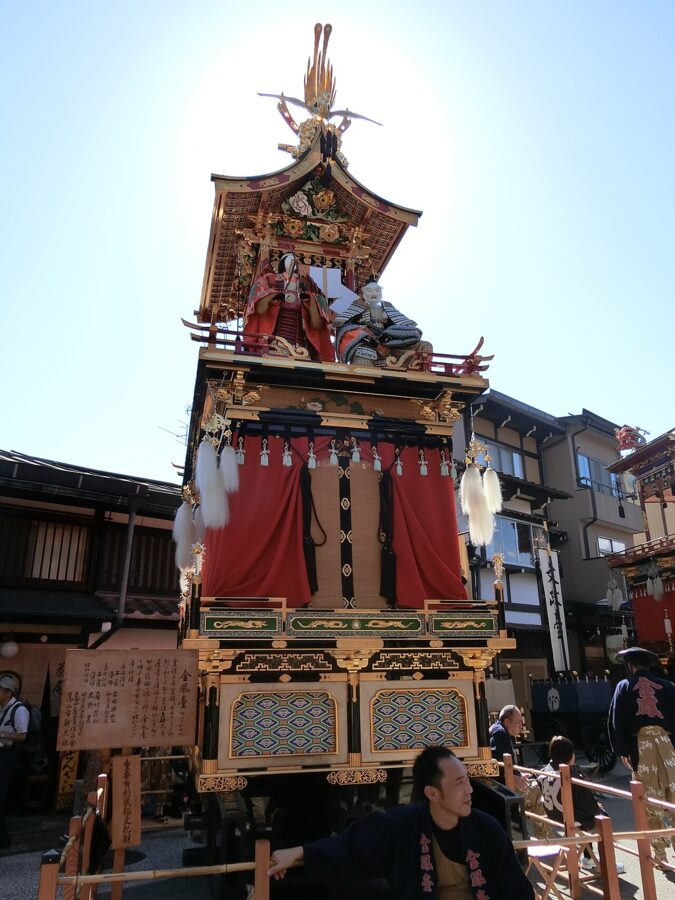
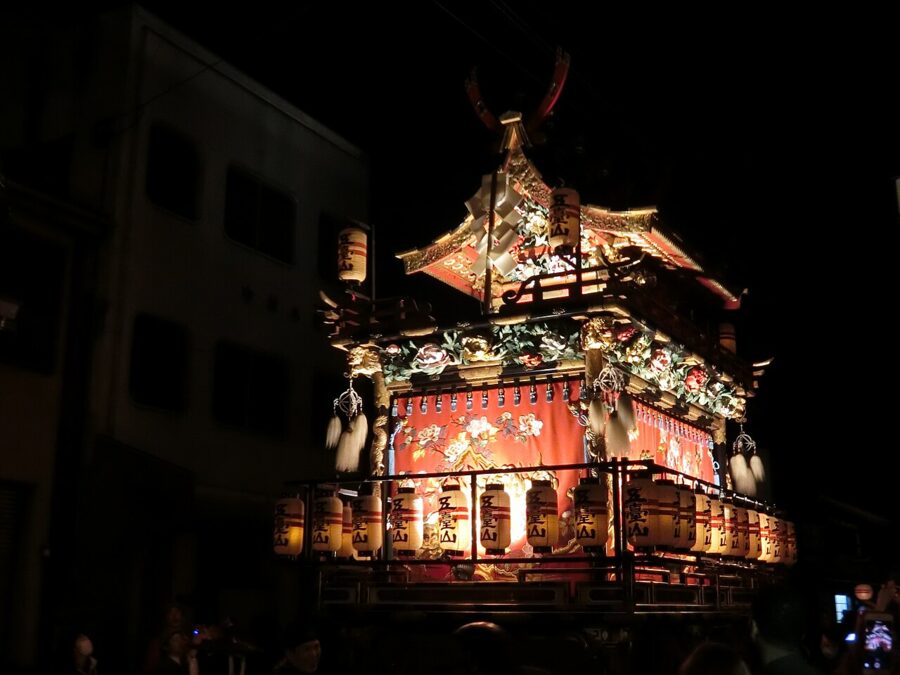
On both days the floats stand on display through the day, a costumed procession carries the shrine’s deity through the streets, and puppeteers work the karakuri marionettes on top of certain floats, twice a day. On the evening of the first day, April 14 or October 9, each float is hung with about a hundred lanterns and pulled slowly through town. That night parade is the part I would rearrange a trip for.
Rain cancels the parades and the puppet shows, and nothing is postponed. Rooms for the festival nights sell out months ahead, so book as soon as your dates are firm, or stay in Furukawa or Gero and come in by train. In autumn 2026 one float, Gyōjin-tai, was away for repairs, and only ten were shown; check the city’s festival page before you go.
What are the yatai, and where can you see them the rest of the year?
The yatai are the festival floats: tall wheeled carriages with carved woodwork, lacquer, metal fittings and embroidered drapes, owned and kept by their neighborhoods. They are nationally protected cultural properties, and in 2016 UNESCO listed the Takayama festival with thirty-two other Japanese float festivals as intangible cultural heritage.
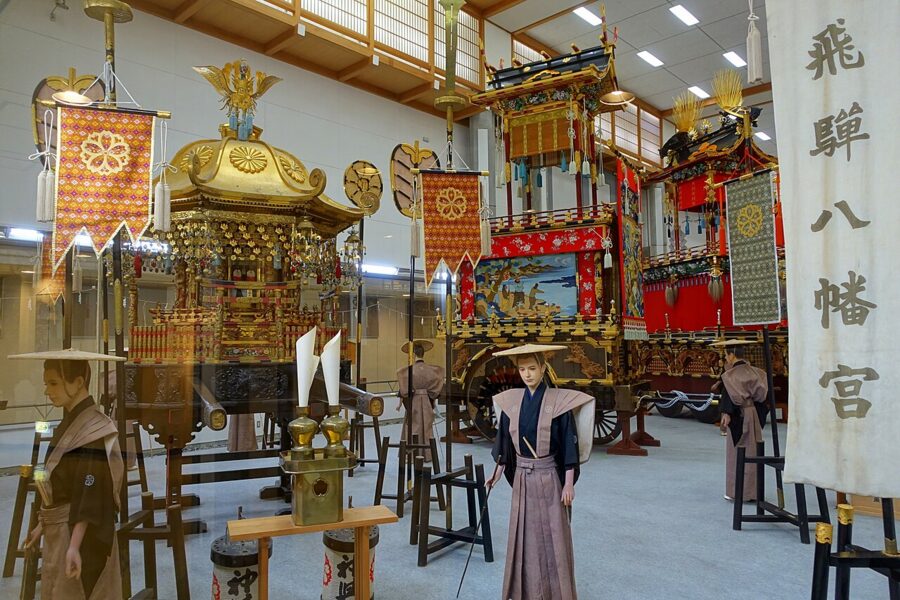
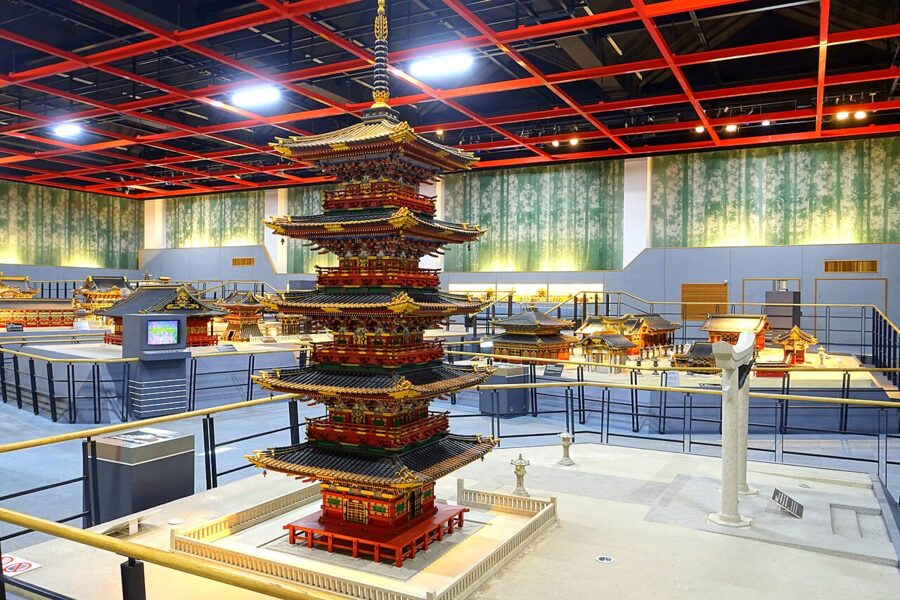
Out of season, go to the Takayama Matsuri Yatai Kaikan in the grounds of Sakurayama Hachimangu, a twenty-minute walk north of the station. It shows four real floats, rotated through the year, and the Sakurayama Nikkōkan beside it holds a detailed scale model of the Nikkō shrines. Admission is ¥1,000, and it opens daily from 9:00 to 17:00, closing at 16:30 from December to February.
For cherry blossom, Takayama runs later than Tokyo, and the sakura forecast is published from January.
Where can I try Hida beef?
Almost anywhere in the old town, and in three very different forms. Hida beef is a protected name for Japanese Black cattle raised longest in Gifu Prefecture, by registered farms, fattened for at least fourteen months and graded 3 to 5 for meat quality.
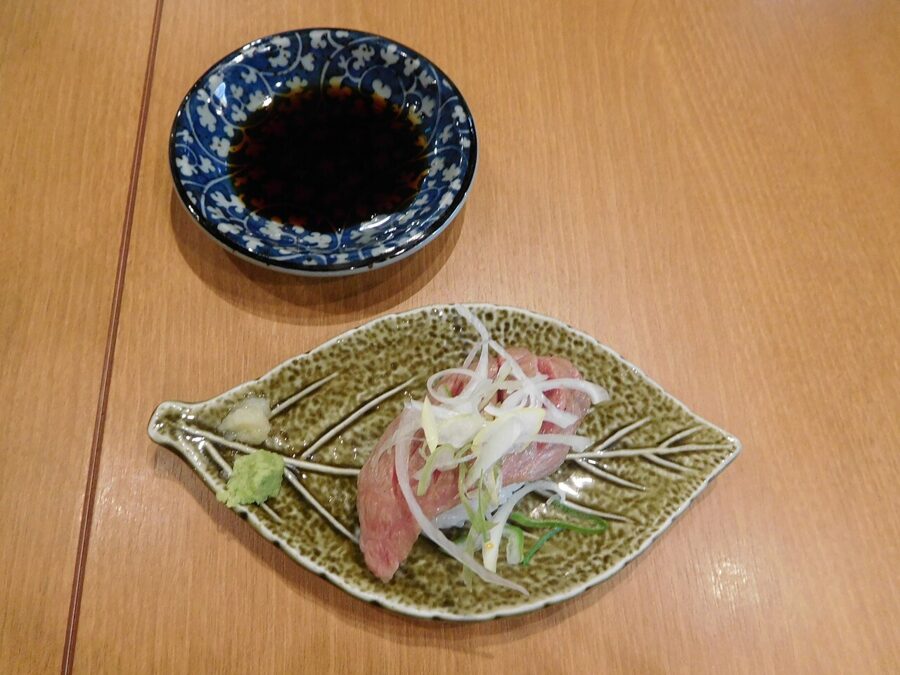
The quick version is seared beef nigiri from the old-town counters. The local version is hoba miso: beef or vegetables cooked with miso on a dried magnolia leaf over a small burner at your table, which many ryokan serve at breakfast. The full version is a steak or grill dinner.
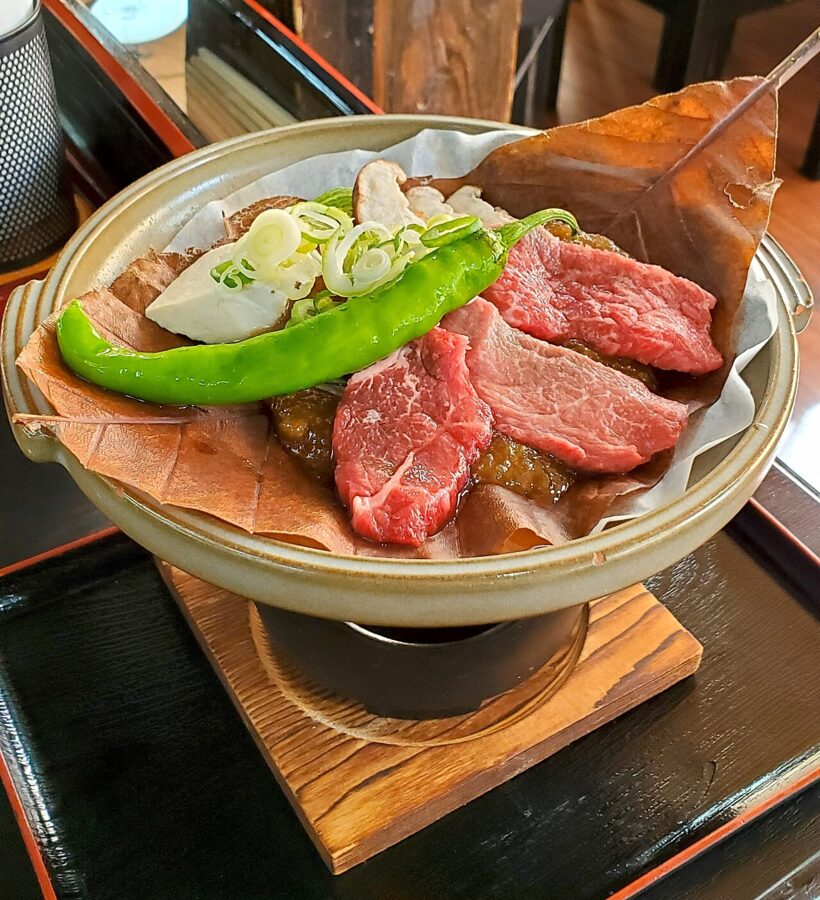
For dinner I like an izakaya over a steakhouse. Ajihei, a Showa-retro izakaya in town, does hoba miso, Hida dishes and fish from the Sea of Japan, with more than ten local sakes, from 17:00 to midnight. It closes only on December 31 and January 1; book on festival nights and weekends.
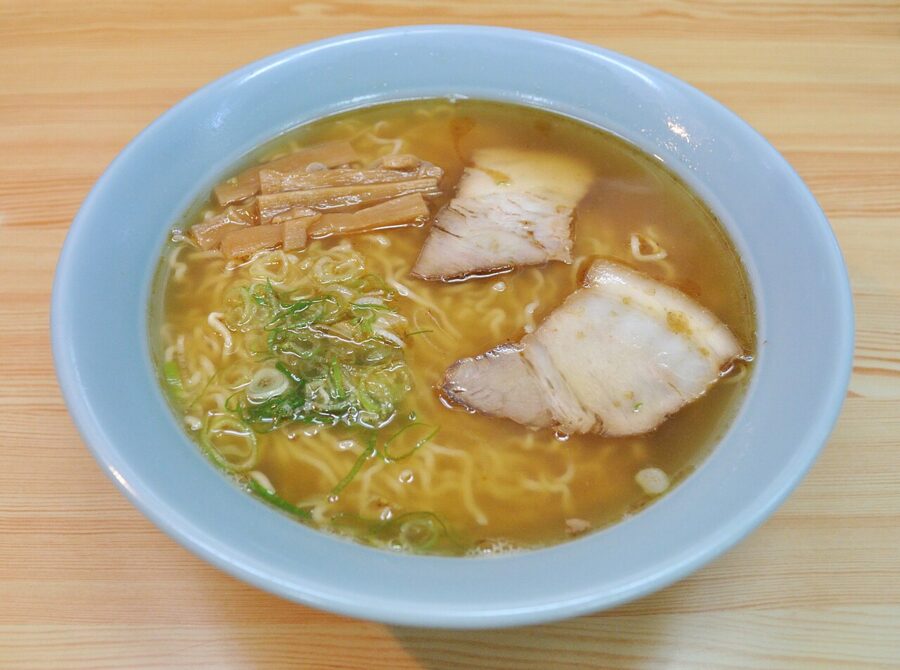
Lunch, if it is not beef, should be Takayama ramen: thin, curly noodles in a clear soy broth, lighter than most Japanese ramen. Some small shops close once the soup runs out, so go before 13:00.
Where should I stay: near the station, in the old town, or in a ryokan?
Near the station if you arrive late, leave early or ride buses out to Shirakawa-gō and Okuhida. In or near the old town if you want the lanes at dawn and dusk. A ryokan if you want dinner, breakfast, a futon on tatami and, often, a bath.
Some hotels in town have hot spring baths and some do not, so if a real onsen matters, check that the hotel says so. Tattoo rules differ from inn to inn; ask before booking. Since October 1, 2025, Takayama has charged an accommodation tax of ¥100 to ¥300 (about US$1 to US$2) per person per night, depending on the room rate, with elementary-school-age children exempt.
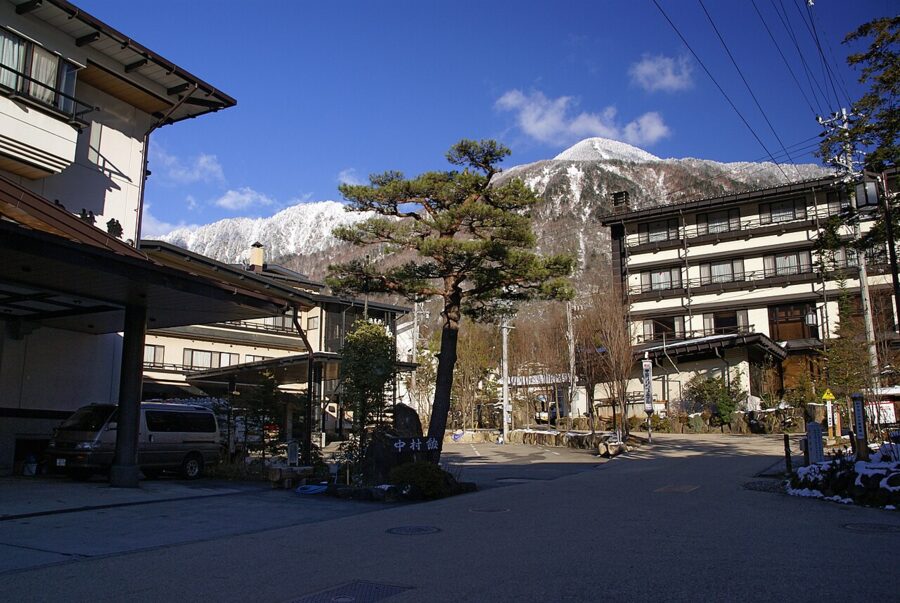
For a proper onsen night, go up to Okuhida. Its five hot spring villages, Hirayu, Fukuji, Shinhirayu, Tochio and Shinhotaka, have more than a hundred outdoor baths between them, many facing the Northern Alps. Hirayu is about an hour from Takayama by bus, ¥1,600 (about US$10), and most of the Shinjuku buses stop there.
If you drive between December and March, book a rental car with winter tires. The city warns drivers that normal tires on snowy roads are illegal in Gifu, and that rental firms rarely switch them after you arrive.
What are the best day trips from Takayama?
Shirakawa-gō for thatched houses, Okuhida for mountains and baths, Hida-Furukawa for a quieter old town. I would do one per extra night, not two in a day.
Shirakawa-gō
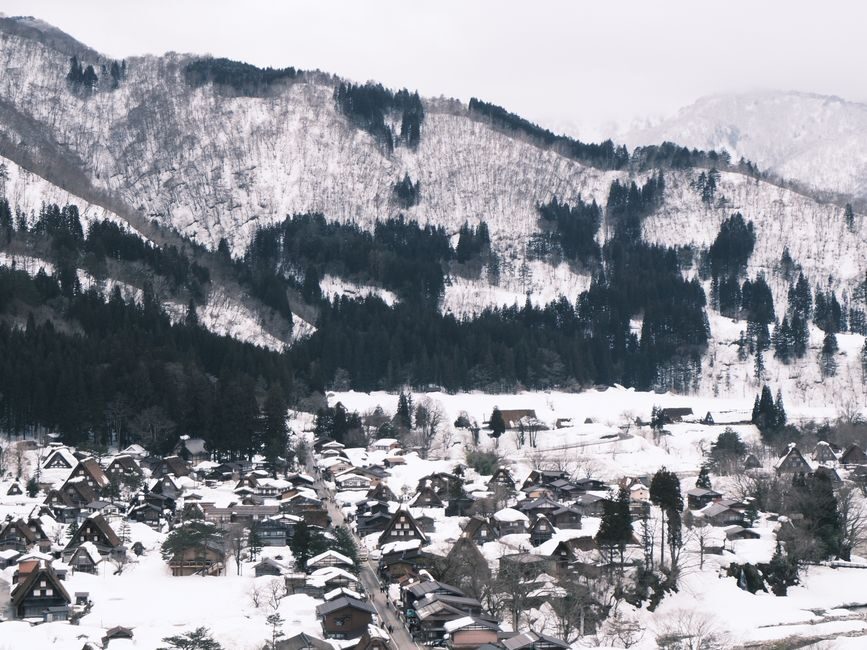
About fifty minutes by Nohi bus, ¥2,900 one way from December 1, 2026. Book the bus, take an early one, and allow at least two to three hours in Ogimachi, the main village; the lanes are busiest at midday when the coaches are in.
Okuhida and the Shinhotaka Ropeway
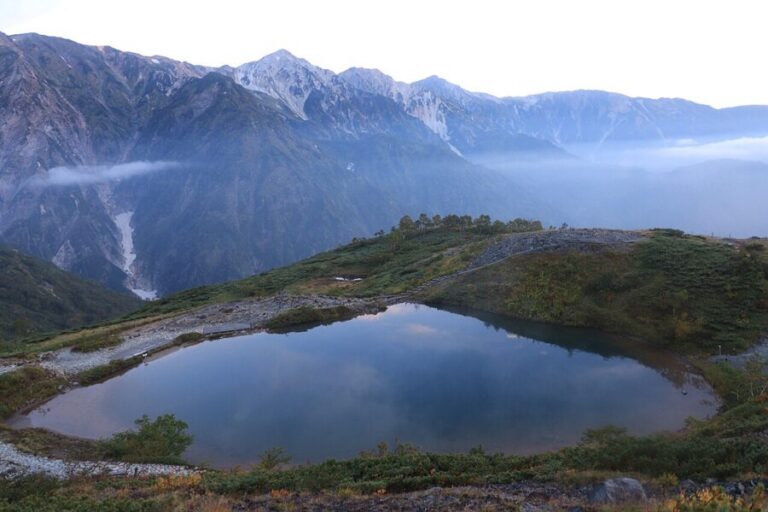
Nohi buses run about once an hour from Takayama to the Shinhotaka Ropeway, about an hour and a half via Hirayu, for ¥2,200 (about US$14) one way. Two cable cars, the upper one with double-decker gondolas, lift you to Nishihotakaguchi Station at 2,156 meters, where a rooftop deck faces the Hotaka peaks and Yarigatake.
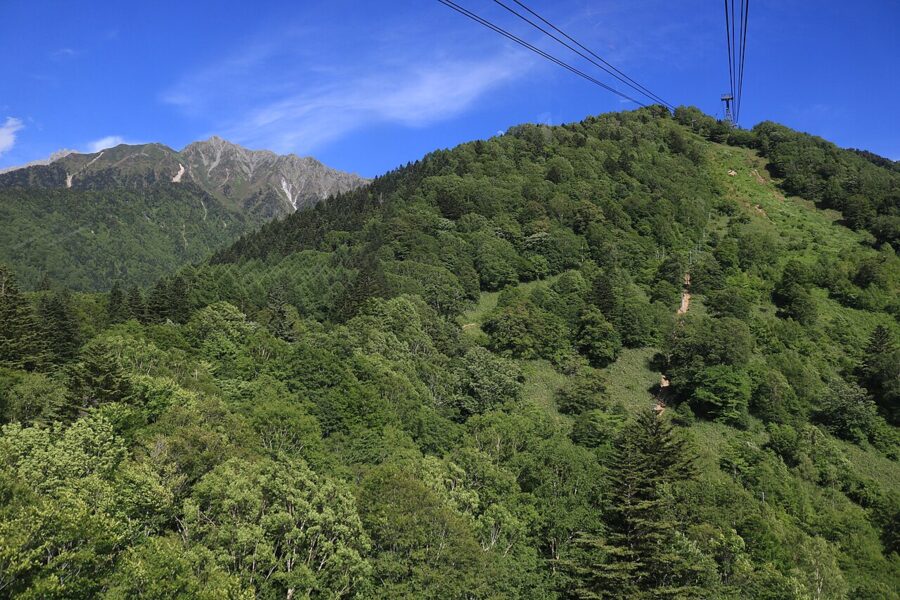
The round trip costs ¥3,800 (about US$24), as of 2026. The ropeway runs every day of the year but stops for high wind and for short maintenance closures, which it posts on its site. Take a warm layer even in summer.
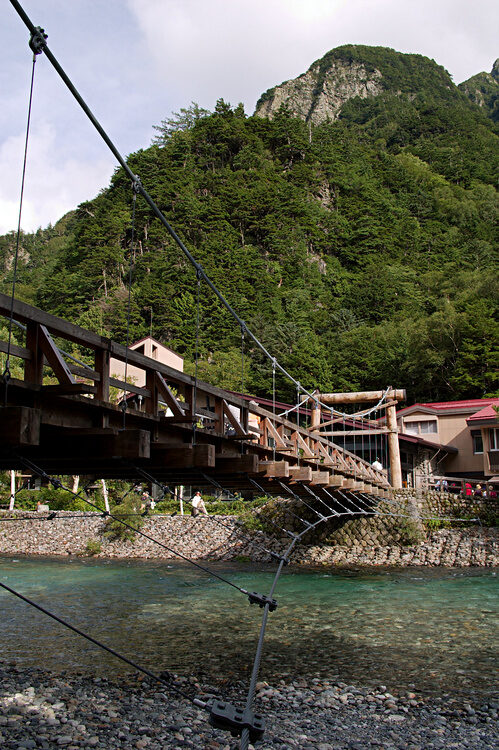
Kamikochi, the alpine valley on the Nagano side, is reached the same way, by changing at Hirayu. It is open only between mid-April and mid-November; in 2026 the season ran from April 17 to November 15.
Hida-Furukawa
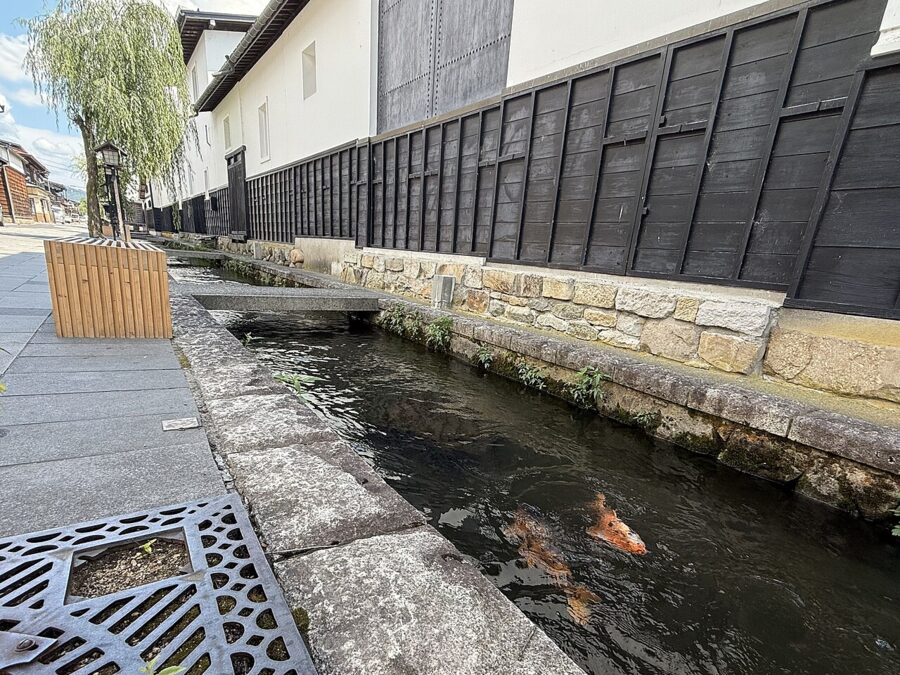
Fifteen to twenty minutes north by train, Hida-Furukawa has the look of Takayama’s old town at a fraction of the crowd. Walk the Seto River canal, lined with white-walled storehouses and full of carp, then the temple quarter and the timber streets behind it. A morning is enough, and you can be back in Takayama for lunch.
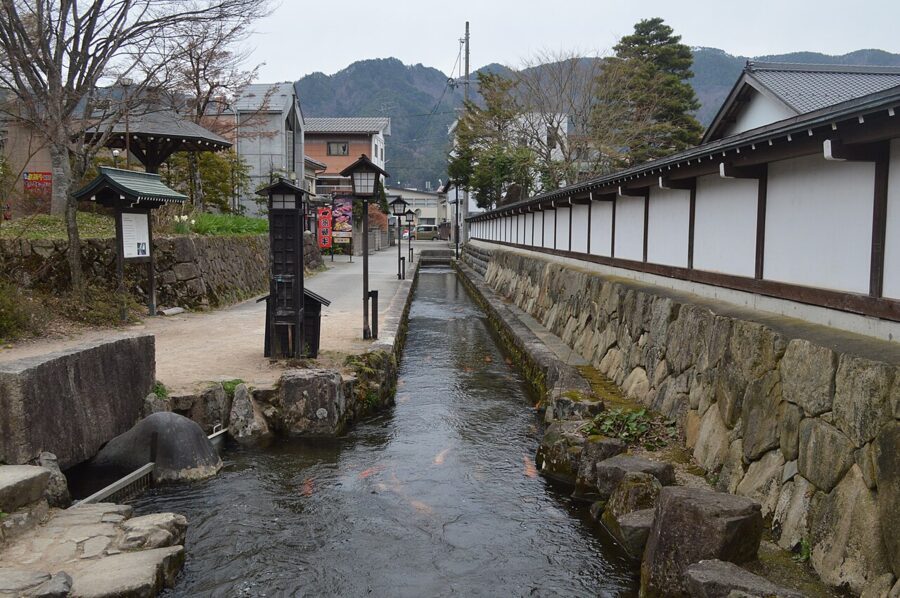
Between late November and early April the carp are moved out to a pond, because the canal is used to carry away snow from the streets. The town’s own festival, with its midnight drum procession, is on April 19 and 20.
So: two nights, and set an alarm. Book the Hida or the Shinjuku bus the day seats open, a month ahead, and the festival rooms even earlier. Then be at the Miyagawa Market by eight, when the stallholders still have time to talk.