Questions on this page22
- Can you see Mount Fuji from Tokyo?
- Getting to the Fuji Five Lakes from Tokyo
- Kawaguchiko and the best viewpoints
- Can you climb Mount Fuji?
- When is the climbing season?
- Which trail should you take?
- Do you need a permit for the Yoshida Trail?
- What are the rules on the Shizuoka trails?
- Do you need to book a mountain hut?
- What should you bring?
- How bad is the altitude, and how cold does it get?
- Can you climb Fuji in a day?
- Is Mount Fuji still an active volcano?
- Can you climb Fuji outside the season?
- Can you visit the 5th Station without climbing?
- When is the Fuji Shibazakura Festival?
- Kawaguchiko, Hakone or the Shizuoka side: where should you stay?
- What to do before you leave home
On the roof of a school building in Kichijoji, in west Tokyo, someone has checked for Mount Fuji every day since 1963. The summit is 83 kilometers away. In the 1960s the Seikei Meteorological Observatory counted about fifty days a year when it showed; in recent years the count has passed 150.
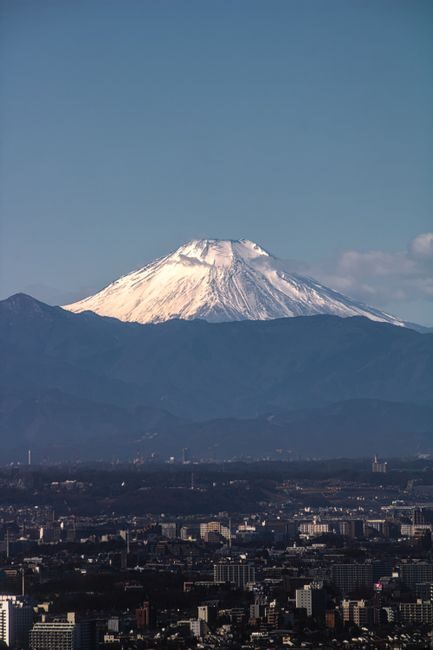
So yes, you can see Fuji from Tokyo, more often than most visitors expect, and far more often in winter than in June. If you want it close, the Fuji Five Lakes on the north side are about two hours from Shinjuku by bus or train. If you want to stand on top, the season is ten weeks long, and the most popular trail now has a fee, a gate and a daily cap.
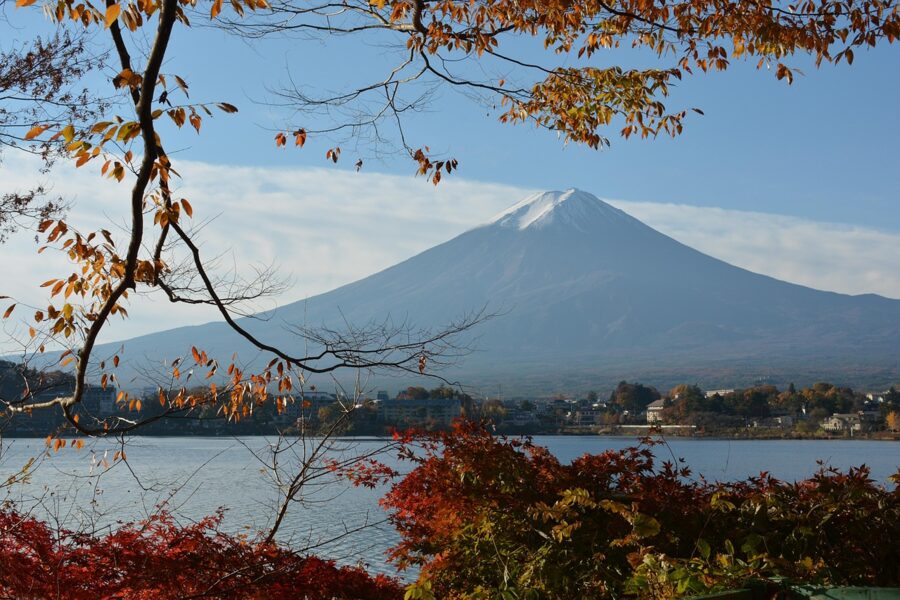
Can you see Mount Fuji from Tokyo?
Yes, on clear days, and the clear days bunch up in the cold months. JNTO’s own viewing notes say what any Tokyo resident would tell you: from far away, crisp winter days give the best view, and the rainy season from early June to mid-July hides the mountain most of the time. The Kichijoji observers credit cleaner, drier city air for their rising count.
Time of day matters too: early morning and late afternoon are the best windows, and the morning is the one to plan around. Treat a Tokyo sighting as a bonus, not a plan.
Where in Tokyo can you see it from?
Anywhere high with a clear line to the southwest. The easy one is the Tokyo Metropolitan Government Building in Shinjuku, where both towers have an observatory on the 45th floor, 202 meters up, and entry is free. Tokyo Skytree, Tokyo Tower and the City View deck on the 52nd floor of Roppongi Hills Mori Tower all show it on a clear day, for an admission fee.
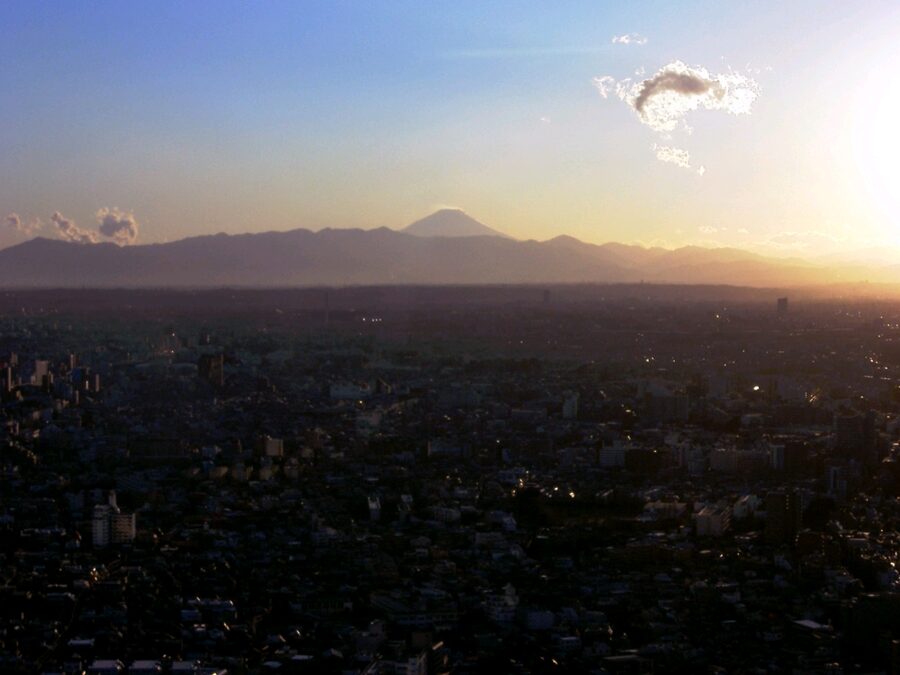
If you would rather earn it, Mount Takao is about 50 minutes from Shinjuku by train, with Fuji across the hills from the summit. On the coast, Enoshima frames it over the sea.
Which side of the Shinkansen is Fuji on?
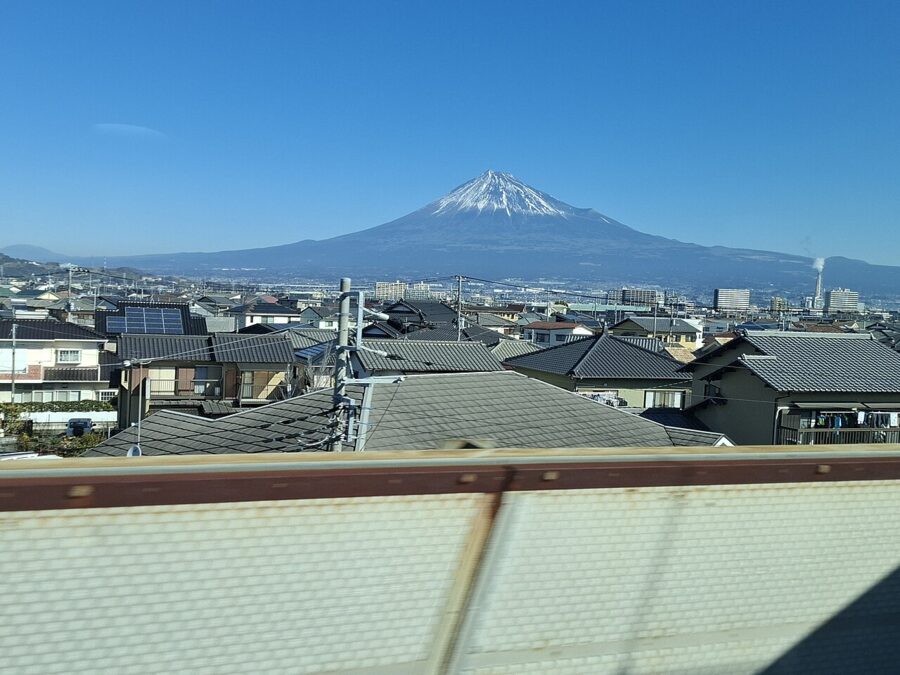
The right-hand side when you leave Tokyo heading west, which is seat E in the ordinary cars; the left-hand side when you come from Kyoto or Osaka. The classic view comes around Shin-Fuji Station, where the line crosses the Fuji River. Ask for it when you book.
Getting to the Fuji Five Lakes from Tokyo
The bus from Busta Shinjuku to Kawaguchiko Station takes about 1 hour 45 minutes and costs ¥2,200 (about US$15), or ¥2,000 (about US$13) if you pay online, as of 2026. The through train, the Fuji Excursion, takes from 1 hour 53 minutes and costs ¥4,200 (about US$28). The bus is the better deal for most people, as long as you book it and accept that traffic can make it late.
| Route (as of 2026) | Time | Fare, adult | Booking |
|---|---|---|---|
| Highway bus, Busta Shinjuku to Kawaguchiko Station | about 1 hr 45 min | ¥2,200 (¥2,000 online) | Reserved seats; opens one month ahead |
| Fuji Excursion limited express, Shinjuku to Kawaguchiko | from 1 hr 53 min | ¥4,200 | Reserved or seat-unspecified ticket |
| JR to Otsuki, then Fujikyu Line local | depends on the connection | ¥2,580 (about US$17) base fare | None needed |
| Summer direct bus, Busta Shinjuku to Fuji Subaru Line 5th Station | about 2 hr 30 min | ¥4,800 (about US$32; ¥4,500 online) | Reserved seats; climbing season only |
Where does the bus leave from, and do I need to book it?
It leaves from the 4th floor of Busta Shinjuku, the expressway bus terminal directly connected to the south side of Shinjuku Station. Yes, you need a booking: every seat on the Shinjuku to Fuji Five Lakes line is reserved, and sales open on the same date one month before travel and close ten minutes before departure. Phone bookings on the first day of sale start at 9 a.m.
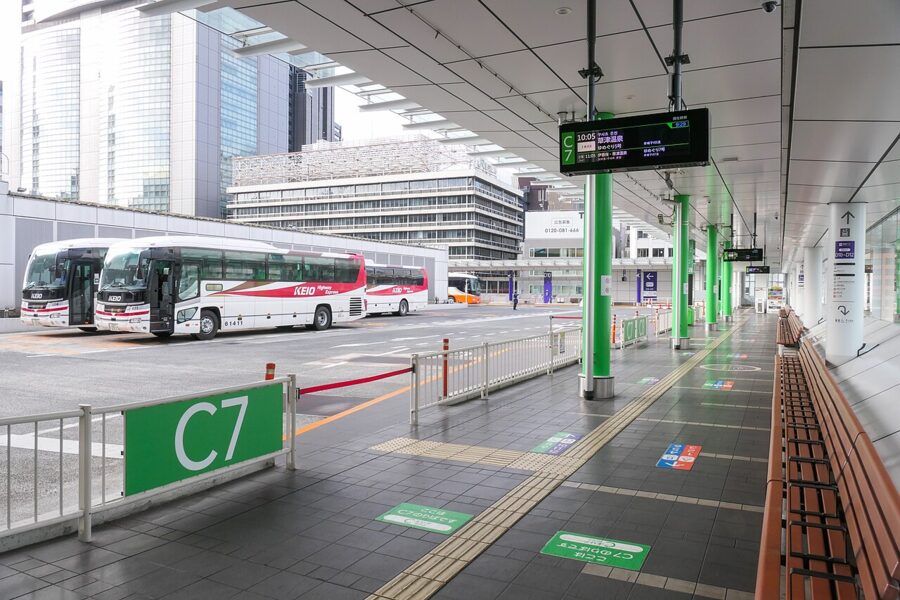
One change catches people out. Two companies run the line, Keio and Fujikyu, and from October 1, 2026 the Fujikyu-run buses are sold on Fujikyu’s own site, Fujiyama Connect, while the Keio-run buses stay on Highway Bus.com. You cannot move a booking from one site to the other; you cancel, pay any cancellation fee, and book again.
Pick up the ticket at least ten minutes before departure and be at the gate on time; an empty seat at departure can go to someone else. Lose a paper ticket and you may have to buy another, and no fare is refunded for a late arrival in traffic.
Is the train worth it?
The Fuji Excursion runs from Shinjuku straight through to Kawaguchiko four times a day each way, with one extra train in busy periods. The ¥4,200 is the ¥2,580 base fare plus a ¥1,620 (about US$11) express charge, and there are no unreserved cars: you buy either a reserved seat or a “seat-unspecified” ticket that lets you take any empty seat.
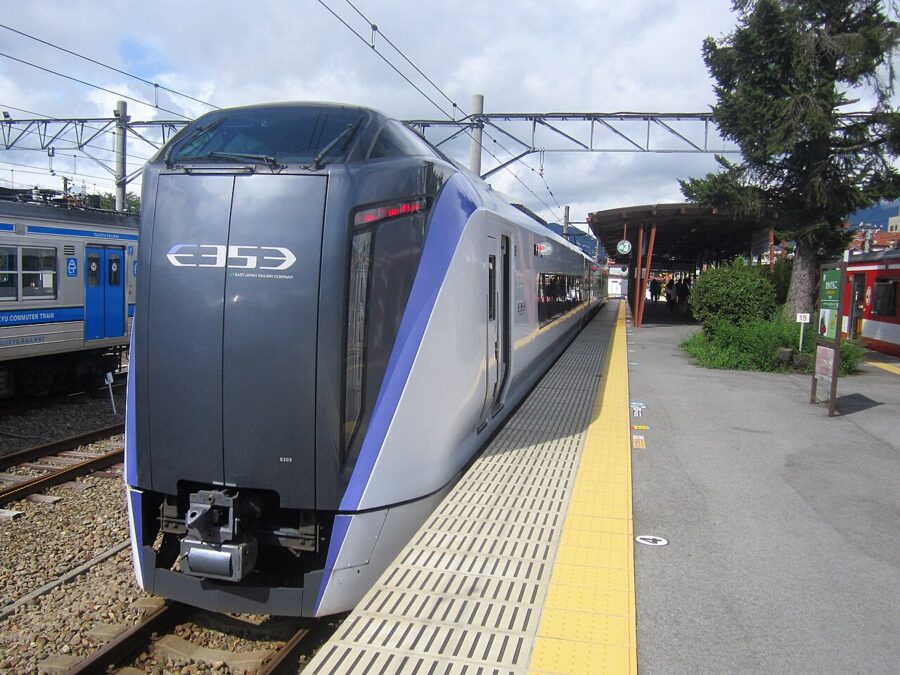
The cheap way by rail is the JR Chuo Line to Otsuki and a change to the Fujikyu Line local. Fujikyu’s fare table gives ¥1,170 (about US$8) from Otsuki to Kawaguchiko and ¥980 (about US$7) to Shimoyoshida, the stop for the Chureito Pagoda; IC cards work and are charged to the yen. For IC cards and rail passes, see getting around Japan.
Can you drive to Mount Fuji?
Yes. The Chuo Expressway takes you to Kawaguchiko IC, and the toll road up the mountain, the Fuji Subaru Line, starts nearby and climbs to the 5th Station at about 2,300 meters. In summer that road closes to private cars: in 2026 the ban ran from July 3 at 18:00 to September 10 at 18:00.
During the ban you leave the car at Fujisan Parking near Fujiyoshida IC, which charges ¥1,000 (about US$7) per visit, and ride the shuttle bus up for ¥3,000 (about US$20) round trip, valid for two days. Electric and fuel-cell cars may use the road, but only after getting a certificate at the parking lot first.
Kawaguchiko and the best viewpoints
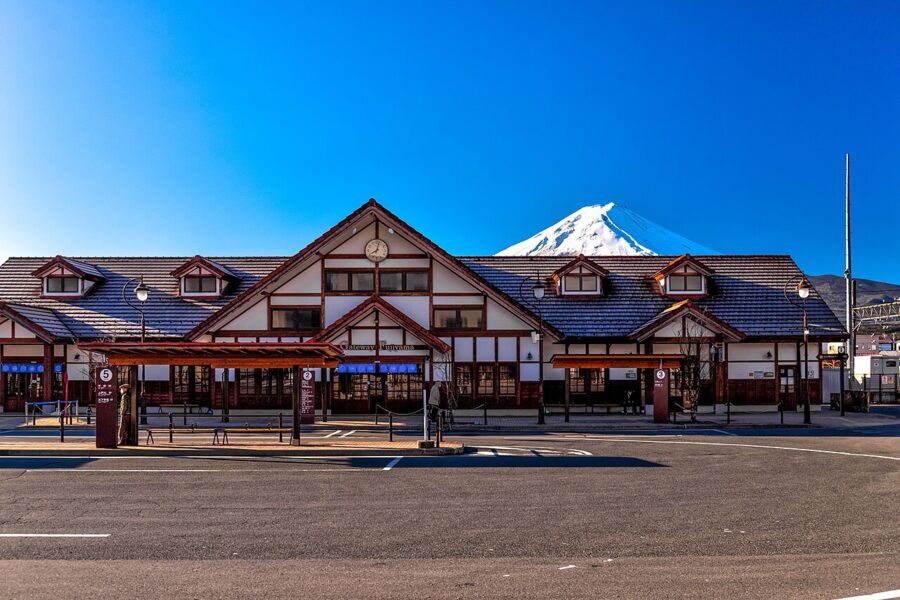
Lake Kawaguchi is the most accessible of the five lakes, and Kawaguchiko Station is the base for nearly everything here. The two famous views are a few stops back down the Fujikyu Line at the Chureito Pagoda, and across the water on the north shore; both are best before the day-trip buses arrive.
How do you get to the Chureito Pagoda?
Take the Fujikyu Line to Shimoyoshida Station and walk. Fujiyoshida’s tourism office puts it at about 25 minutes from the station to the pagoda, and the last part is a flight of 398 steps up through Arakurayama Sengen Park to the viewing deck, renovated and reopened in February 2022. The park is open around the clock and costs nothing to enter.
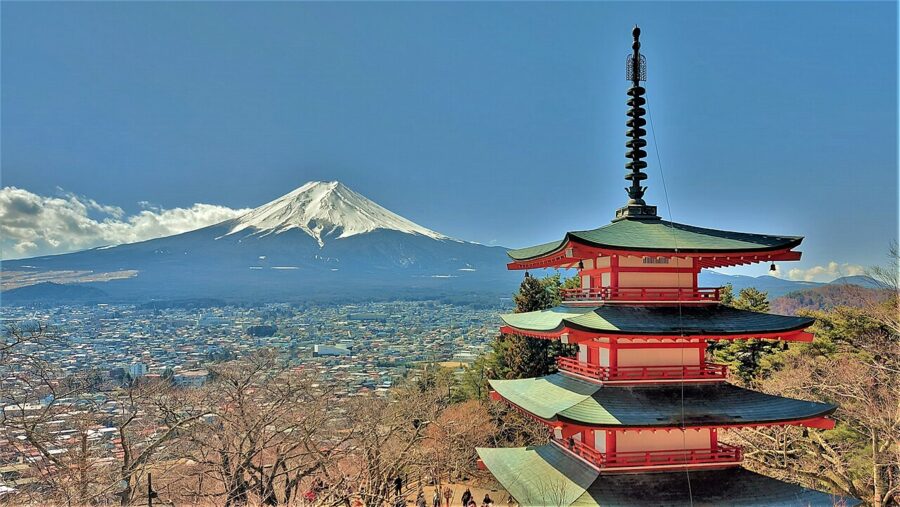
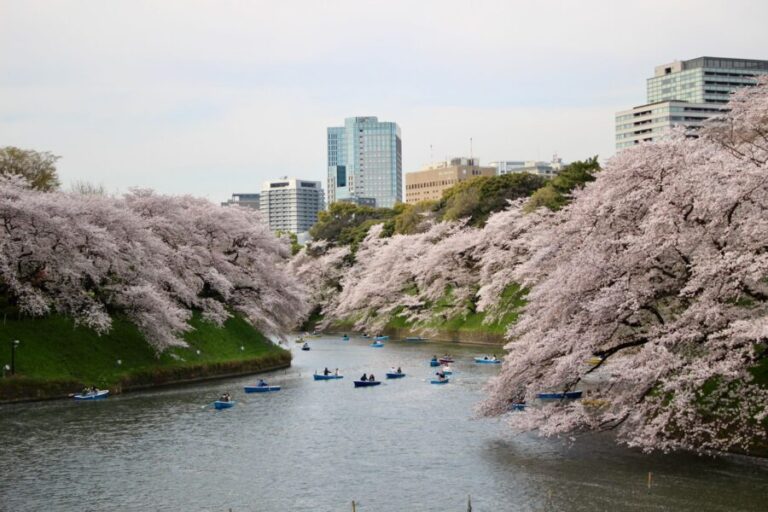
At cherry-blossom time it is the most crowded viewpoint around Fuji. About 650 cherry trees grow in the park, and in 2026 the city called off the park’s cherry-blossom festival altogether, after years of complaints from residents about traffic, litter and visitors walking into private gardens. The park stayed open. If you go in bloom, go at dawn on a weekday, and see cherry-blossom season for how the forecasts work.
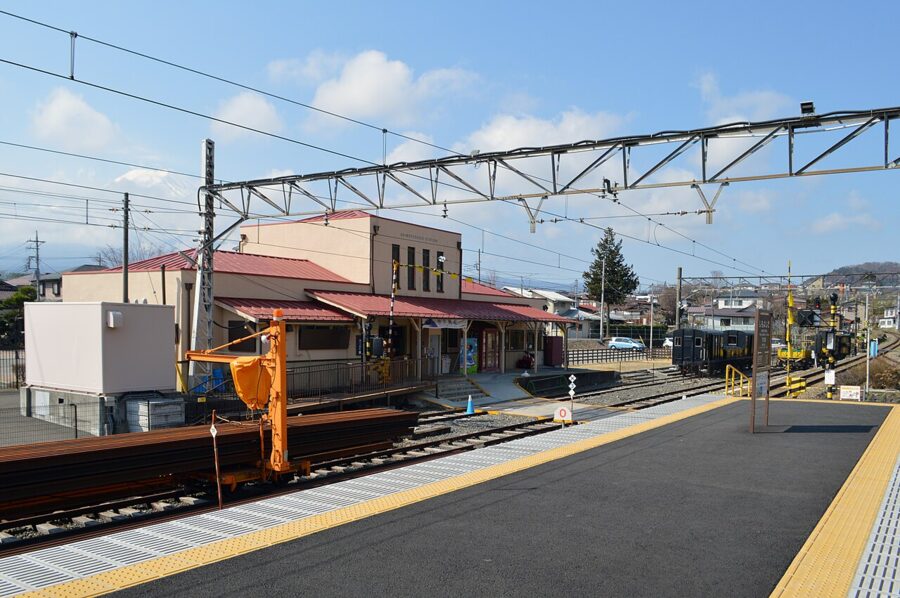
A few practical rules from the city: do not drive up to the plaza in front of the pagoda, and if you do come by car, use the four paid lots, which charge ¥1,000 or ¥1,500 (about US$10) for up to six hours. The pagoda is lit after dark, from 16:00 in December to February and from 19:00 in summer, until 21:50.
Oishi Park and the north shore
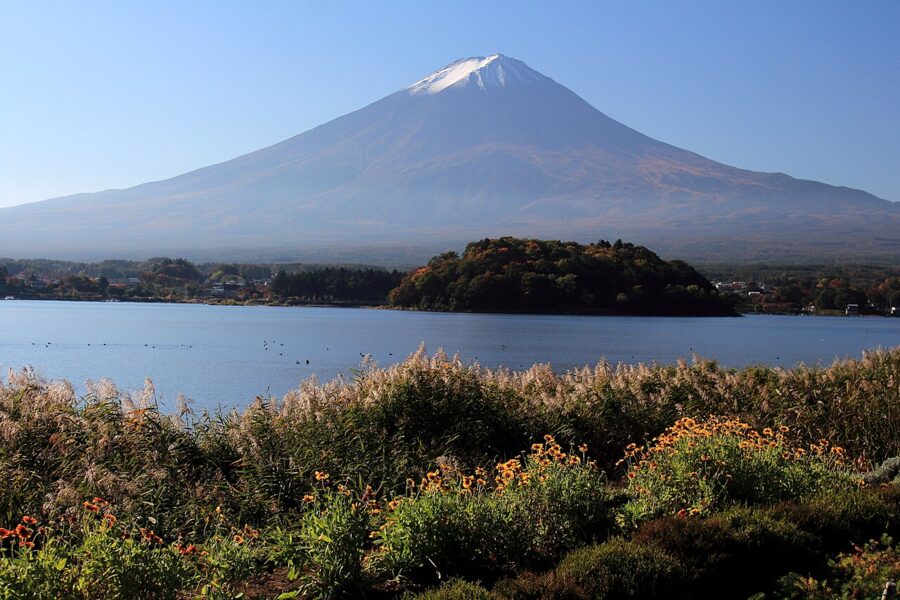
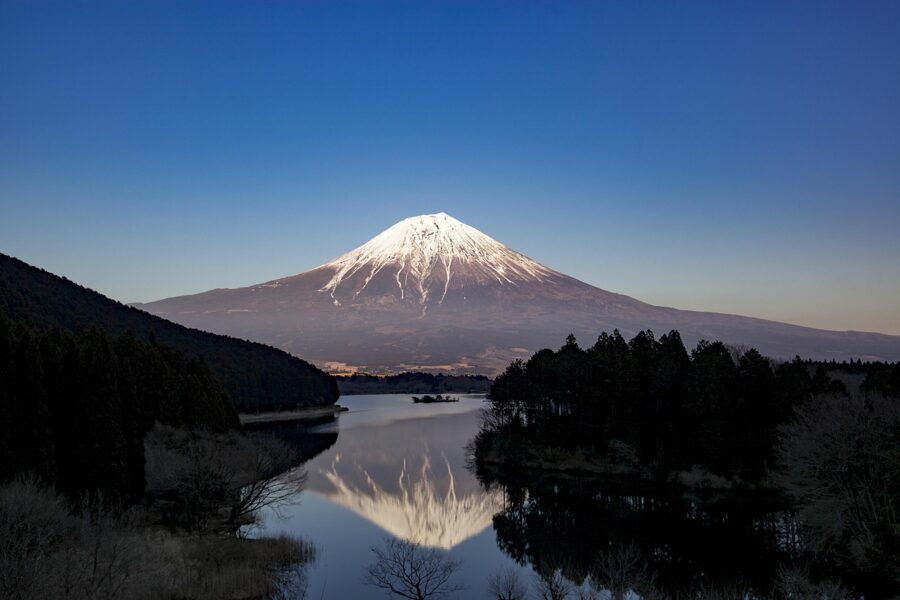
Oishi Park is the lakeside park on the north shore of Lake Kawaguchi, and it gives the straight-on view: water, then the whole mountain, with nothing in the way. In winter the snow cap is at its fullest, and on a still morning the reflection is the reason to set an alarm.
How do you get around the lake without a car?
By the three sightseeing bus loops that start at Kawaguchiko Station. The Red Line runs the north shore of Lake Kawaguchi, with stops at Oishi Park and the Kawaguchiko Muse Museum; the Green Line goes on to Lake Saiko; the Blue Line reaches Narusawa, Lake Shoji and Lake Motosu. Fujikyu’s pass for all three costs ¥1,500 (about US$10) for one day or ¥2,000 for two, as of 2026; single rides start at ¥180 (about US$1).
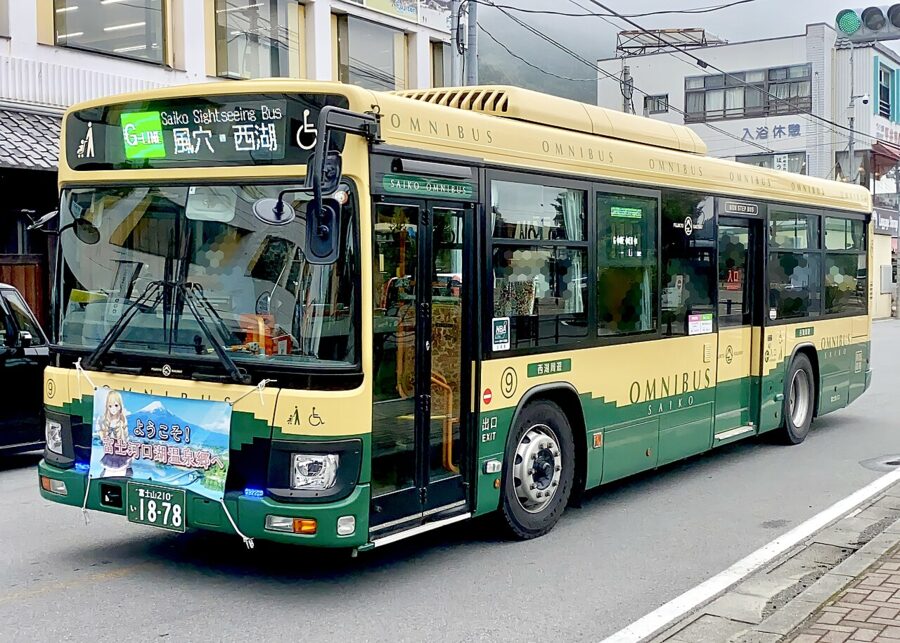
For a view from above, the Mount Fuji Panoramic Ropeway climbs from the east shore of the lake in about three minutes to a deck at 1,075 meters, with Fuji on one side and the lake below. Look at the mountain before you buy the ticket; in cloud it is pointless.
Can you climb Mount Fuji?
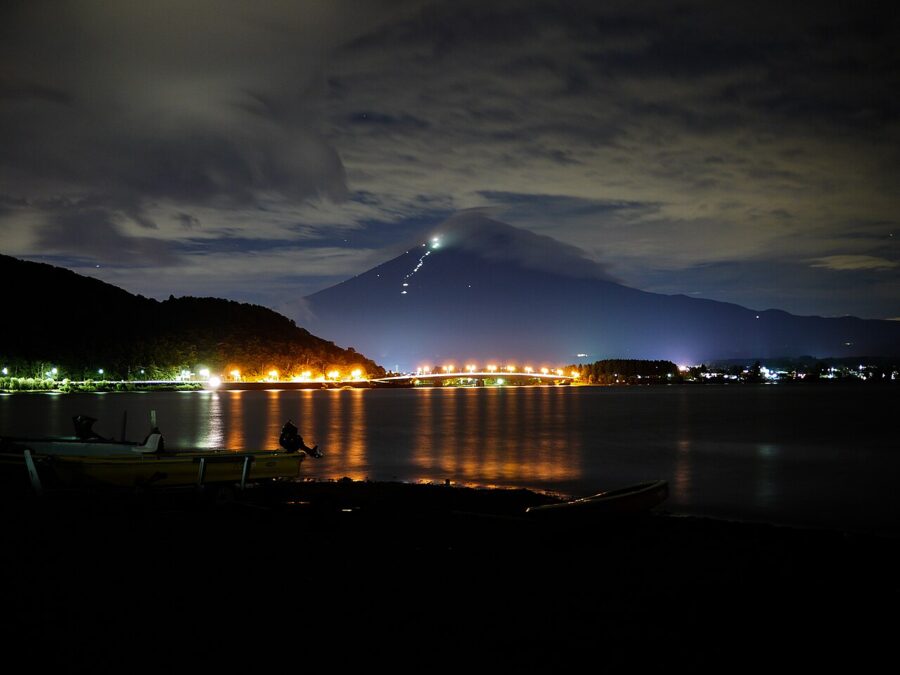
Yes, in summer, and only in summer. The official climbing site runs the season from early July to September 10, and outside it the trails above the 5th Stations are closed. Most climbers start at a 5th Station, sleep a few hours in a hut, and reach the 3,776-meter summit for sunrise.
When is the climbing season?
In 2026 the Yoshida and Subashiri trails opened on July 1, the Fujinomiya and Gotemba trails and the walk around the crater rim on July 10, and all four closed on September 10. The official site expects 2027 to run from early July to early September again, with dates announced before the season. The trails are busiest from late July to late August, worst on weekends and over Obon, the mid-August holiday when families visit their hometowns, so a weekday in early July or early September is the calm choice.
Which trail should you take?
The Yoshida Trail, unless you have a reason not to. It starts at the Fuji Subaru Line 5th Station, the easiest to reach from Tokyo and Kawaguchiko, has the most mountain huts and first-aid posts, and uses a separate path for the way down. The official route comparison gives these figures:
| Trail | Starts at | Up | Down | Notes |
|---|---|---|---|---|
| Yoshida (Yamanashi) | 2,305 m | 6.8 km, about 6 hr | 7.0 km, about 3.5 hr | Most huts; separate descent path |
| Fujinomiya (Shizuoka) | 2,400 m | 4.3 km, about 5 hr | Same path, about 3 hr | Shortest, steep and rocky |
| Subashiri (Shizuoka) | 2,000 m | 6.9 km, about 7 hr | 6.2 km, about 4 hr | Forest at first; joins Yoshida at the Hon-8th Station |
| Gotemba (Shizuoka) | 1,440 m | 10.5 km, about 9 hr | 8.4 km, about 4 hr | Longest, fewest huts, sandy descent |
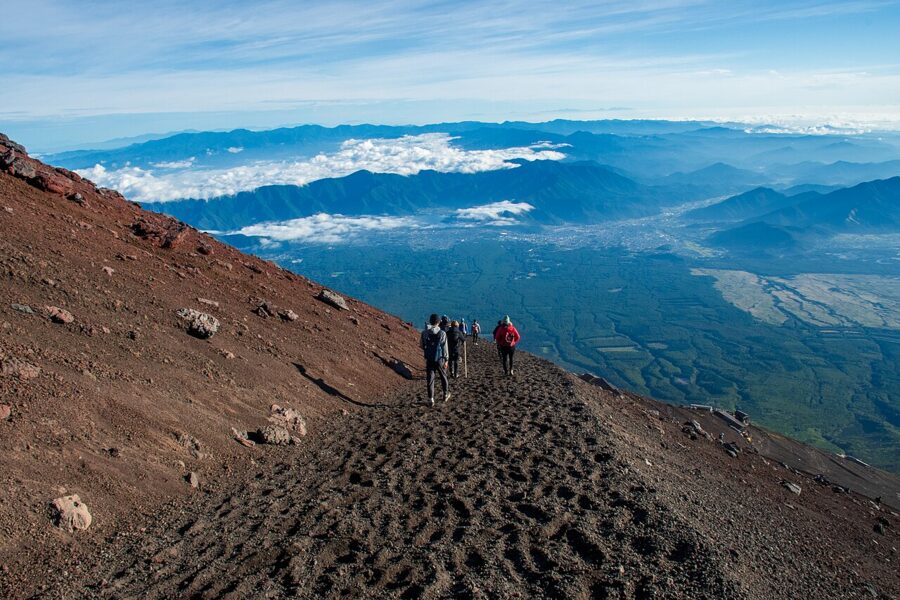
The Yoshida and Subashiri trails merge at the Hon-8th Station, which is why the last stretch to the summit jams before dawn. On the way down, watch for the fork near the 8th Station where the two descent paths split, marked by yellow signs; the wrong one ends on the other side of the mountain.
Do you need a permit for the Yoshida Trail?
You need to pay a hiking fee, and you can book a passage slot in advance. Every climber pays ¥4,000 (about US$27), children included, as of 2026. On the Yoshida Trail Yamanashi Prefecture’s rules add a gate at the 5th Station trailhead with two limits:
- The gate is shut to climbers from 14:00 to 3:00 the next morning, unless you have a mountain hut booking for that night. You can come down through it at any hour.
- It also shuts once 4,000 people have passed in a day, again with an exception for hut guests.
The advance booking is optional but sensible. You pay the fee online through Yamanashi’s Yoshida Trail reservation system, up to and including the day of the climb, and get a QR code for the gate. You can cancel free until the day after you pay; from two days after payment the whole fee is kept. The 5th Station has no ATM, so bring cash for anything you buy there.
The cap sounds scarier than it has been. The official FAQ records zero days in 2024 and zero in 2025 when the 4,000 limit was reached during open hours, and some places are held back for people who register on the day. The 14:00 gate is the rule that changes plans: if you are not sleeping in a hut, you must be through it by 2 p.m.
What are the rules on the Shizuoka trails?
The Fujinomiya, Gotemba and Subashiri trails have their own system, set out in Shizuoka Prefecture’s notice. Before you set off you complete a short online course on the rules and pass a test, all inside the prefecture’s free FUJI NAVI app, then pay the same ¥4,000 fee and get a QR code permit. On the day you show it at the trailhead and get a wristband.
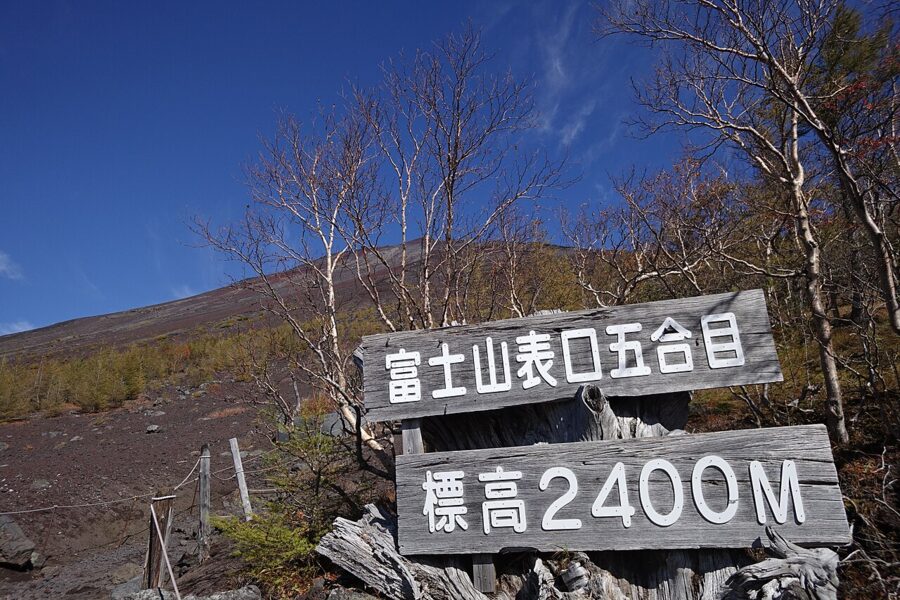
The time rule matches Yamanashi’s: no entry between 14:00 and 3:00 unless you have a hut booking. There is no daily cap on the Shizuoka side, and you can cancel for a full refund up to the day of entry. Without a smartphone you can do everything at the 5th Station, which takes about 30 minutes and can mean a queue in peak season. Pay on one side and come down on the other and you do not pay twice, but keep proof of payment.
Do you need to book a mountain hut?
If you want to see the sunrise from the top without breaking the night-time rule, yes. Hut bookings are separate from the hiking fee and are made directly with each hut, and when booking opens varies from hut to hut. Print or screenshot the confirmation, because the gate staff will ask to see it after 14:00.
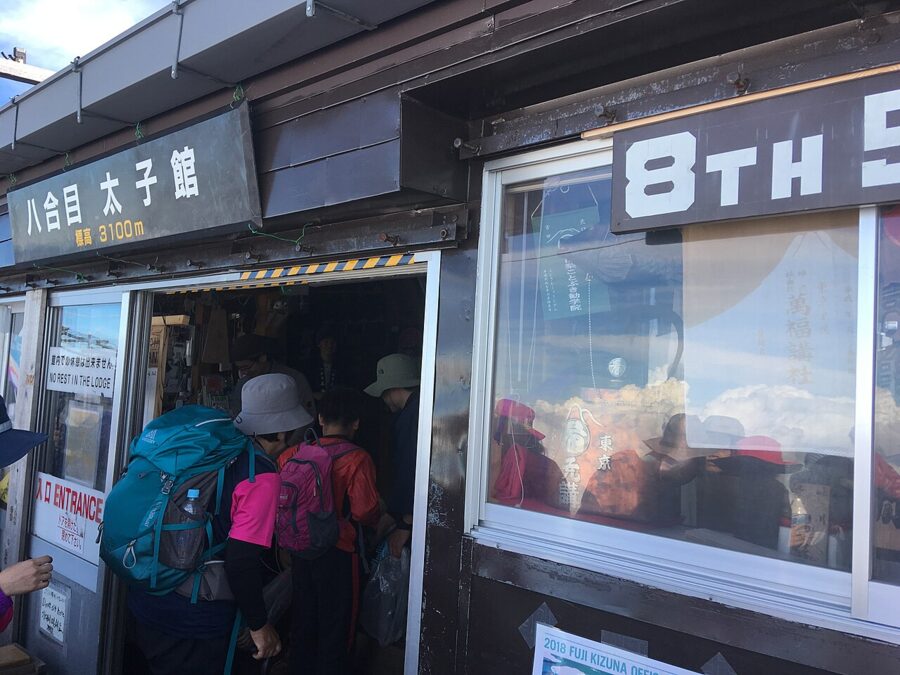
Huts are generally for overnight guests only, and there are no rest areas between them. Toilets ask for a tip of ¥100 to ¥300 (about US$1 to US$2), so carry 100-yen coins.
What should you bring?
Warm clothes, real rain gear and proper boots, because rangers can check your equipment and turn you back without them. The official gear list for a one-night climb comes down to this:
- High-cut hiking boots with stiff soles, checked before the trip; old soles peel off.
- Separate waterproof jacket and pants. A convenience-store poncho shreds in the wind.
- Fleece, a down jacket, gloves and a neck warmer.
- A headlamp with spare batteries, so both hands stay free.
- A pack of about 30 liters, 1 to 2 liters of water, high-calorie snacks and a bag to carry all your trash home; there are no bins on the mountain.
- Cash and 100-yen coins, a hat, sunglasses, sunscreen, a map, trekking poles with tip caps, and a small first-aid kit.
A helmet is recommended for falling rock, and a dust mask and goggles help on the sandy descents. Huts sell water, priced for being carried up by bulldozer.
How bad is the altitude, and how cold does it get?
Cold enough to matter even in August. Temperature drops about 0.6°C for every 100 meters you climb, so the summit sits roughly 9°C colder than the Yoshida 5th Station, and before sunrise it can be close to freezing. Wind makes it feel colder still, and summer afternoons can bring sudden thunderstorms.
The gate hours exist because of the “bullet climb”: going up overnight without sleeping, straight from Tokyo, to catch the sunrise. Officials blame it for altitude sickness and hypothermia, and I agree with them. Spend time at the 5th Station before you start, climb slowly, drink often, and if a headache or nausea gets worse as you climb, turn around.
The Yoshida Trail has first-aid centers at the 5th, 7th and 8th Stations in season. Most falls happen on the way down, on loose gravel, so keep your poles out.
Can you climb Fuji in a day?
Yes, if you start early. A fit walker can go up and down the Yoshida Trail from the 5th Station in a long day, about six hours up and three and a half down before breaks, but you must be through the gate by 14:00 and you will not see the sunrise from the top. Set a turnaround time and keep the last bus down in mind.
Is Mount Fuji still an active volcano?
Yes. The Japan Meteorological Agency keeps it at alert level 1, the lowest, with a reminder that it is an active volcano. Its last eruption, in 1707, blew out of the southeast flank and dropped ash on Edo, as Tokyo was then called. Climbers on the Yoshida Trail confirm they understand that when they pay the fee.
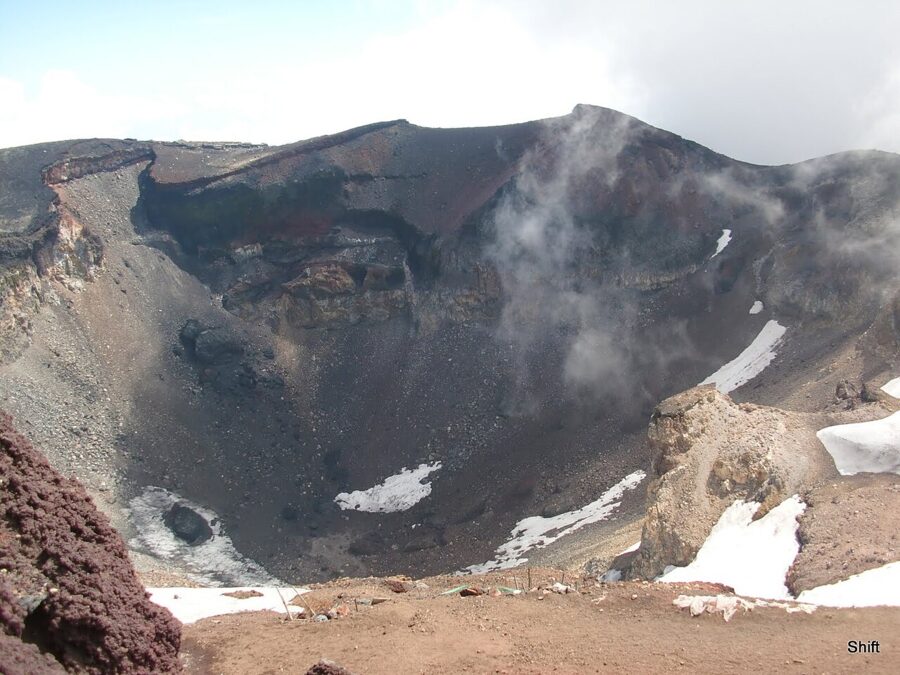
Can you climb Fuji outside the season?
No. Outside the season the trails from the 5th Stations to the summit are closed under the Road Act, and the penalty is up to six months in prison or a fine of up to ¥300,000 (about US$2,000). The huts and first-aid centers are shut, the guide ropes are taken down, mobile coverage almost disappears, gusts can top 40 meters per second, and even experienced mountaineers have died there. Go to the 5th Station instead.
Can you visit the 5th Station without climbing?
Yes, and it is the best half-day on the mountain for anyone who is not climbing. Buses run from Kawaguchiko Station and Mt. Fuji Station to the Fuji Subaru Line 5th Station outside the climbing season as well as in it; only the direct bus from Shinjuku is summer-only. Sightseeing at the 5th Station and walking the level Ochudo trail cost nothing, because the hiking fee applies only once you pass the trailhead gate.
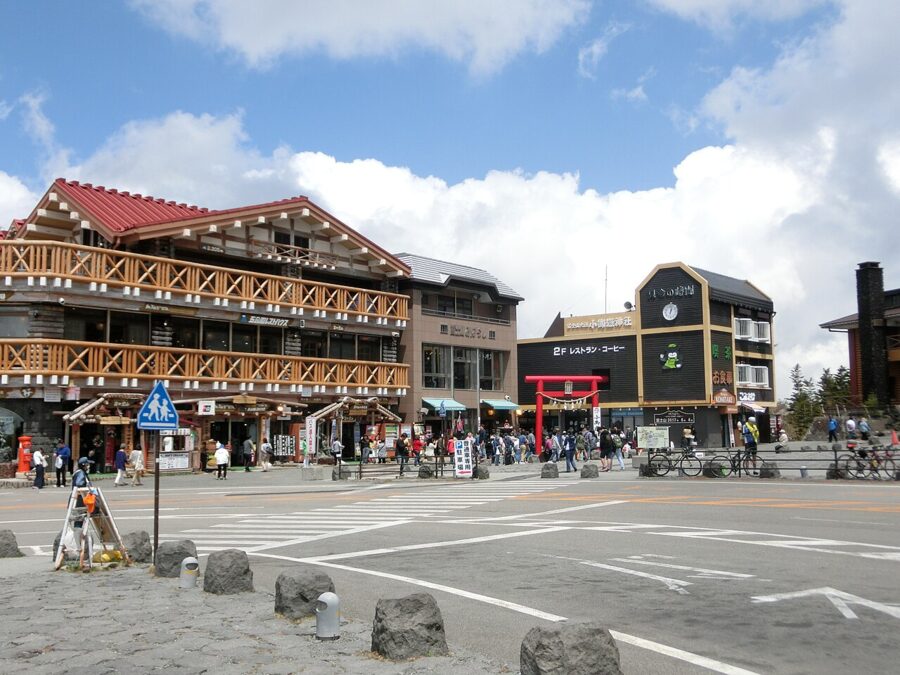
Behind the shops, Komitake Shrine holds the ceremony that opens the climbing season each July, and an observation deck behind the trailhead looks straight up at the summit. The information center there opens May through October, 9:30 to 16:30 outside the climbing season. In winter, snow and ice can close the upper Subaru Line, so check Fujikyu’s service notices on the morning you go.
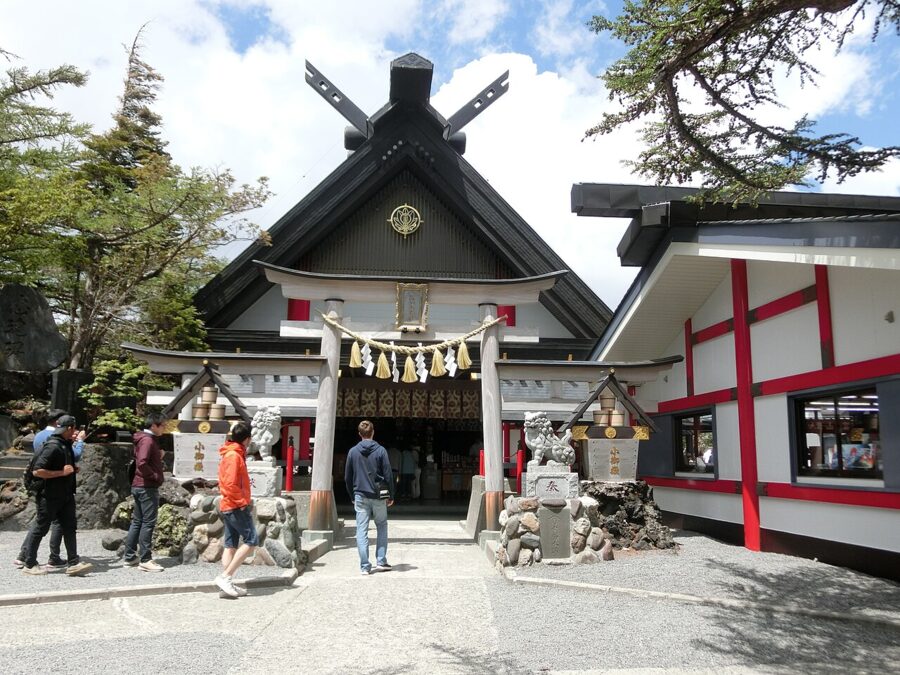
Go only when the top half of the mountain is clear. Cloud often sits on the middle slopes while the lakes are sunny, and on those days the 5th Station is a gift shop in fog.
When is the Fuji Shibazakura Festival?
In spring, from mid-April to late May. The 2026 Fuji Shibazakura Festival ran from April 11 to May 24 at Fuji Motosuko Resort, near Lake Motosu, with six varieties of moss phlox planted in pink, white and red bands below the mountain. The dates can shift with the bloom, and 2027’s had not been published by late November 2026.
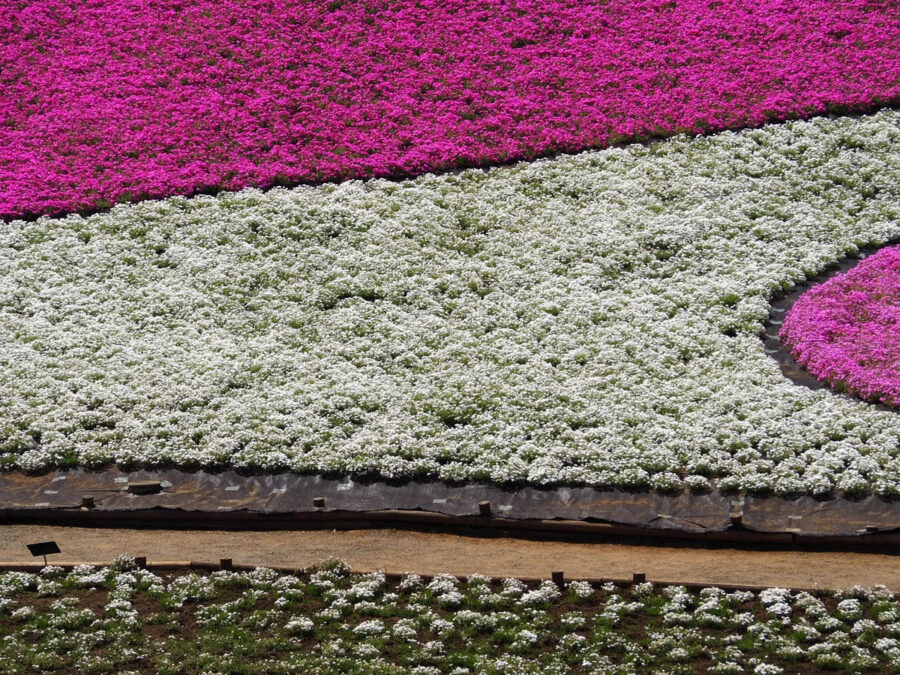
Getting there is the hard part, because the venue is out on the far west side of the lakes. During the festival the Shibazakura Liner runs nonstop from Kawaguchiko Station in about 40 minutes, from 8:35 on most days, and package tickets combine a highway bus from Shinjuku or Tokyo with festival entry. Outside festival time the buses do not stop at the venue; the nearest stop is a 20-minute walk away.
The grounds open from 8:00 to 16:00, varying by period, and an online ticket bought by the day before saves ¥100 (under US$1). I would skip Golden Week unless you enjoy sitting in traffic with a view.
Kawaguchiko, Hakone or the Shizuoka side: where should you stay?
Stay at Kawaguchiko if the mountain is the point of the trip. It has the closest views, the Chureito Pagoda and the north shore within easy reach, the buses to the Yoshida Trail and the 5th Station, and the cheapest transport from Tokyo.
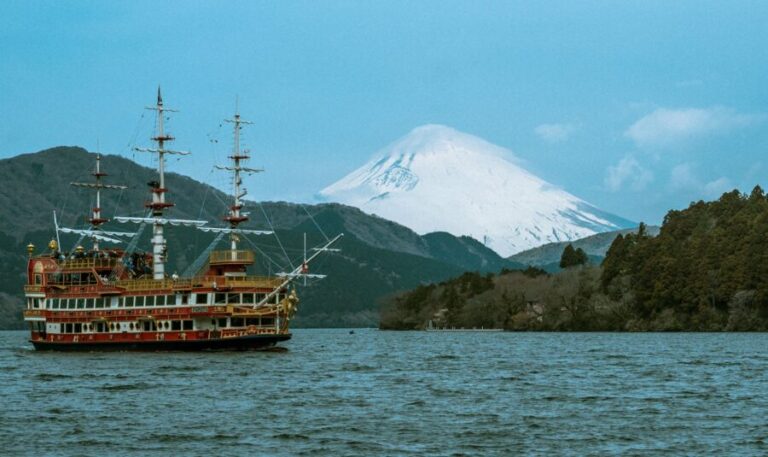
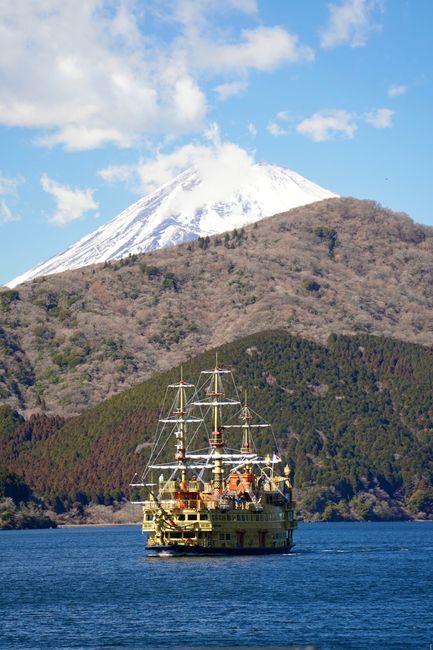
Stay in Hakone if you want hot springs, museums and a loop of mountain trains, boats and cable cars, with Fuji as a view rather than the main event. From Lake Ashi the mountain appears over the ridge on clear days, at its sharpest in winter. If you want both, Odakyu’s Fuji Hakone Pass costs ¥11,100 (about US$74) as of 2026 and covers three days of travel in both areas, plus a round trip between Shinjuku and Odawara; the Romancecar express needs an extra ticket.
Choose the Shizuoka side if you are climbing the Fujinomiya, Gotemba or Subashiri trails, or if you like the south face of the mountain. JNTO’s Shizuoka notes point to Mishima and Shin-Fuji stations on the Tokaido Shinkansen as the gateways. From there buses reach Fujisan Hongu Sengen Taisha, the shrine where pilgrims traditionally began the climb, Shiraito Falls, and Lake Tanuki on the Asagiri plateau, where the mountain doubles in the water.
With one day, take the early bus or train to Kawaguchiko, do the pagoda first, then the north shore. With two, sleep by the lake: the morning is when the mountain most often stands clear.
What to do before you leave home
Look at the date. If it falls between July and early September and you want the summit, book the hut first, then the hiking fee, then the bus. If it is any other month, book a bus from Busta Shinjuku the day sales open, a month ahead, and ask for the earliest departure.
Then look west every clear morning in Tokyo. The Kichijoji rooftop sees the mountain on more than 150 days a year, so on a winter trip you have a fair chance of spotting Fuji before you ever leave the city.