Questions on this page14
Tokyo’s cherry season officially starts when a weather observer counts five or six open flowers on one tree in the grounds of Yasukuni Shrine. In 2026 that happened on March 19. Nine days later the same tree reached full bloom, and by the second week of April most of the city’s petals had fallen into the Meguro River and onto the paths of Ueno Park.
That is the whole season: about three weeks from first flower to bare branch, with one good week in the middle.
The short answer for planning: aim for the last week of March and the first days of April, keep two or three days flexible, and know which parks let you sit, drink and stay after dark.
When do the cherry blossoms bloom in Tokyo?
Late March. The 1991–2020 average puts Tokyo’s first bloom on March 24 and full bloom on March 31, according to the Japan Meteorological Agency’s first-bloom and full-bloom tables. In the last six years the first flowers came between March 14 and March 29, and full bloom between March 22 and April 4.
Early years are now more common than late ones. Two of the last six seasons opened on March 14, the earliest date on record (2020 opened that day too). The latest first bloom on record was April 11, in 1984.
| Year | First bloom (kaika) | Full bloom (mankai) |
|---|---|---|
| 2021 | March 14 | March 22 |
| 2022 | March 20 | March 27 |
| 2023 | March 14 | March 22 |
| 2024 | March 29 | April 4 |
| 2025 | March 24 | March 30 |
| 2026 | March 19 | March 28 |
| Average (1991–2020) | March 24 | March 31 |
Who decides that the season has started?
The Tokyo District Meteorological Observatory does, by looking at a single Somei-yoshino sample tree (hyōhonboku) at Yasukuni Shrine in Chiyoda. Staff have watched the trees there since 1966. The day five or six flowers are open on that tree is the official first bloom, and the day about 80 percent of its flowers are open is full bloom.
The 80 percent rule exists because nobody can confirm that every last bud on a big tree has opened. It matches the point where most people would call a tree full anyway. Both announcements are national news every spring.
How long do the blossoms last?
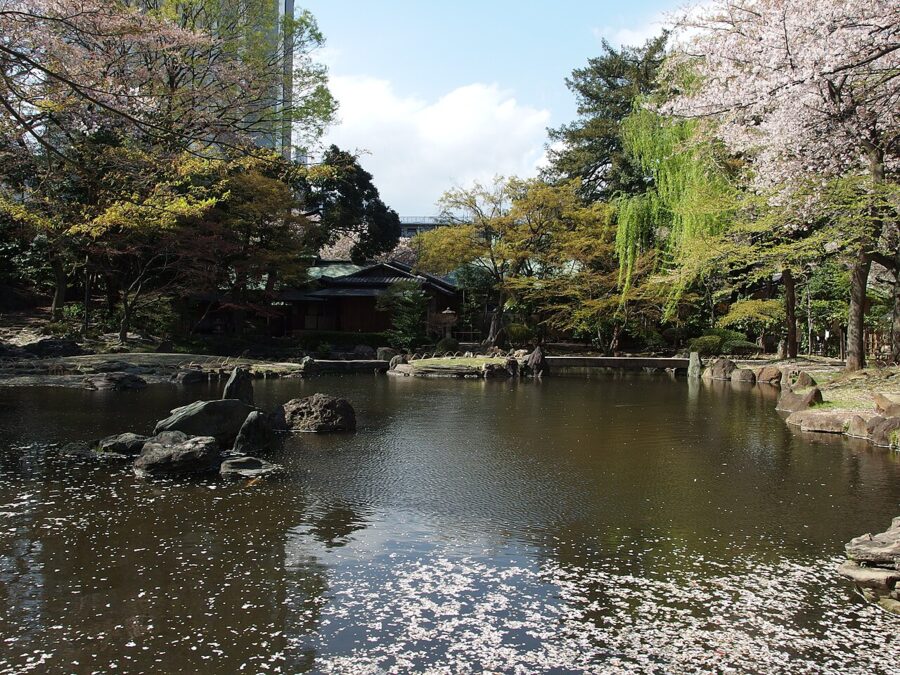
About a week at their best, and roughly two and a half weeks from first flower to mostly bare branches. Full bloom usually arrives six to nine days after the first flowers. After that, wind and rain decide how long the trees hold.
The 2026 season shows the pattern. First bloom came on March 19 and full bloom on March 28. Spot reports from Ueno had the main Somei-yoshino trees scattering by April 3 and mostly bare by April 7, and the Meguro River was shedding heavily by April 9. Strong wind on March 31 and a spring storm right after it started the fall early.
When is the cherry blossom forecast published?
In early January, by private weather companies. The meteorological agency records the dates but no longer forecasts them. Weathernews and the Japan Meteorological Corporation both had 2026 forecasts out by January 8, and both revise them through February and March.
The early numbers were close. Weathernews’s first 2026 forecast gave Tokyo March 21, moved to March 18 by its fifth update on March 4, and the Japan Meteorological Corporation’s January forecast said March 20. The real date was March 19. Weathernews says its 2027 spot pages go up in February.
My advice is to book flights on the averages and use the forecast to choose which days to keep free. A trip covering March 24 to April 5 would have overlapped the best week in each of the last six years, though in 2021 and 2023 you would have caught only the tail of it.
Where are the best places to see cherry blossoms in Tokyo?
Shinjuku Gyoen for space and variety, Ueno for the crowd and food stalls, Chidorigafuchi for the boats, and the Meguro River for an evening walk under lanterns. Fees, hours and rules below are as of 2026.
| Place | Entry | Sit and picnic | Alcohol | Lit at night (2026) |
|---|---|---|---|---|
| Shinjuku Gyoen | ¥500 (about US$3) | Yes, on the lawns | Banned | No, closes 18:00 |
| Ueno Park | Free | Yes, off the main path | Allowed | Lanterns to about 20:00 |
| Chidorigafuchi Green Way | Free | No, walking path | No parties | From 18:00 |
| Meguro River | Free | No, riverside streets | Stalls sell it | Lanterns 17:00–20:00 |
| Sumida Park | Free | Yes | Check signs | 18:30–21:00 |
| Yoyogi Park | Free | Yes, big lawns | Allowed | No |
| Rikugien | ¥300 (about US$2) | Stroll garden, paths only | Check signs | One week, ticketed |
Shinjuku Gyoen
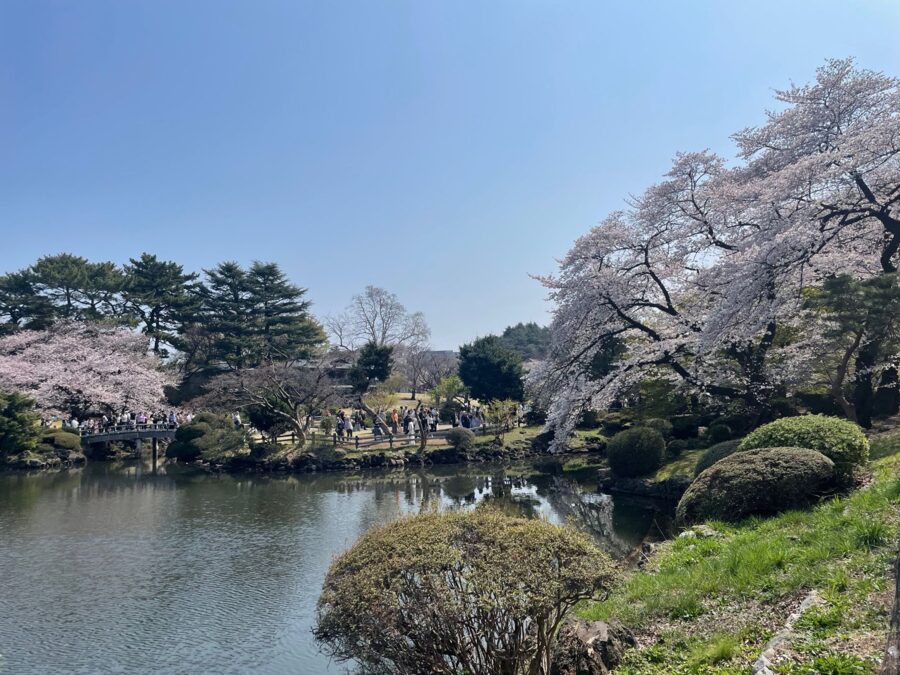
This is the one I would pick if you only have one afternoon. The national garden has about 900 cherry trees of some 70 varieties, so something is in flower from January to late April, and the lawns are wide enough that you never sit on a stranger’s sheet. About 300 of the trees are Somei-yoshino, the variety the forecasts track.
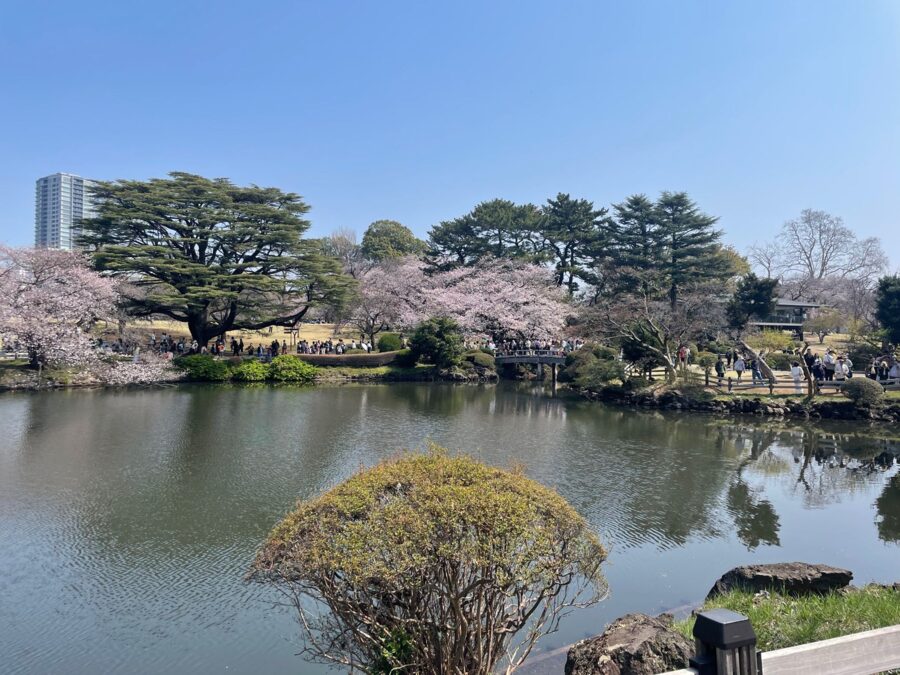
Entry is ¥500, ¥250 (about US$2) for seniors and students, and free for children 15 and under; transit IC cards work at the gates. From March 15 the garden opens 9:00 to 18:00 with last entry at 17:30, and from March 25 to April 24 it opens every day, Mondays included. Alcohol is banned, along with open flames, musical instruments, drones and tents, and the full list is on the garden’s rules page.
Peak weekends need a ticket booked in advance. In 2026 timed entry applied from 10:00 to 16:00 on March 28 and 29 and April 4 and 5, sold online only from March 2, and the April 4 requirement was dropped the day before. Weekdays did not need one.
There are three gates. Shinjuku Gate is 10 minutes from the South Exit of Shinjuku Station or 5 minutes from Exit 1 of Shinjuku-gyoemmae Station; Sendagaya Gate is 5 minutes from JR Sendagaya Station. The access page lists every exit.
Ueno Park
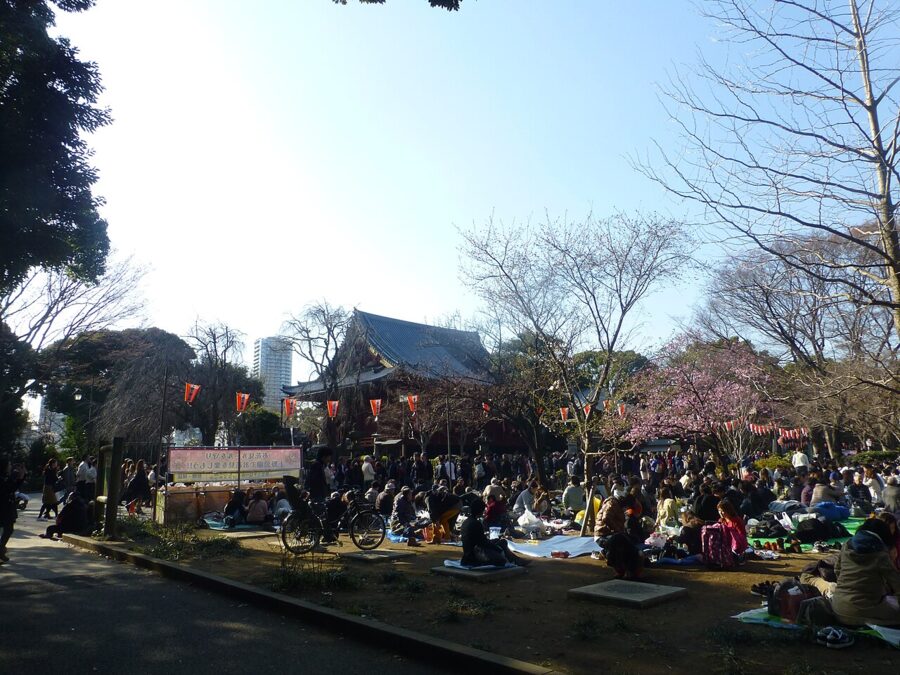
Ueno has been Tokyo’s great hanami ground since the Edo period, and it still feels like the city’s party. Counts vary from about 800 to 1,200 trees depending on who is counting; JR East’s 2026 guide gives 1,200 for the park, with some 800 along Sakura-dori, the main avenue. Entry is free, but the park is closed from 23:00 to 5:00.
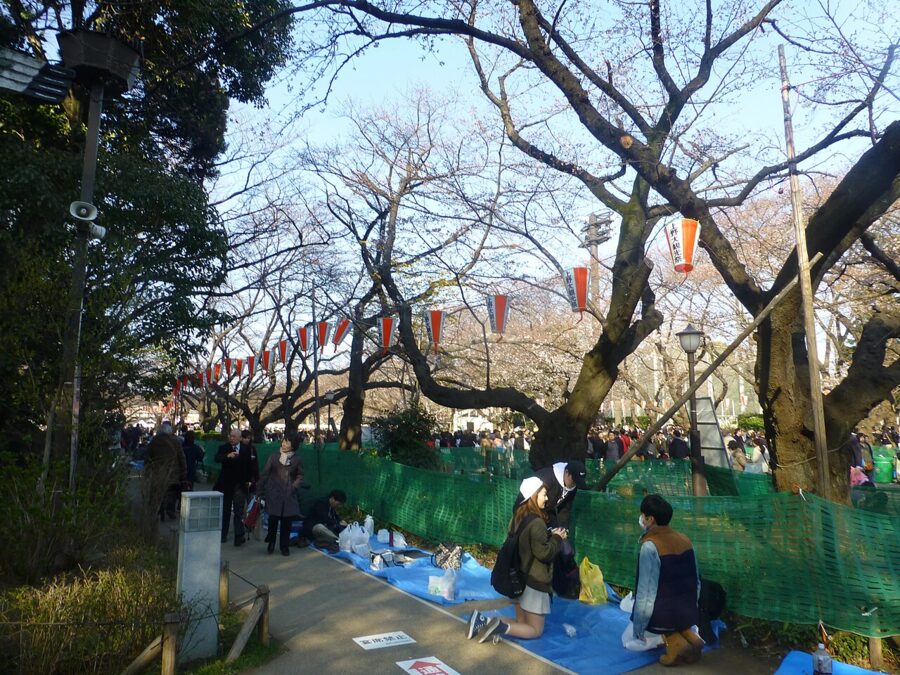
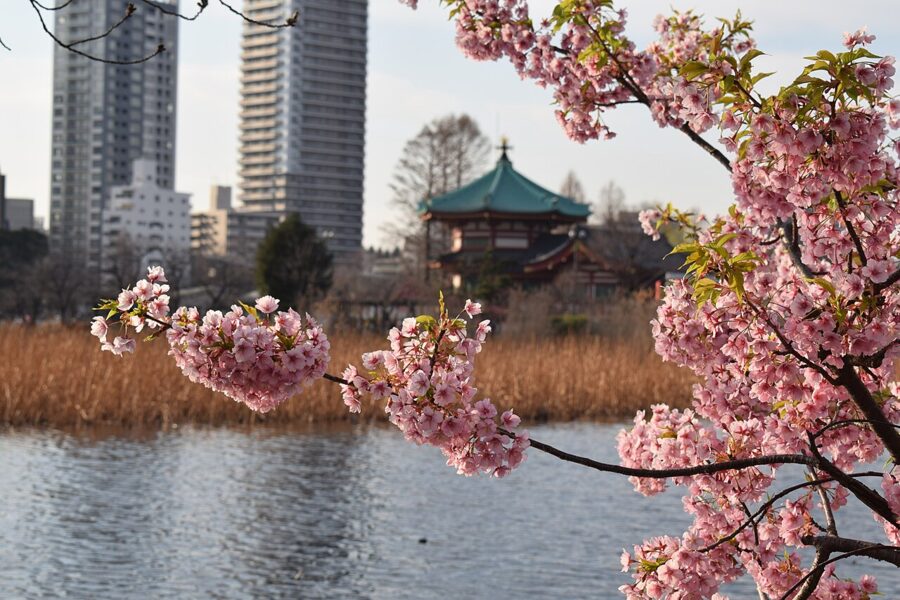
In 2026 the Ueno Sakura Festival ran from March 14 to April 5, and paper lanterns lit the trees from March 20 to April 19, from dusk until about 20:00 or 21:00, according to JR East’s Ueno guide. Food stalls set up around the fountain plaza and by Shinobazu Pond. The pond side has lower trees and benches, and it holds its flowers a few days longer than the main avenue.
Getting there is easy: JR Ueno Station is about two minutes from the park, and Keisei Ueno Station is one minute away. The park’s own page has the management office number if you need to check a rule.
Chidorigafuchi
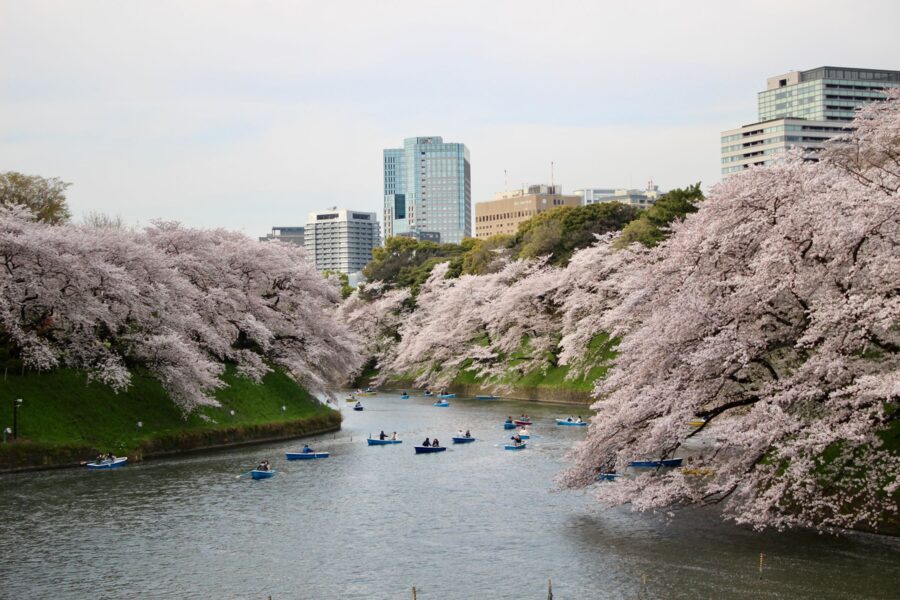
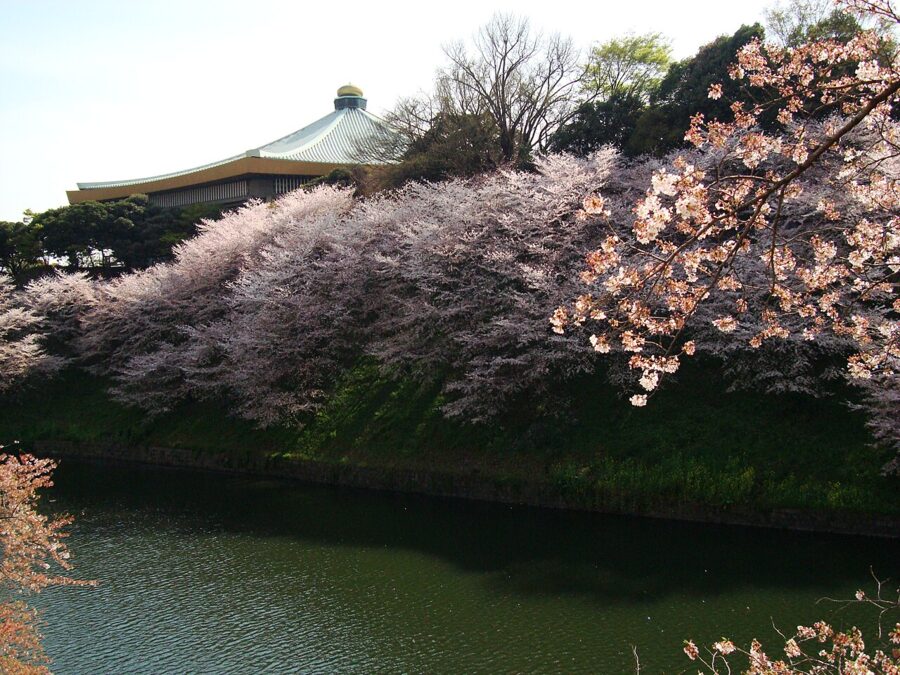
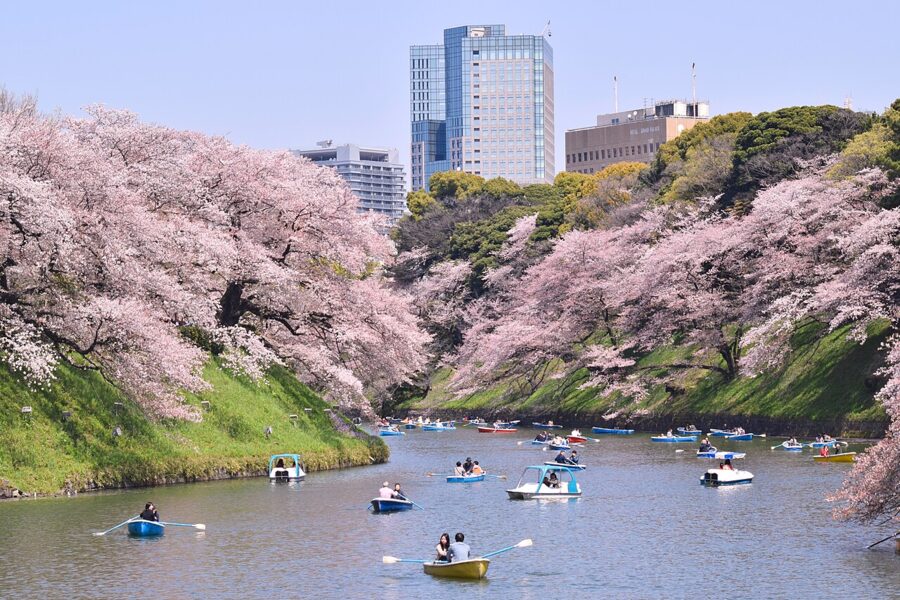
The Chidorigafuchi Green Way is a path of about 700 meters along the Imperial Palace moat, with branches hanging over the water on one side. It is free, and the path bans parties and smoking, so this is for walking, not sitting.
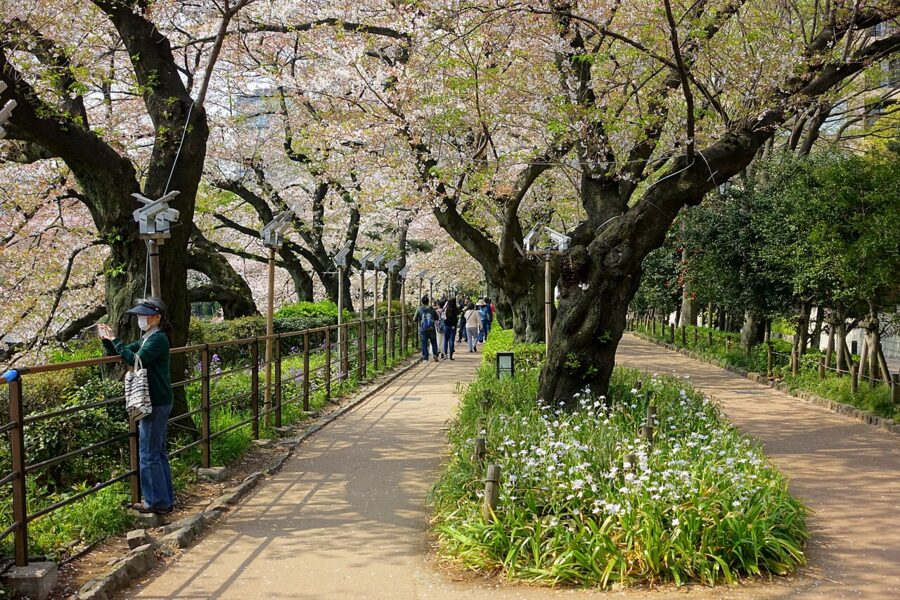
Use Exit 2 of Kudanshita Station, five minutes from the path. On weekends during the 2026 light-up, from 9:00 to 21:00, the Green Way ran one way only and the Hanzomon end was closed to people coming in. The Chiyoda cherry festival runs the light-up, which was held from March 26 to April 6 in 2026, starting at 18:00.
The boats are the reason people come. In 2026 an advance “smart ticket” from the boat pier cost ¥12,000 (about US$75) per boat per hour, for up to three people, bookable online from March 10. A share of the price goes to the ward’s fund for replanting cherry trees. Boats are also let on the day at the pier, without a booking, when the queue allows.
Meguro River
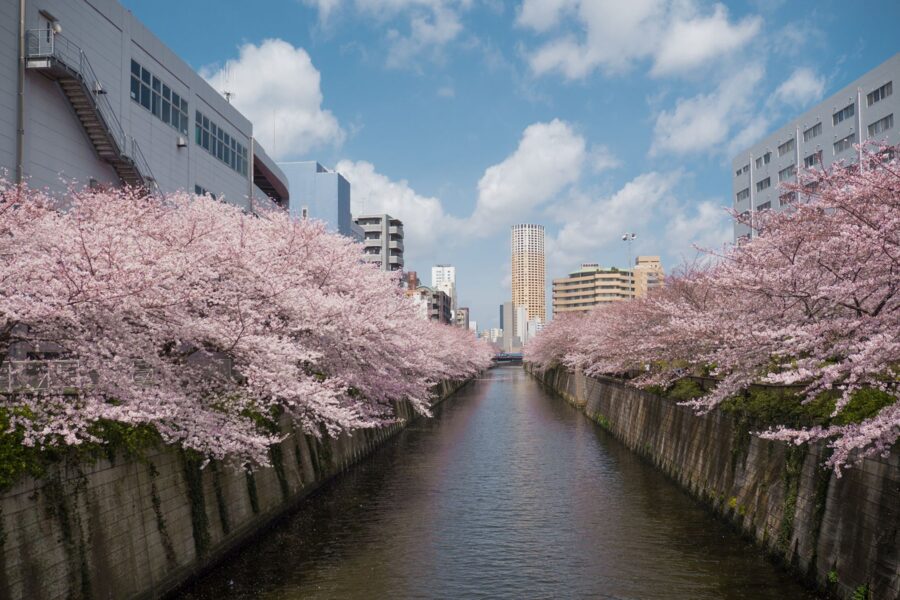
About 800 Somei-yoshino line some 4 kilometers of the Meguro River in Meguro ward, starting near Ikejiri-Ohashi Station and running down past Nakameguro. The best stretch runs upstream from Nakameguro Station, where branches from both banks meet over the water. Shops along the river set up stalls selling food and drinks during the season.
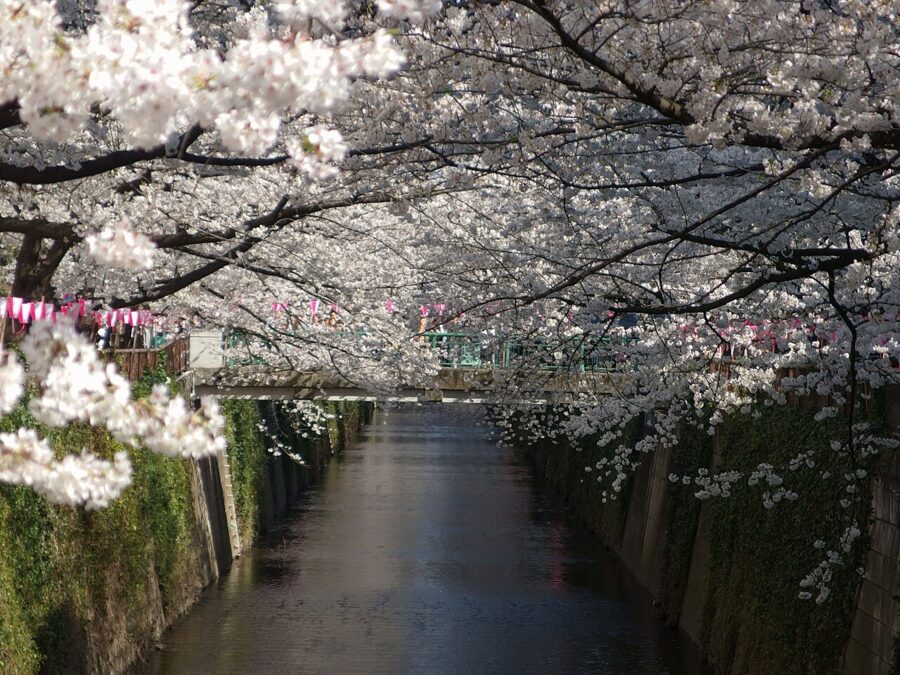
The 2026 Nakameguro Sakura Festival ran on March 28 and 29, and the lanterns were planned for 17:00 to 20:00 for about two weeks from the first bloom. There is no parking. Nakameguro Station on the Tokyu Toyoko and Hibiya lines is the stop, and on peak days crowd control is in place along the river.
Sumida Park
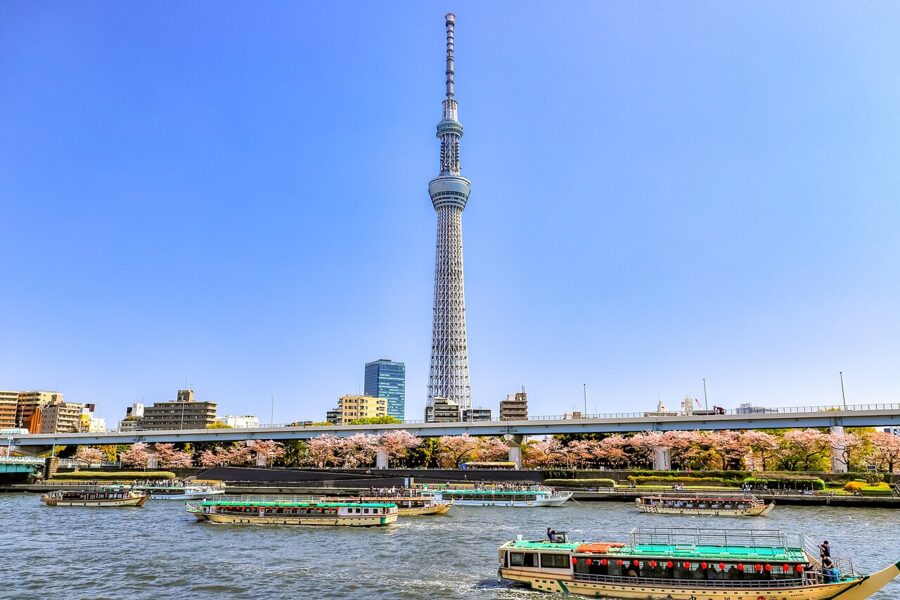
The shogun Tokugawa Yoshimune had cherries planted on the banks of the Sumida River in the 1700s, and the kilometer of trees between Azuma Bridge and Sakura Bridge still draws Asakusa’s crowds. From the Taito side you get Tokyo Skytree across the water. The Sumida-side Bokutei cherry festival ran from March 20 in 2026, with the trees lit from 18:30 to 21:00.
Yoyogi Park
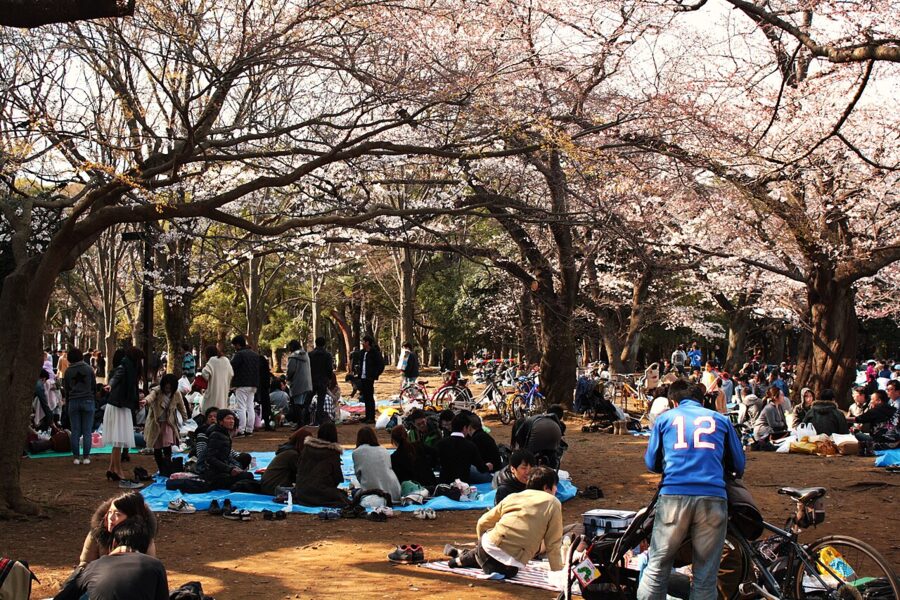
Yoyogi is where Tokyo goes to spend a whole day on a sheet. The lawns are huge, the crowd is younger and louder than Shinjuku Gyoen’s, and there is space for a group of twenty. The park is free and open around the clock, three minutes from JR Harajuku Station or Yoyogi-koen Station on the Chiyoda Line.
Rikugien
Rikugien is a stroll garden in Komagome built around 1700, and in spring people come for one tree: a weeping cherry (shidarezakura) about 15 meters tall and 20 meters wide near the entrance. It blooms earlier than the Somei-yoshino, usually in mid to late March. Daytime entry is ¥300, and the garden is about seven minutes from Komagome Station on the JR Yamanote and Namboku lines.
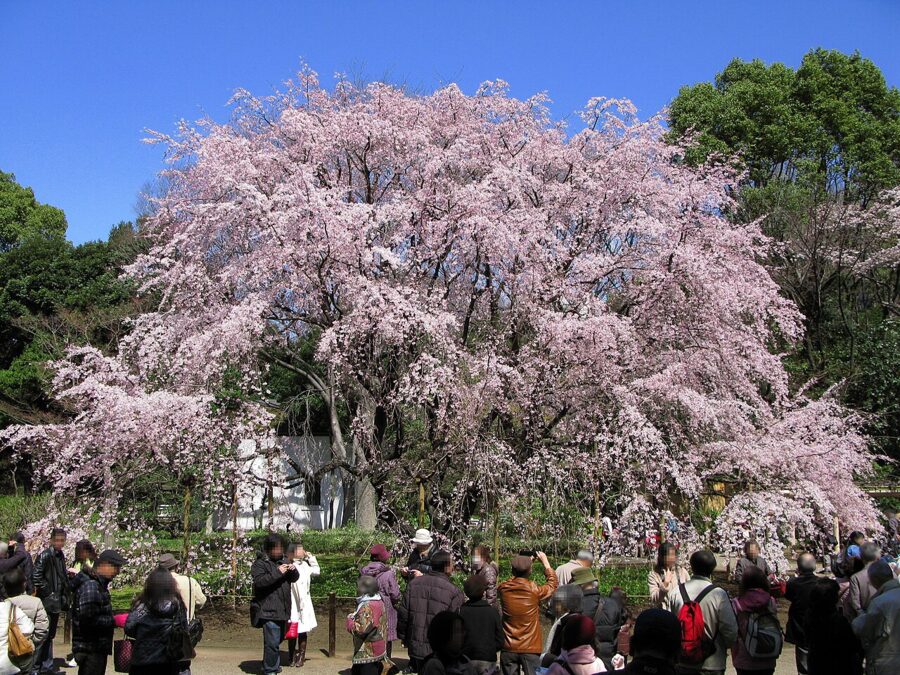
The night viewing runs for about a week, with dates fixed about a week ahead to match the tree. In 2026 it ran 18:30 to 21:00, last entry 20:00, with a separate ticket of ¥1,000 (about US$6) in advance or ¥1,200 (about US$8) on the day.
Inokashira Park and the rest
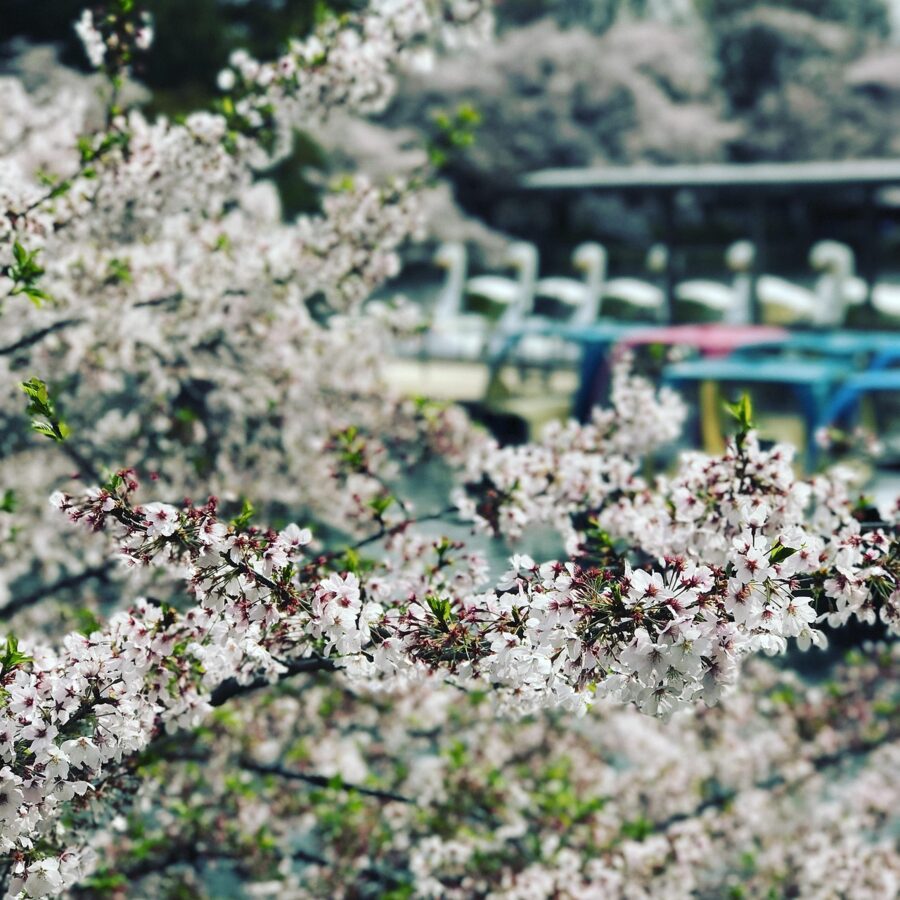
Inokashira Park in Kichijoji, a short ride west of Shinjuku on the JR Chuo Line, has a pond, rowing boats and a calmer crowd. Kitanomaru Park and Asukayama Park make good second stops.
How does hanami work?
Hanami, flower viewing, means sitting under the trees with food and drink for a few hours, usually on a plastic sheet. You do not need a reservation, a permit or anyone’s permission in a free park. You do need a spot, and on peak weekends the spots go early.
How do I get a good spot?
Arrive early, and stay with your sheet. Spot reports from Ueno in 2026 had many of the places under the trees taken by 9:00 on a late-March weekday, and weekends are worse. Ueno does not allow banquets on Sakura-dori itself, so groups sit in the areas off the main avenue, and a sheet with nobody on it can be removed.
If you are only two people, you do not need to compete with the office groups. Small gaps open all afternoon as others leave.
What should I bring?
A sheet, a bag for your rubbish, and something to eat. Convenience stores sell plastic sheets in season. In Ueno, the Takeya discount store, three minutes from the North Exit of JR Okachimachi Station, has a Daiso on its fourth floor with sheets and paper plates and a supermarket in the basement, and in 2026 it stayed open until 22:00.
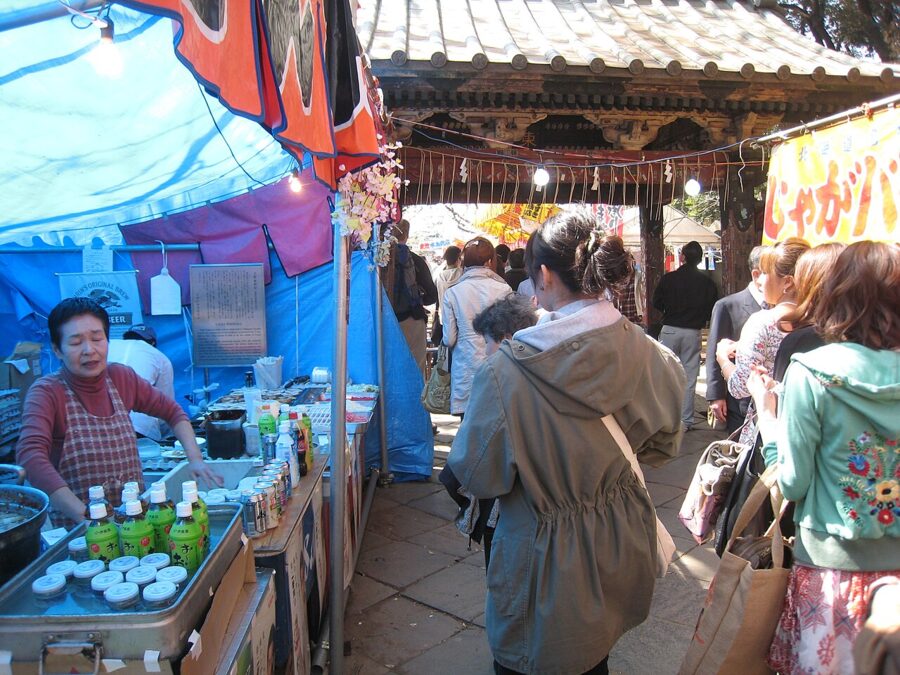
Leave the stove at home. Open flames and barbecues are banned in the big parks, and so are tents, which Shinjuku Gyoen spells out in its rules.
Can I drink alcohol at hanami?
In most free parks, yes. Ueno and Yoyogi have no ban, and beer and canned highballs are as much a part of the day as the flowers. Shinjuku Gyoen bans alcohol inside the gates, and the Chidorigafuchi Green Way bans drinking parties outright.
Drinking in public is legal in Japan; the limits are manners. Keep it to your sheet and keep the music off.
What do I do with my rubbish?
Take it with you. Bins are few, and the ones there are fill fast on peak days. Shinjuku Gyoen accepts rubbish only in its designated bins and bans bringing household waste in.
Leave the trees alone, too. Do not shake branches for a petal shower, climb the trunks or stand on the roots; Ueno fences them for a reason, and picking flowers is banned in Shinjuku Gyoen and frowned on everywhere.
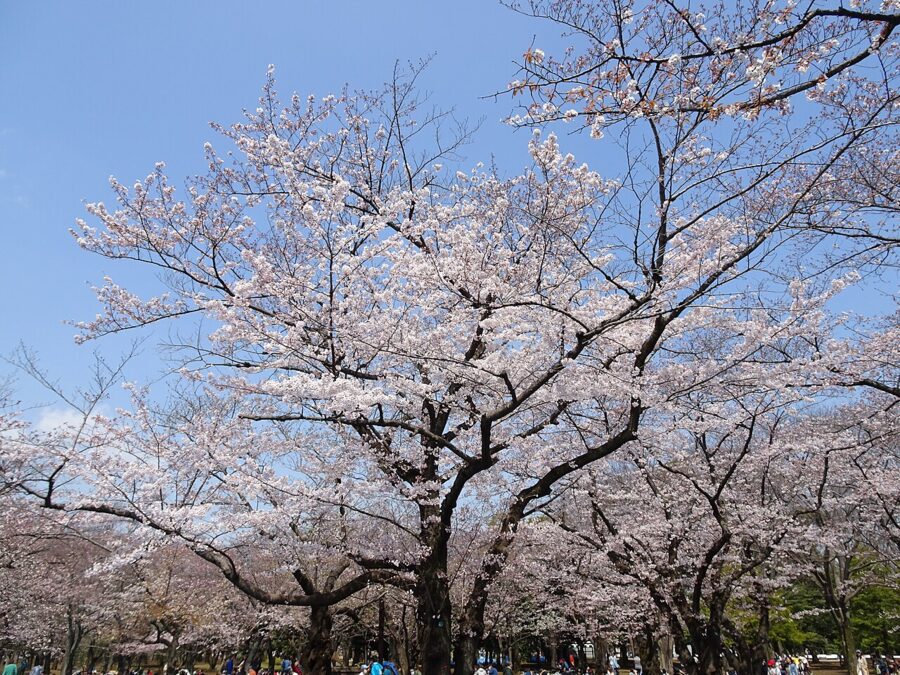
Where can I see the cherry blossoms at night?
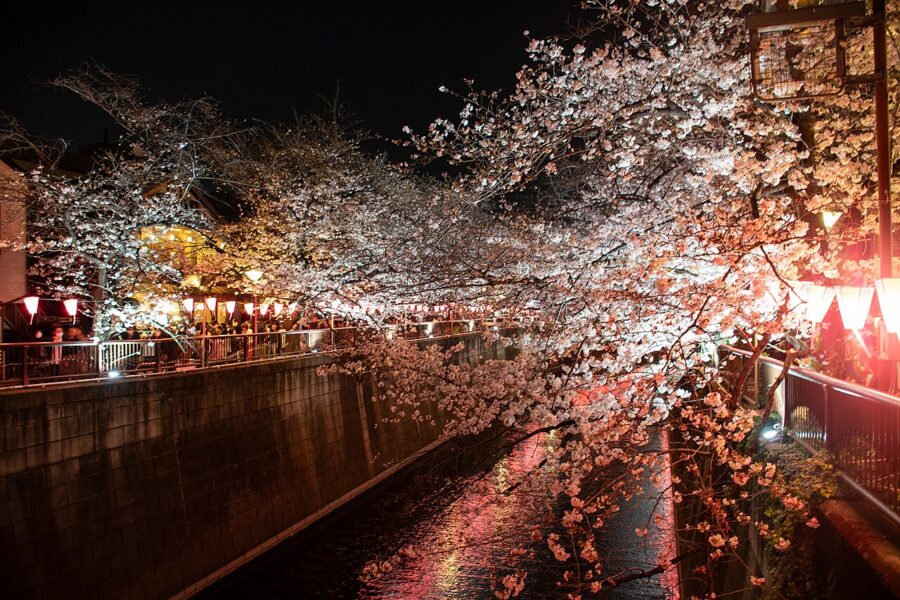
The Meguro River, Chidorigafuchi, Ueno and Sumida Park all light their trees, and Rikugien has its ticketed week. Night viewing has its own name, yozakura, night cherries. Shinjuku Gyoen closes at 18:00 and has no evening opening for the cherries.
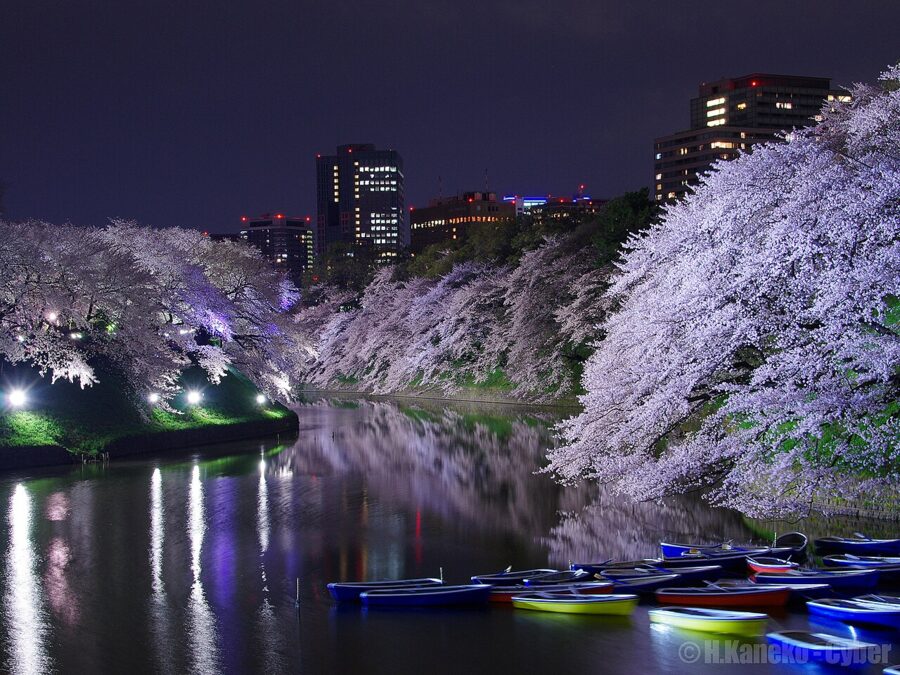
Chidorigafuchi is the most beautiful of them. The trees are lit from below and reflected in the moat, and the boats stay out into the evening during the light-up. Go on a weekday, when the one-way rule is off and you can walk at your own pace.
Ueno at night is louder: lanterns and groups still on their sheets. Remember the park shuts at 23:00.
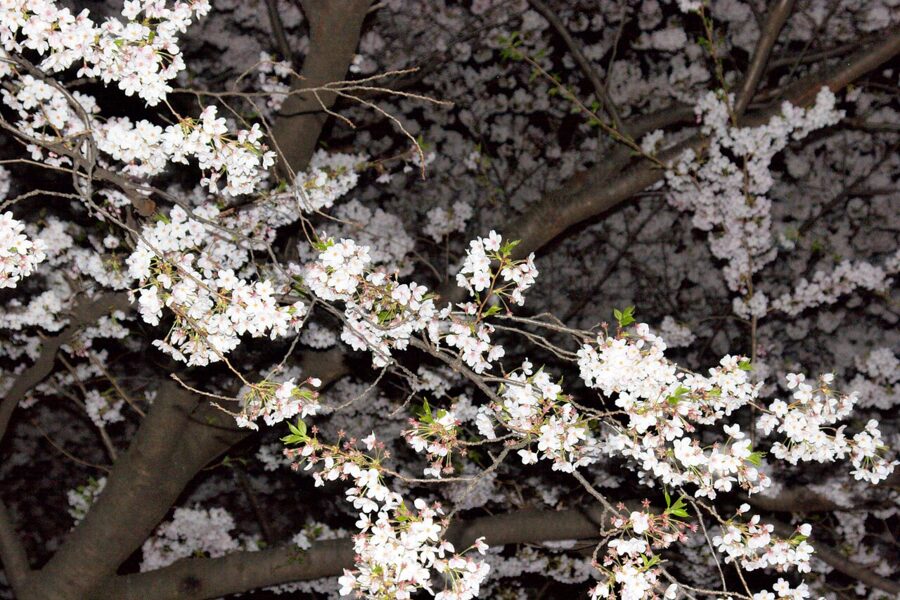
Can I see cherry blossoms in February or late April?
Yes, though not the main show. Early varieties flower from late January, and late double-flowered ones carry on to the end of April. Almost all of the famous photos, though, are of Somei-yoshino, and that variety peaks in the window above.
Early varieties: kawazu-zakura and kanzakura
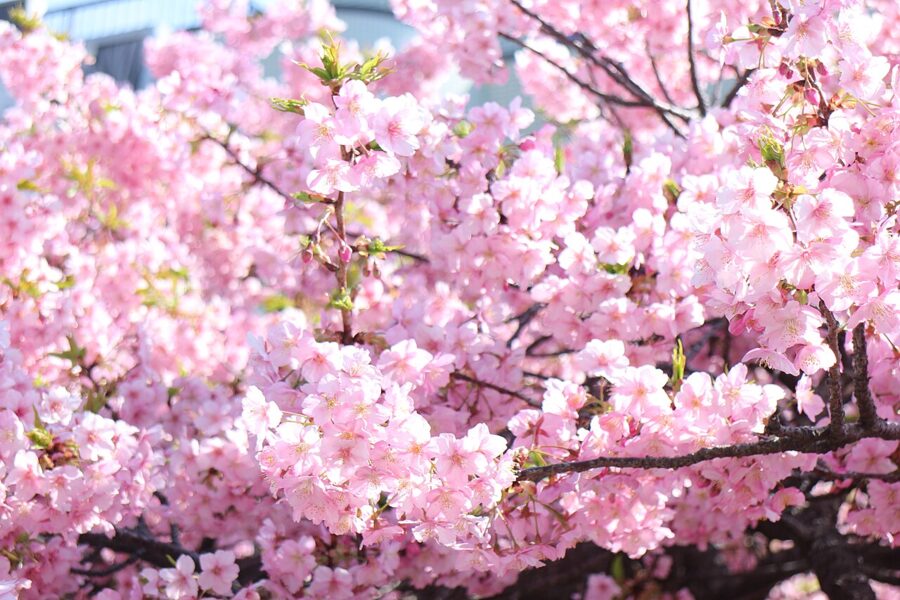
Kawazu-zakura is a deep pink early cherry named after Kawazu, a town on the Izu Peninsula. The Japan Meteorological Corporation, which added it to its forecasts in 2026, expected the original tree to open around January 22 and the trees to reach full bloom in mid to late February. The Kawazu cherry festival has already set its 2027 dates: February 6 to March 7.
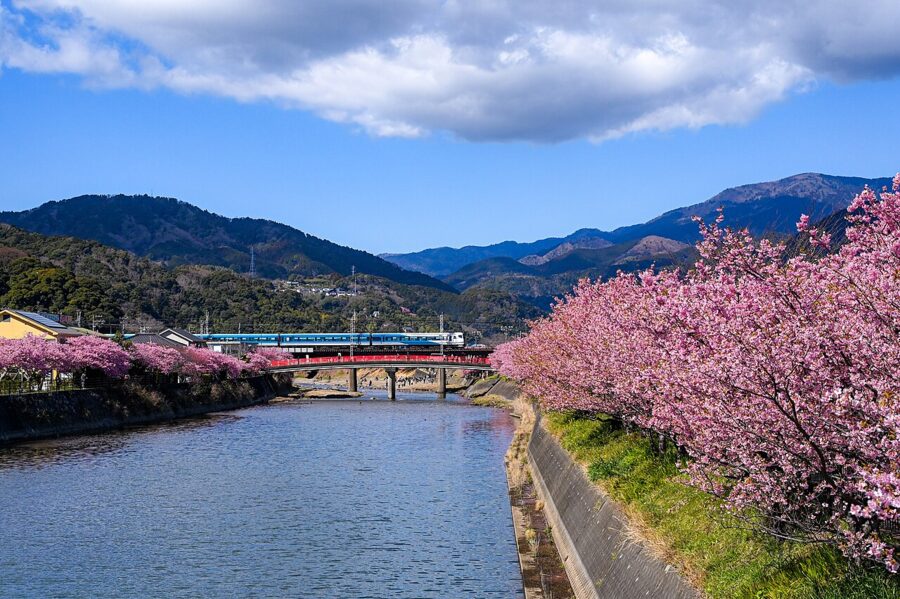
Inside Tokyo, Shinjuku Gyoen has about 20 early varieties near its tea house that flower from January to early March, with kanzakura at its best from February into March. Ueno’s early trees by the park entrance were already open on March 13 in 2026, a week before the Somei-yoshino.
Late varieties: yaezakura
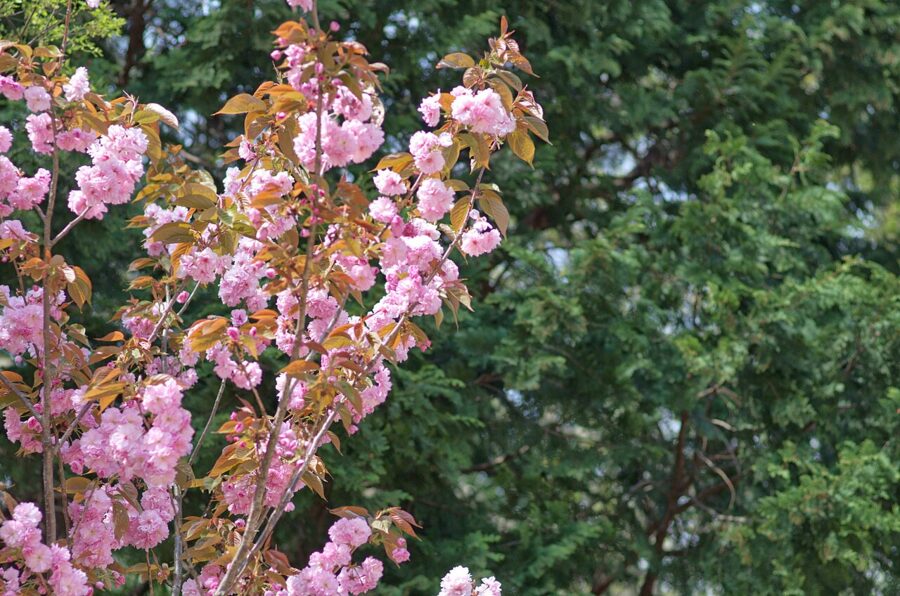
The double-flowered cherries, yaezakura, open after the Somei-yoshino have dropped. Shinjuku Gyoen has nearly 100 Ichiyo trees, at their best in early to mid April, and about 70 Kanzan, the deep pink one, flowering from mid to late April. On April 7, 2026, with Ueno’s main trees bare, its Kanzan and Ichiyo were in full bloom.
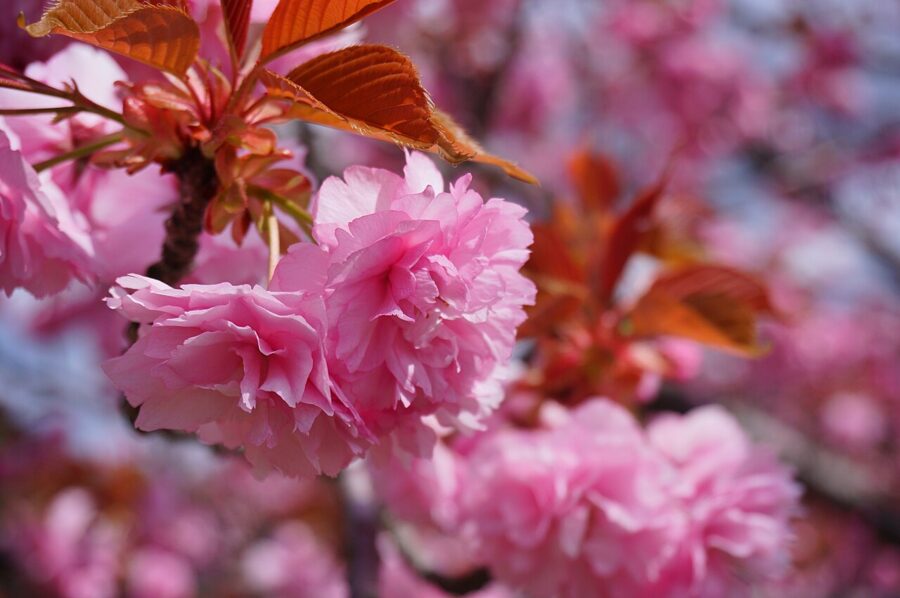
Can you see cherry blossoms in May? Not in Tokyo, beyond a few stragglers. In Hokkaido, yes: Sapporo’s average first bloom is May 1.
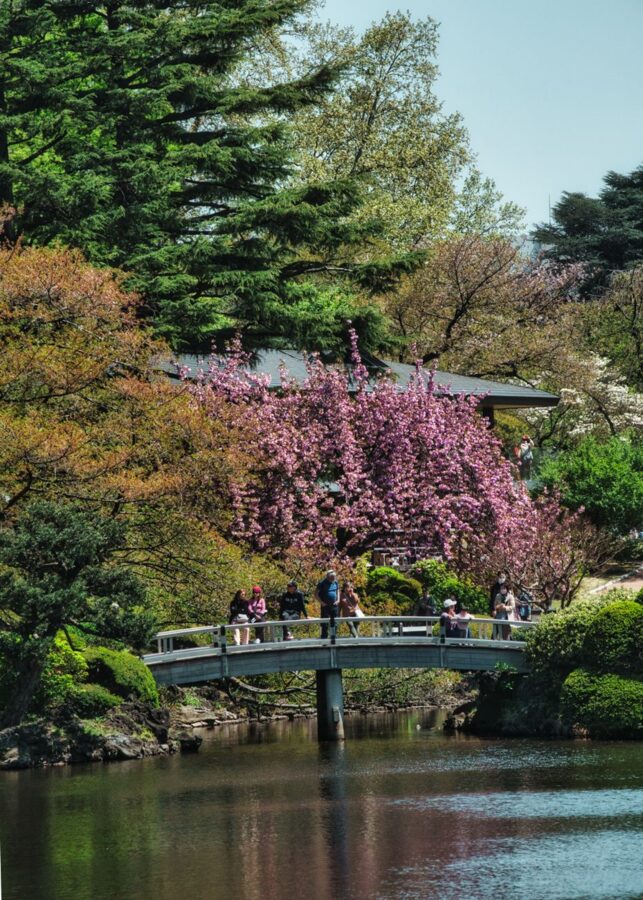
How bad are the crowds, and how do I beat them?
Bad on the weekend of full bloom, manageable on weekdays, and quiet before 8 a.m. Meguro and Ueno on a Saturday afternoon mean shuffling, not walking. Chidorigafuchi goes one-way on weekends and its boat queues run for hours.
- Go early. Ueno, Yoyogi and the Meguro River are open before breakfast; Shinjuku Gyoen opens at 9:00.
- Swap the days. Famous spots midweek, shopping on the weekend.
- Book what can be booked. Shinjuku Gyoen’s weekend tickets and Chidorigafuchi’s boats both sold online from early March in 2026.
Is Japan more expensive in cherry season? For hotel rooms, yes, so book one as soon as you book the flight, on a free cancellation rate if you can.
What if I miss the peak?
Go where the season runs early or late: south and toward the coast before the Tokyo bloom, up into the mountains or north after it.
Arriving too early
Kawazu is about 2 hours 40 minutes from Tokyo Station on the Odoriko limited express, a long day but a straightforward one. Closer in, the kawazu-zakura near Miurakaigan Station on the Keikyu Line flower in February and early March, and they make a shorter trip from Shinagawa.
Arriving too late
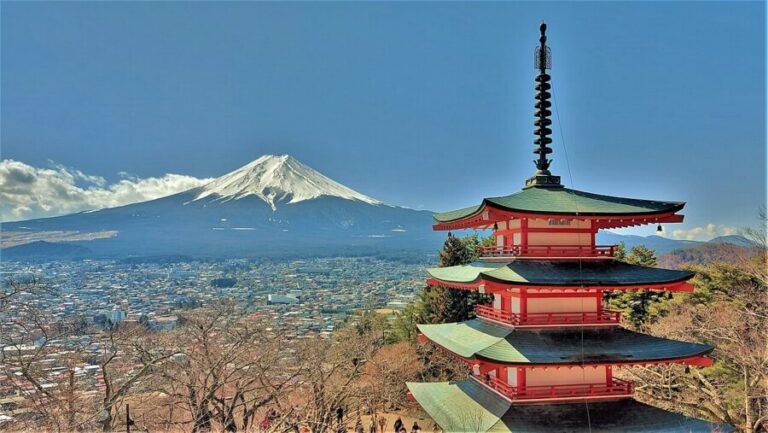
Fujiyoshida, at the foot of Mount Fuji, runs about two weeks behind Tokyo. In 2026 the city ran its crowd-control period at Arakurayama Sengen Park, home of the Chureito pagoda, from April 1 to 17, which tells you when the trees there were at their best. The cherry festival itself was not held in 2026, and the city’s cherry page warned of one to three hours’ wait for the timed-entry viewing deck.
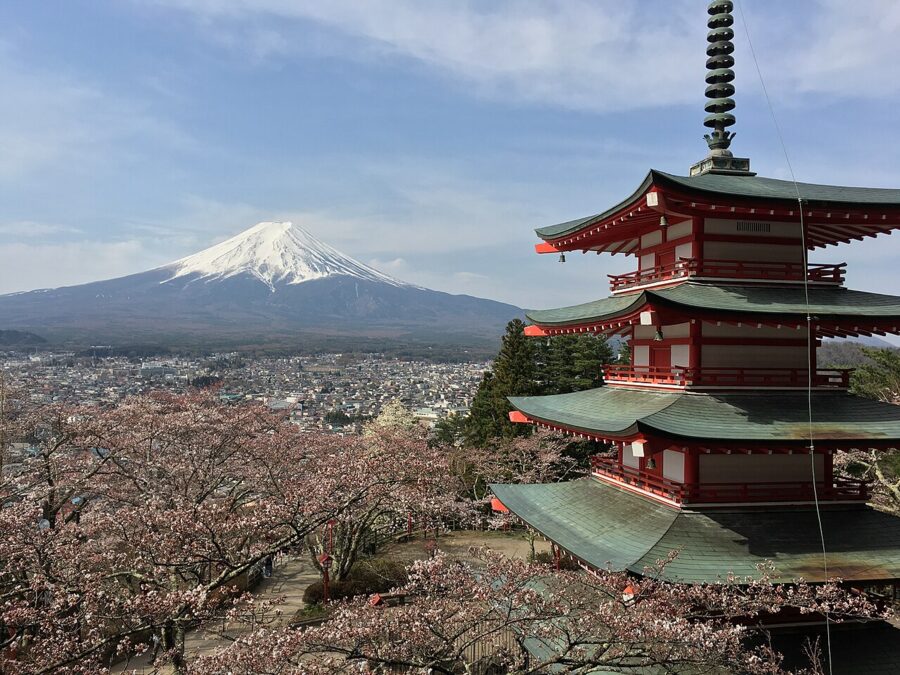
Shimoyoshida Station on the Fujikyu Line is about 10 minutes’ walk from the park. The direct Fuji Excursion limited express from Shinjuku takes about 105 minutes but runs only four times a day; otherwise change at Otsuki. Highway buses from Busta Shinjuku take about 115 minutes to Fujisan Station, a short ride up the line from Shimoyoshida.
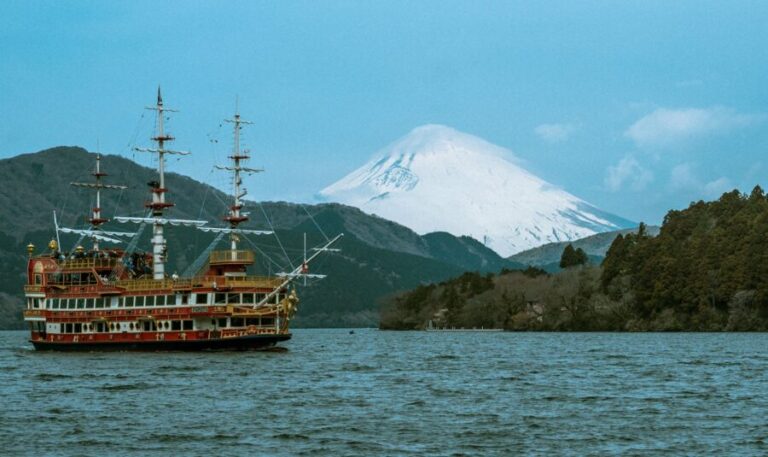
Further afield, Kanazawa averages first bloom on April 3 and full bloom on April 8, a week behind Tokyo, and Kenrokuen garden is its showpiece. Sendai’s average full bloom is April 13. The Shinkansen makes both easy, and the details are in the guide to getting around Japan. Hakone is a good overnight in the same week, since its higher villages usually flower after the city.
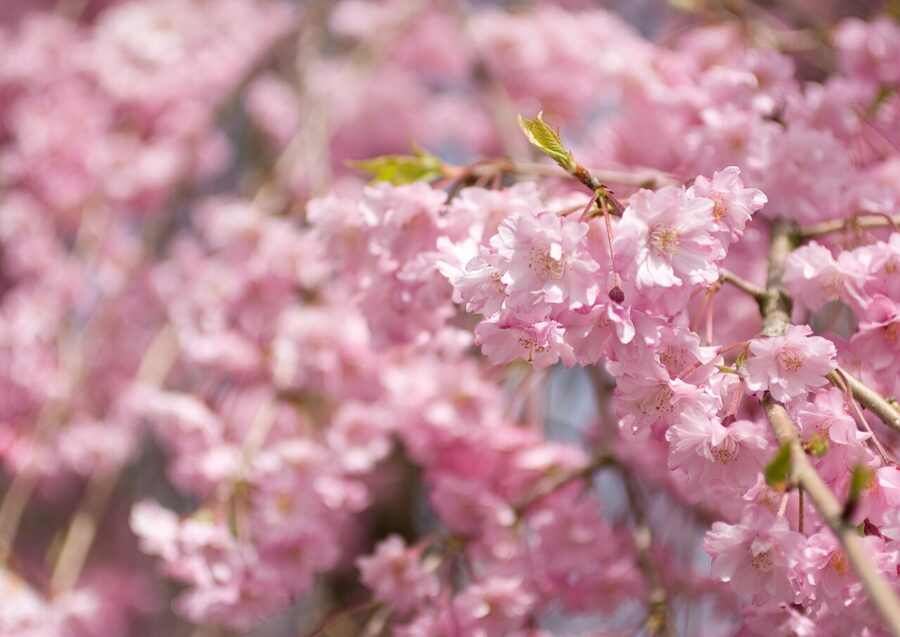
So: five or six flowers on a tree at Yasukuni, usually in the third week of March, then one good week. Book your room for the last days of March now, put Shinjuku Gyoen’s weekend tickets in your calendar for early March, and check the forecast once it appears in early January.